Scholarship Management Platform

Award More Scholarships With Less Work

AI-enhanced full lifecycle platform for scholarships—built to streamline operations, power smarter reviews, and drive confident selections.

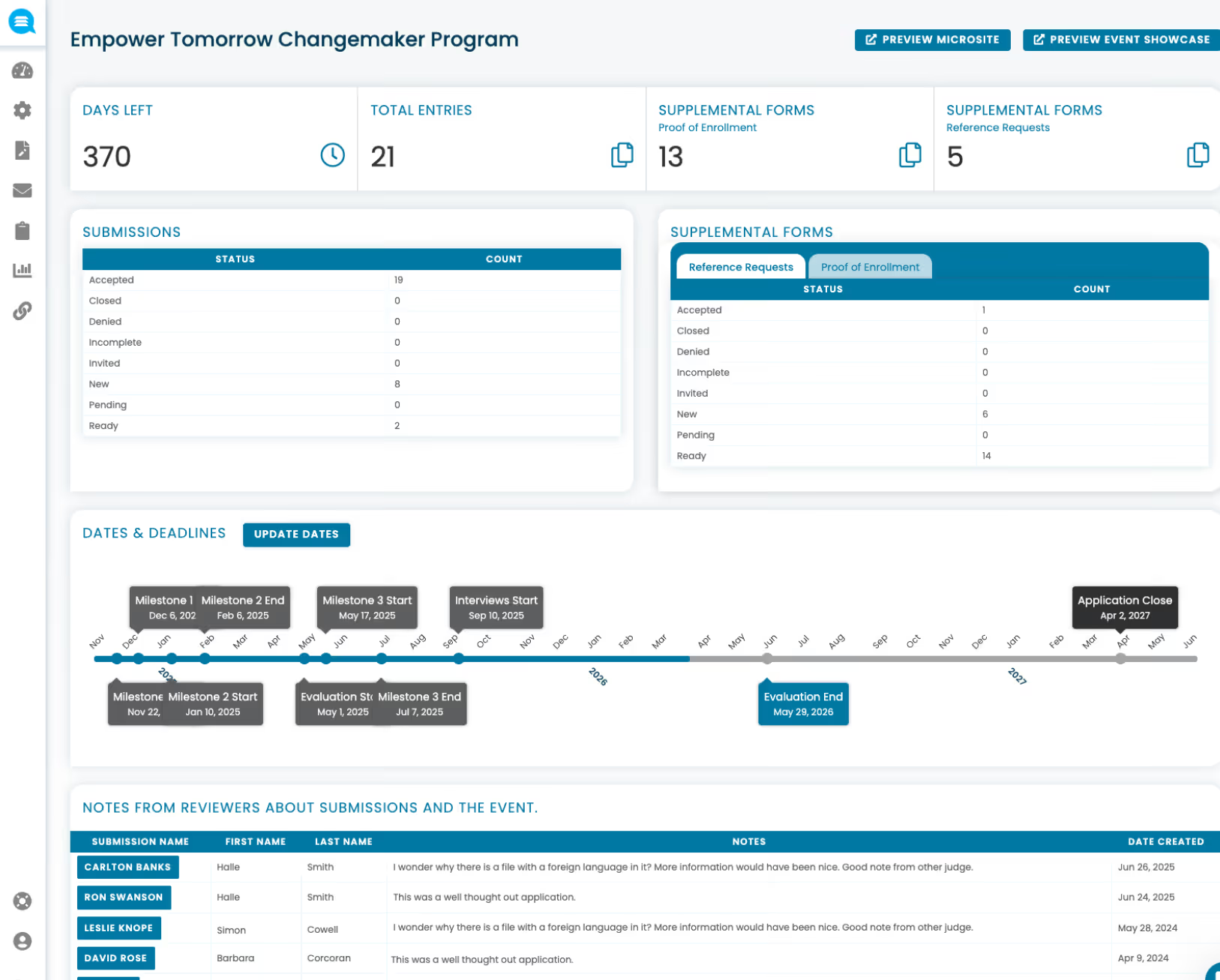
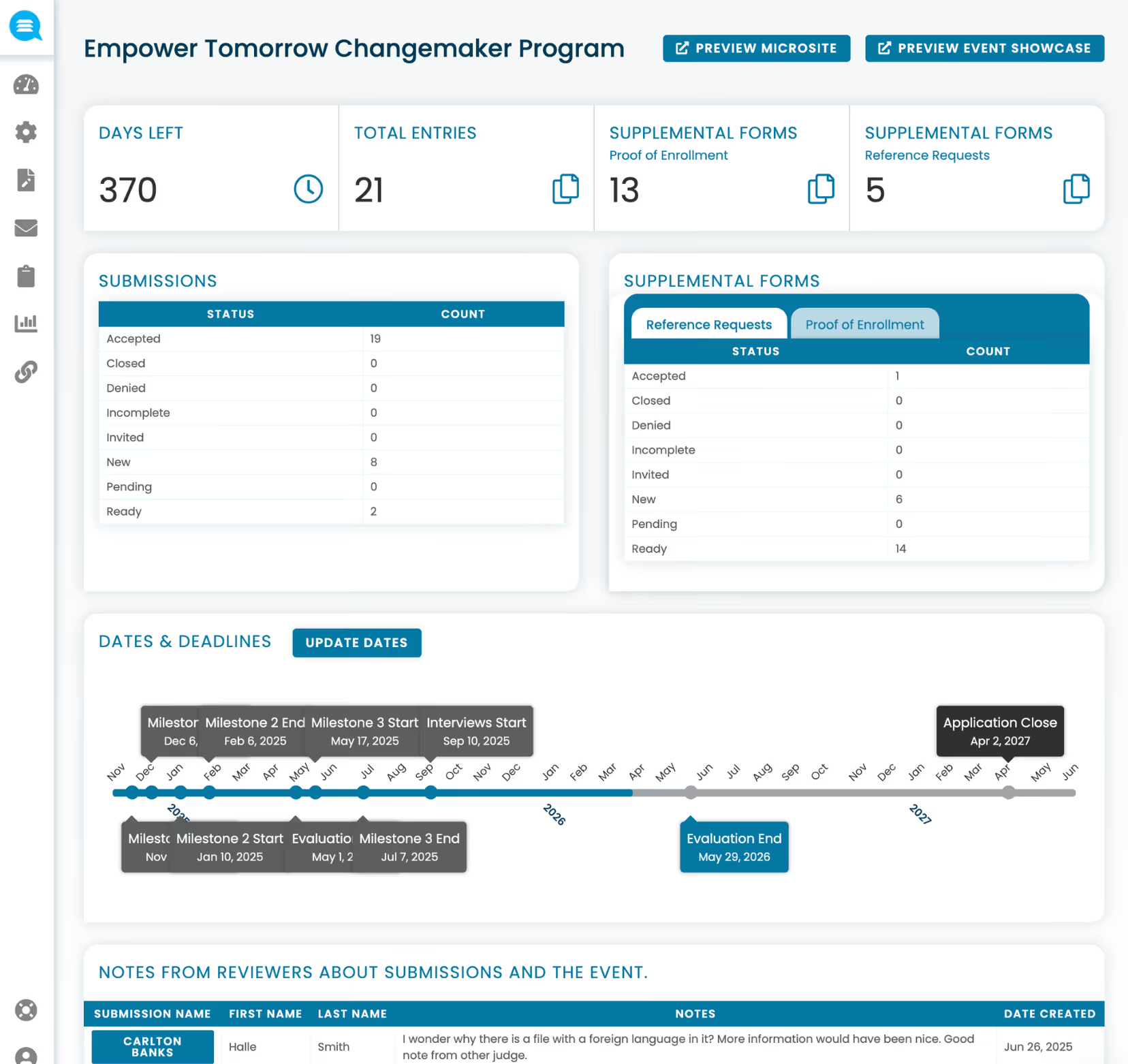
Dashboard for Empower Tomorrow Changemaker Program showing 370 days left, 21 total entries, 13 proof of enrollment and 5 reference request forms. Submission status table with counts, supplemental forms status for reference requests and proof of enrollment, timeline with milestones and deadlines from 2023 to 2027, and reviewer notes on submissions with names and dates.

See Reviewr In Action

Sound Familiar?

A Day in the Life of Scholarship Management

This isn't a bad day. This is every day.
> Scroll through to read the story
8:14 AM
An applicant emails asking if their application was received and whether their references have submitted yet. You check three different tools to piece together an answer.
8:47 AM
You open your online form tool, export all submissions to a spreadsheet, and spend the next hour manually compiling individual scholar packets — copying, pasting, renaming files.
9:52 AM
A reviewer replies-all asking where the scoring rubric is. It was in a different email thread from two weeks ago. Two other reviewers still haven't started — they say they "didn't know it was time."
10:30 AM
You realize 12 applications are missing letters of recommendation — with the deadline in 4 days. You start manually emailing each reference.
11:30 PM
You realize 12 applications are missing letters of recommendation — with the deadline in 4 days. You start manually emailing each reference.
12:10 PM
You download scoring spreadsheets from each judge and start recompiling them into a master sheet — only to find a broken formula and three judges with incomplete scores.
1:15 PM
The committee wants a list of finalists. You spend 90 minutes pulling data from the form tool into a spreadsheet and cleaning it.
2:30 PM
A rejected applicant's parent calls asking why their student wasn't selected. You have no documented scoring rationale, no audit trail, and no way to show the decision was fair.
3:40 PM
A board member asks how last year's winners are doing. You have no idea — post-award tracking never happened. They ask if the program is worth continuing to fund.
4:30 PM
Six award recipients still haven't submitted acceptance forms or tax documents. A multi-year scholar is up for renewal but you don't know if they're still enrolled or maintained their GPA. There's no system to collect any of it.
5:58 PM
You're still at your desk. The scholarship goes out next week. Nothing feels ready.
> Scroll through to read the story
7:48 AM
You open the scholarship application link. It's a long web form with dozens of questions, file uploads, and essay prompts. There's no login — just a page that warns not to refresh or close the browser. I hope i'm even eligible...
8:16 AM
Halfway through the form you realize you need your transcript and activity list. You leave the page to find the files and hope the form doesn't reset.
8:42 AM
The application requires two letters of recommendation. You email your teacher asking if they can write one and hope they have time before the deadline.
10:03 AM
Your teacher replies saying they can help but asks where the letter should be sent. You explain that you'll need the letter back so you can upload it into the application yourself.
11:18 AM
After nearly an hour of writing essay responses, the page refreshes and the form reloads. Your answers are gone. You start over.
1:07 PM
You finally submit the application. The page reloads with a short "Thank you for applying" message. No confirmation email arrives.
Three weeks later
You see a post announcing the scholarship winners. Your name isn't there.
9:12 AM
You email asking if your application was received. They reply saying they can't find your submission in the spreadsheet export.

11:48 AM
Your application was never reviewed. You were never considered for the opportunity. You're left wondering how you'll fund your education.
> Scroll through to read the story
7:32 AM
An email arrives inviting you to serve as a scholarship judge. The message includes a link to a Google Drive folder and a scoring spreadsheet.
8:04 AM
Inside the Drive folder are dozens of subfolders — one for each applicant. Every folder contains PDFs, transcripts, essays, and supporting documents.
8:47 AM
You open the scoring spreadsheet. Each applicant has a row with several scoring categories. You start downloading applicant packets so you can review them one by one.
9:36 AM
The first few applicants take a while. You read every essay carefully and try to apply the rubric consistently.
10:58 AM
By the fifteenth applicant the process starts to blur together. The packets are long and the spreadsheet keeps growing.
12:41 PM
You notice applicant names, schools, and personal details throughout the materials. There's no way to conduct a blind review.
2:18 PM
You begin moving faster just to get through the remaining submissions. The first applicant you reviewed this morning would probably receive a different score if you saw them now.
4:06 PM
Some questions become harder to score consistently. What felt like a "7" earlier now feels like a "5."
5:12 PM
You finish scoring and email the spreadsheet back to the program administrator.
Two weeks later
You see the winners announced. You have no visibility into how the final decisions were made or how scores from different judges were combined.
Six months later
You're asked to volunteer as a judge again next year. You pause before responding. Your time is valuable. The process was inefficient, and you're not confident the selections were fair. You're not sure you want to do it again.
> Scroll through to read the story
Month 1
You commit to funding a scholarship. You receive a short acknowledgment email thanking you for the contribution. The program launches, but you don't hear anything about how it's being managed.
Month 3
You ask for an update on the program. You're told applications were received and are currently "under review." You ask how many applicants applied. They say they'll check and get back to you.
Month 5
A recipient has been selected. You receive the student's name and a short bio. There's no insight into how many students applied, what the selection criteria were, or how the final decision was made.
Month 7
You start wondering how competitive the scholarship was. Were there 20 applicants or 200? Was the process fair? There's no data to help answer the questions.
Month 9
You ask how the recipient is doing. The program officer says they'll reach out to the student and see if they can provide an update.
Month 10
You receive a brief email: the student is "doing well in school." No transcript updates, no story, no measurable impact.
Month 12
Your board asks about the results of the scholarship you funded. How many students applied? How were finalists selected? What difference did the award make? You don't have answers.
Year 2 — 10:15 AM
You're asked whether you'd like to renew funding for the scholarship. Without visibility into the process or evidence of impact, you decide not to continue funding the program.
There's a better way.
Meet Reviewr.
Replace the chaos with a single connected system — built for every person in the scholarship lifcycle.
1

Less Energy. More Impact

You're spending more time in spreadsheets than making impact. Reviewr replaces the patchwork of spreadsheets, form tools, email, and shared drives with one platform for your entire scholarship lifecycle.
check
Complete program visibility — track every application, review stage, and deadline in a single operational dashboard
check
Automated workflows and reminders — keep applicants, references, and reviewers moving forward without manual follow-ups
check
Structured review and decision management — assign committees, manage scoring, and send award notifications in batches
check
Impact and compliance reporting — collect post-award updates and generate reports for leadership, donors, and boards
Dashboard for Empower Tomorrow Changemaker Program showing 370 days left, 21 total entries, supplemental forms counts, submission status counts, a timeline of important dates, and reviewer notes on submissions.
2

The Experience Scholars Deserve

The scholarship application should not be a barrier to success. Reviewr gives applicants a modern, guided experience with a living profile that follows them from application through post-award relationship.

check
Save progress and apply from anywhere — mobile-friendly applications with automatic save and resume
check
Simple reference collection — invite recommenders directly and track submissions without chasing emails
check
Clear status visibility — applicants always know what has been submitted, what is missing, and what happens next
check
A living applicant profile — documents, applications, and updates stay connected from submission through the post-award relationship
Online applicant form for Angie Quinn showing personal and academic information, with a question/comment section requesting a current transcript.
3

Efficient and Compliant Selections

Eliminate volunteer fatigue. Reviewr gives volunteer reviewers a structured environment where evaluating applicants is simple, consistent, and focused on the criteria that matter most. Everything reviewers need — applications, documents, and scorecards — lives in one streamlined workspace designed for fair, confident decisions.

check
Blind review capabilities — remove identifying information to help reduce unconscious bias
check
Structured scoring rubrics — guide reviewers with clear criteria and consistent evaluation standards
check
Score normalization across reviewers — balance scoring differences to ensure fair comparisons
check
All materials in one review workspace — applications, documents, notes, and scoring side-by-side for faster evaluation
Screenshot of an online submission form showing applicant Angie Quinn's personal and academic information, alongside a pop-up table listing submissions by David Rose, Don Draper, and Mary Richards with reviewer statuses and average scores.
Full Scholarship Lifecycle Management
Click any stage to see how Reviewr handles every step of your scholarship program.

Program Setup

Before applications open, the success of your entire scholarship cycle is already being determined. Eligibility criteria in scattered documents. Reviewer assignments in spreadsheets. The application built in a tool that has no idea what happens after someone hits submit. Nothing connected — and you don't discover the gaps until you're mid-cycle.
Key Capabilities
check_circle
Configure eligibility rules, application stages, deadlines, and evaluation criteria per program  
Every stage downstream runs exactly how you designed it
check_circle
Build your application structure — sections, required fields, file uploads, and conditional logic 
Reviewers evaluate clean, complete applications instead of chasing missing materials
check_circle
Set up communication templates for every stage  
Applicants stay informed automatically — no manual follow-up
check_circle
Manage one program or dozens from a single dashboard  
Always know exactly where every program stands
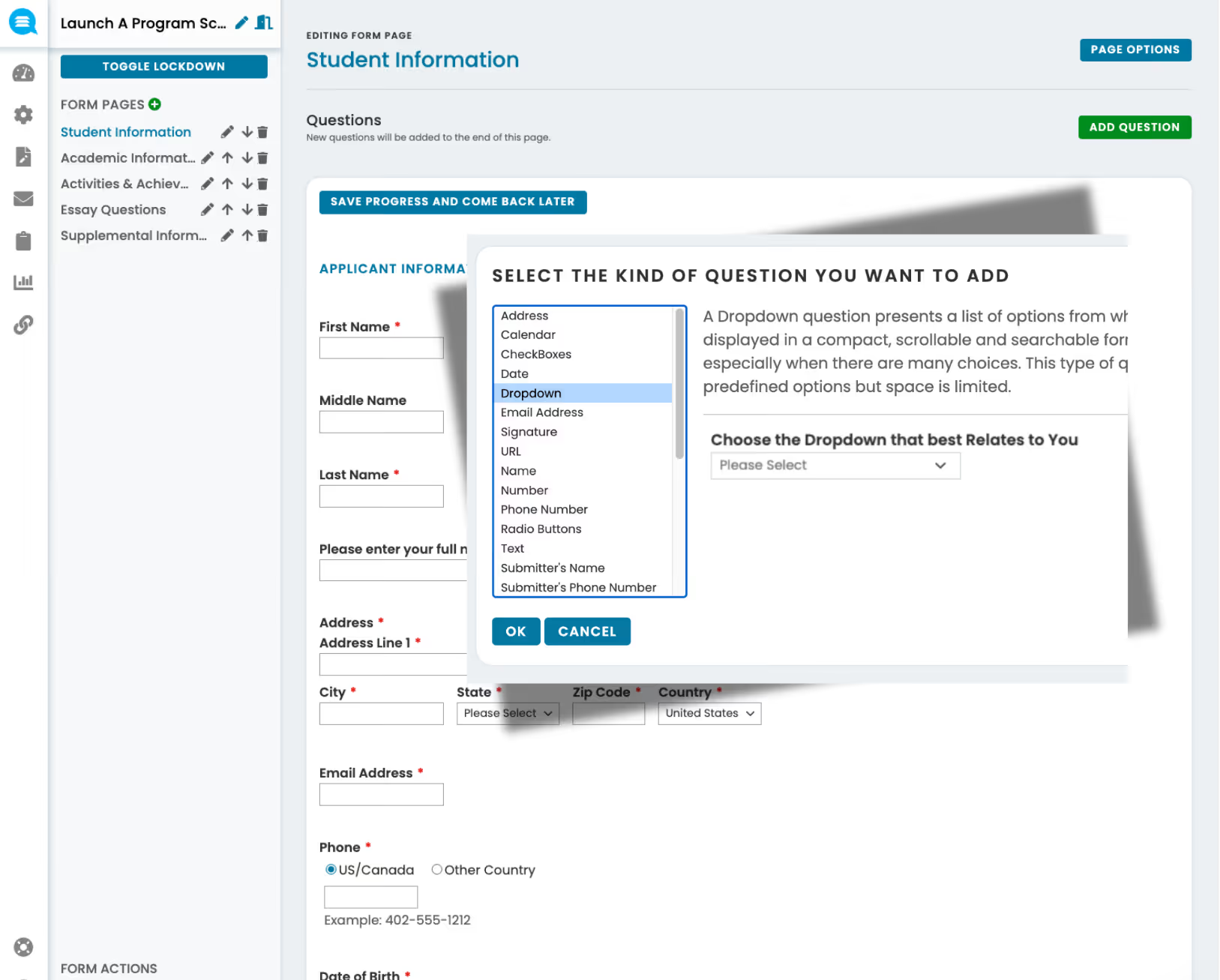
Form editing interface showing Student Information form with fields for applicant details and a pop-up for selecting question type including dropdown option.

Eligibility & Prequalification

Most scholarship platforms let everyone apply and sort out eligibility later — after wasting applicant time and leaving reviewers buried in ineligible applications. Reviewr screens at the front door and matches scholars to the right opportunities automatically.
Key Capabilities
check_circle
Define eligibility rules per program — GPA, enrollment, residency, financial need, and custom criteria 
Students know immediately if they qualify — no investing hours only to be rejected weeks later
check_circle
Automatically match applicants to scholarships they're eligible for based on what they submit
Scholars see the right opportunities — not every opportunity
check_circle
Ineligible applications are blocked before they enter the review pipeline
Your reviewers only see qualified applicants — no manually filtering out ineligible submissions
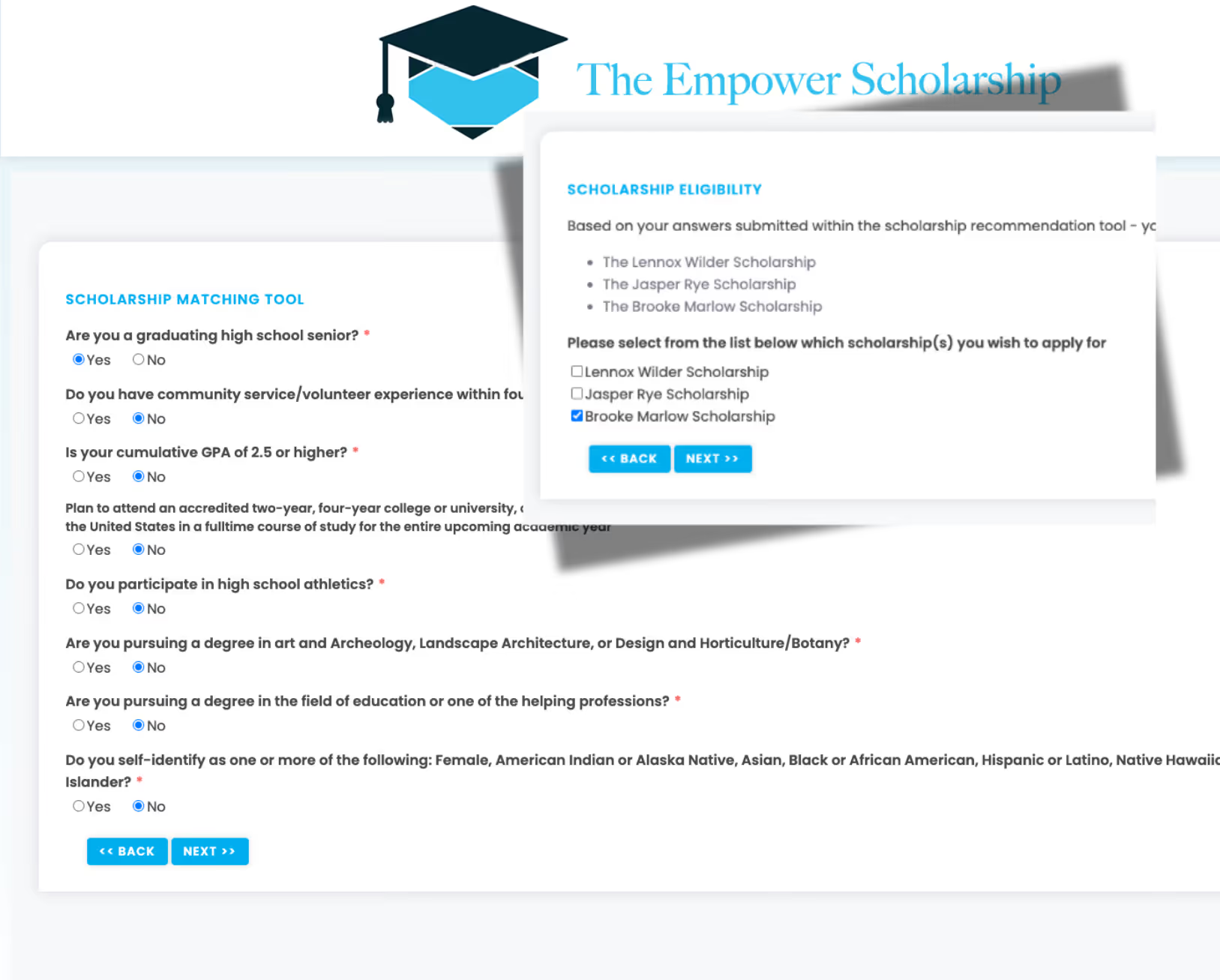
Scholarship Matching Tool form with questions about high school senior status, community service, GPA, college plans, athletics, degree pursuit, and ethnicity, alongside a Scholarship Eligibility section listing three scholarships and options to select one for application.

Scholar Experience

In most scholarship platforms, applicants are rows in a spreadsheet. They submit a form, hope it went through, and wait. Your team pieces together their information across email, file folders, and form exports. Reviewr gives every scholar a living profile — a single record that captures their application, documents, communications, and ongoing deliverables — in a centralized hub.
Key Capabilities
check_circle
Complete applicant profile — every form, file, message, and status change in one view  
See the full person, not a row in a spreadsheet
check_circle
Autosave, mobile-responsive, and guided application flow with progress tracking  
Students finish applications instead of abandoning them
check_circle
Post-award data collection flows back to the same profile — compliance docs, progress reports, renewal forms 
The scholar's record doesn't end at the award decision
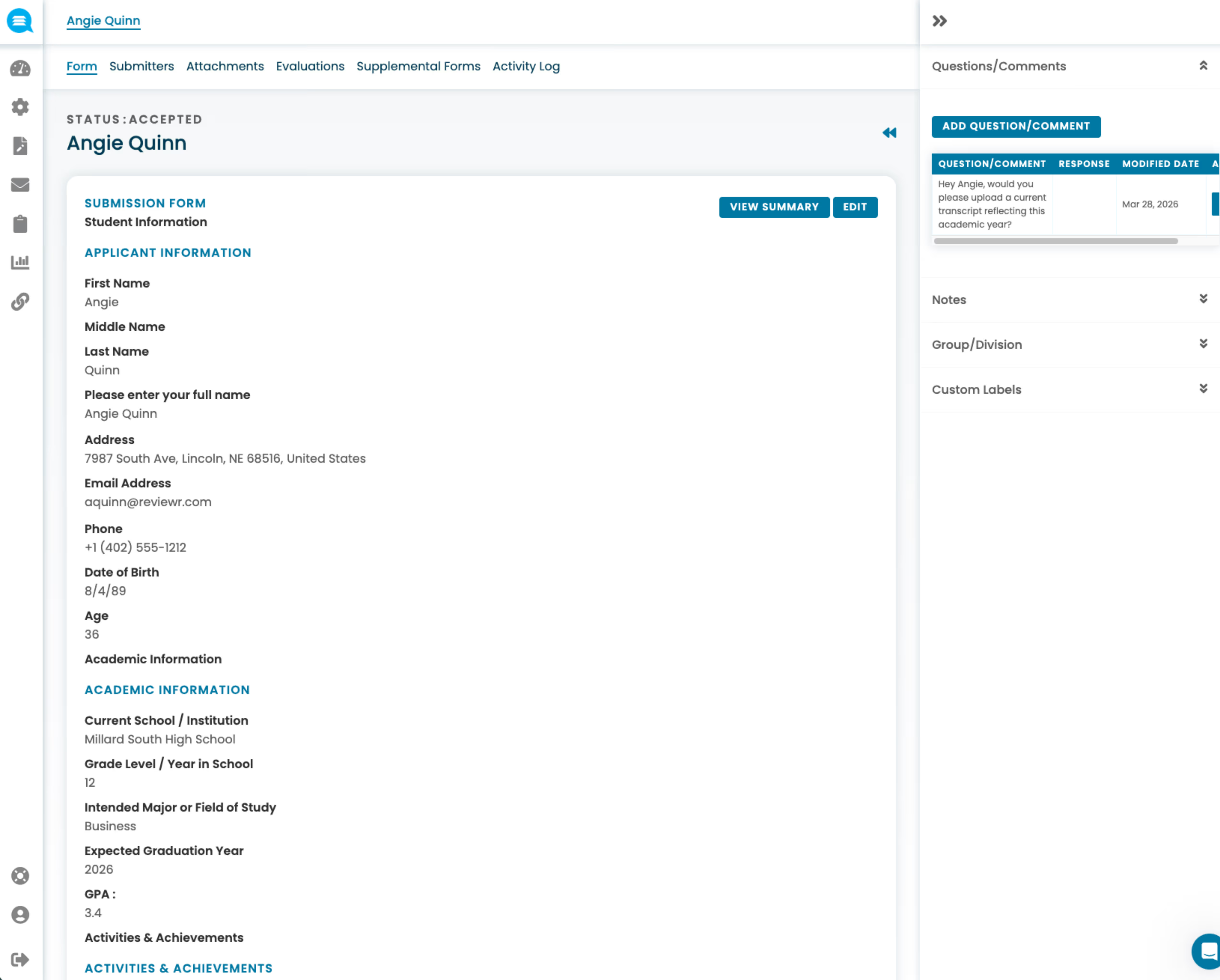
Applicant Angie Quinn's accepted submission form showing personal, academic information, and a question asking for a current transcript.

References & Recommendations

Chasing references is one of the most time-consuming parts of running a scholarship program. Emailing recommenders individually, tracking who's submitted, following up with those who haven't. Reviewr puts reference collection in the hands of the student and automates everything else.

Key Capabilities
check_circle
Students invite their own references directly from the application
No admin coordination — students manage their own recommenders
check_circle
Automated reminders sent on your schedule until received
No more manually following up with each reference
check_circle
Secure, confidential reference forms with enforced minimums before submission
Applications can't be submitted incomplete — recommenders submit privately
Screenshot of a recommendation letter submission interface showing a list of recommenders Clark Kent and Lois Lane, their email addresses, status as accepted, with detailed form for Clark Kent to upload a letter of recommendation for Angie Quinn.

Program Management

Applications are flowing in. Deadlines are approaching. Review teams need coordinating. This is where most teams lose control — toggling between spreadsheets, email, and form tools trying to figure out who's submitted, who hasn't, and what needs attention. Reviewr gives you one operational view of your entire program with the tools to act on it.

Key Capabilities
check_circle
Real-time pipeline views — see every application by status, filter by program, stage, or completeness
One glance tells you exactly where your program stands and where attention is needed
check_circle
Workflow automation — automated reminders, deadline alerts, and status notifications
No more manually emailing applicants or chasing reviewers — the system keeps things moving
check_circle
Control when applications move from collection to review to decisions — with clear stage transitions
Every phase has a defined start and end — no confusion about where the program stands
Dashboard for Empower Tomorrow Changemaker Program showing 370 days left, 21 total entries, 13 proof of enrollment and 5 reference request forms. Submission status table with counts, supplemental forms status for reference requests and proof of enrollment, timeline with milestones and deadlines from 2023 to 2027, and reviewer notes on submissions with names and dates.

Review & Evaluation

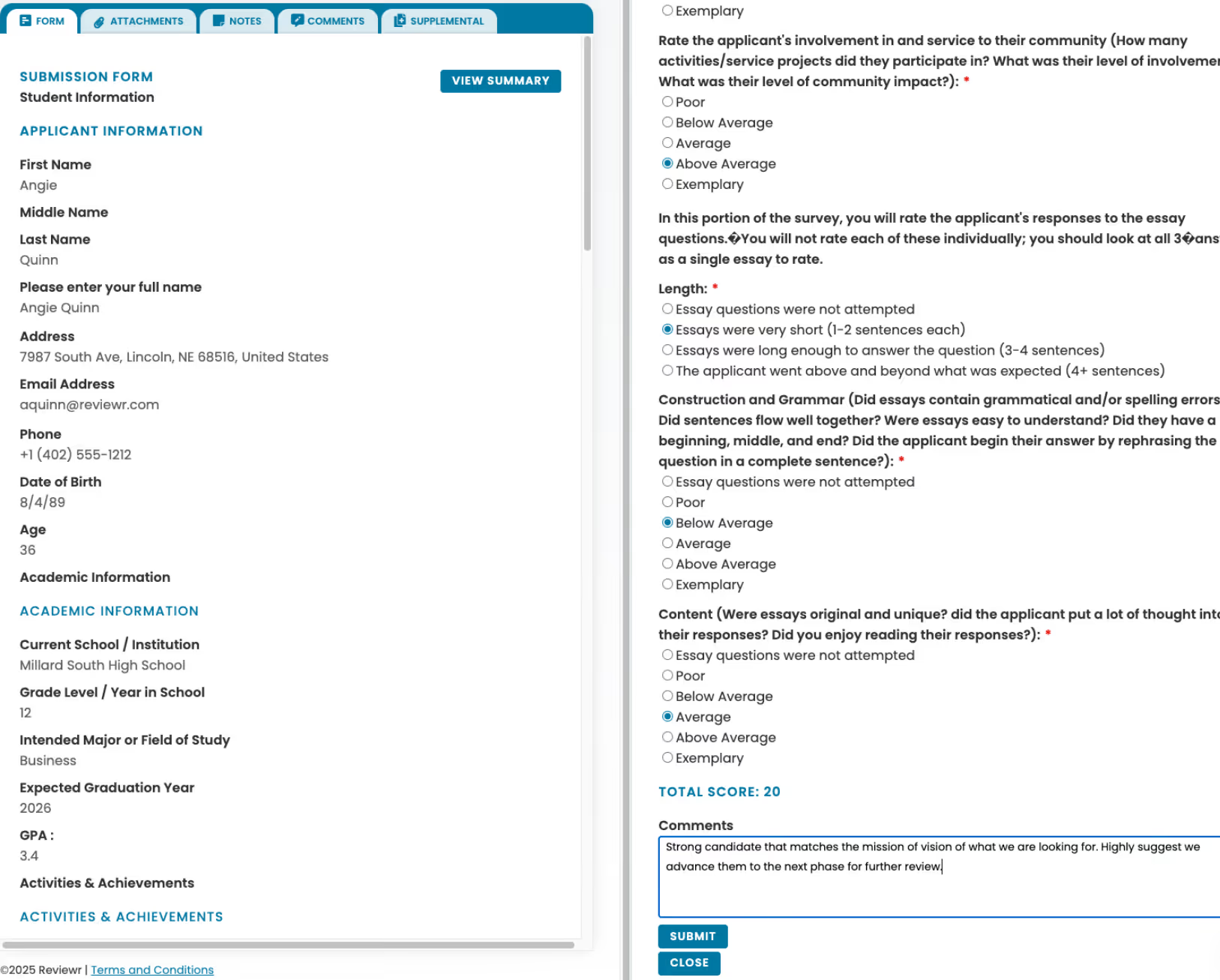
Every dollar awarded traces back to this stage. Inconsistent scoring, undetected bias, and undocumented decisions don't just produce unfair outcomes — they put your program's reputation at risk when donors, boards, or applicants ask how selections were made. Reviewr gives your panel the structure to evaluate fairly and the documentation to answer with confidence.
Key Capabilities
check_circle
Assign reviewers manually or automatically with workload balancing across your panel
Every application gets proper attention — no reviewer is overloaded or volunteer fatigue.
check_circle
Redacted review strips names, demographics, and identifying information from applications
Evaluations are based on merit, not who the applicant is
check_circle
Score normalization adjusts for strict and lenient reviewer tendencies automatically
An applicant's score reflects their merit, not which reviewer they were assigned to
check_circle
Standardized rubrics with weighted criteria and composite scoring
Every reviewer evaluates against the same framework — defensible if ever challenged
Online submission form showing applicant Angie Quinn's personal, academic details, and a review survey with ratings on community involvement, essay length, grammar, content, and a comment suggesting advancement for further review.

Award Decisions & Notifications

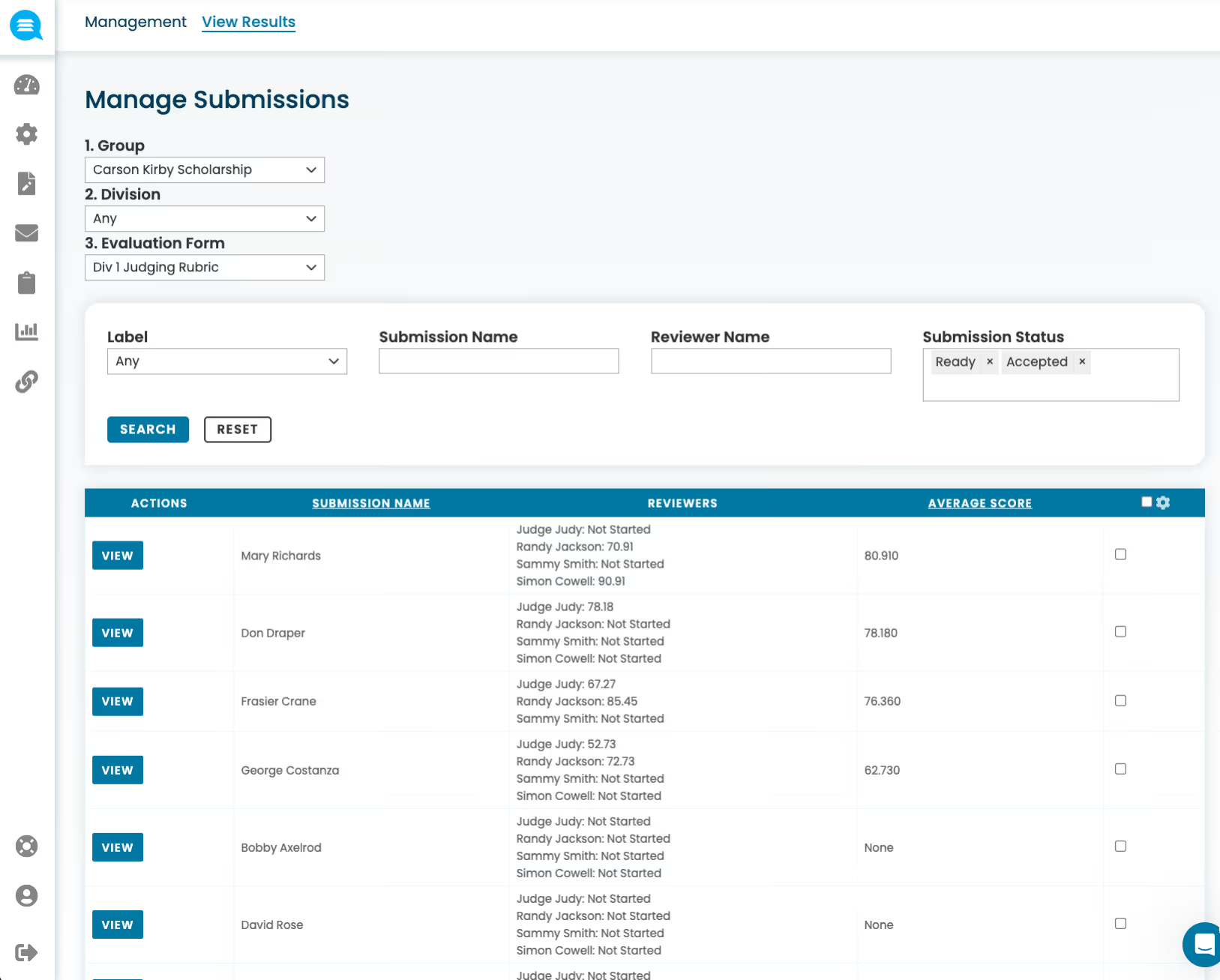
Reviews are complete and scores are in. For most teams this is where things stall — committees passing spreadsheets, award letters drafted one at a time, applicants waiting weeks to hear back. Reviewr moves you from scores to decisions to notifications in one connected workflow.
Key Capabilities
check_circle
Committee decision workflows with voting and approval chains
Every selection is structured and documented — not buried in email threads
check_circle
Batch personalized notifications — award letters, waitlist notices, and non-selection messages sent at once
Every applicant hears back professionally — no one falls through the cracks
check_circle
Program results and reporting — applicant volume, score distributions, award breakdowns, and demographic data
When donors or boards ask what happened this cycle, the answer is one click away
Webpage interface for managing scholarship submissions with filters for group, division, and evaluation form, listing names, reviewer scores, and average scores.

Acceptance & Compliance

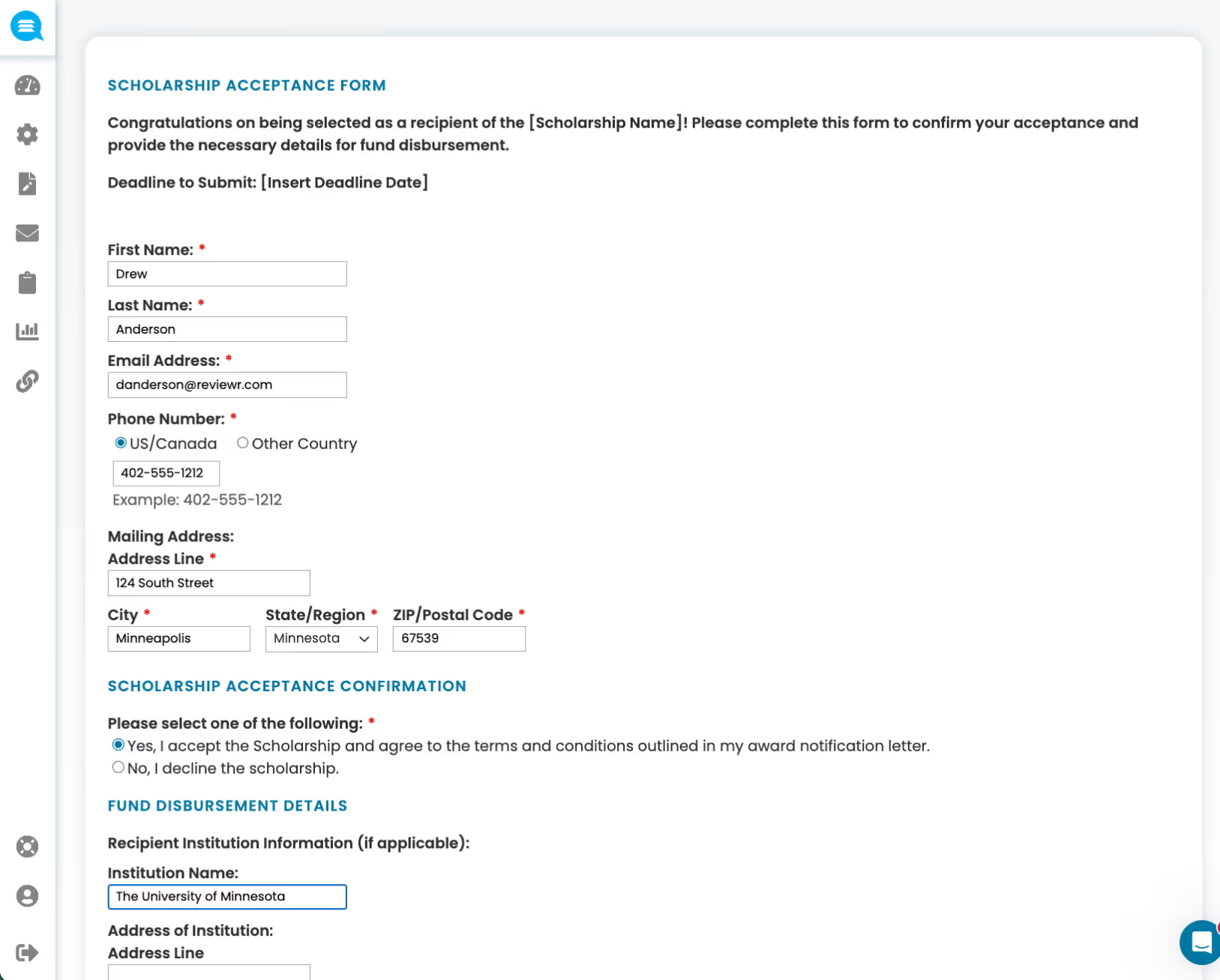
For most platforms — and most teams — the process ends when awards are announced. But for scholarship administrators, the real work is just starting. Acceptance forms, tax documents, enrollment verification, direct deposit setup — all collected manually, tracked in spreadsheets, and chased over email. Reviewr keeps the process going with the same structure and automation your program had before the award.
Key Capabilities
check_circle
Digital acceptance forms with e-signature and post-award document collection
Recipients accept and submit everything you need — W-9s, enrollment verification, direct deposit — in one place
check_circle
Automated reminders for missing or overdue documents with deadline enforcement  
No more chasing recipients by email — the system follows up until everything is in
Scholarship acceptance form with fields filled for recipient Drew Anderson, including contact info, mailing address in Minneapolis, and institution name University of Minnesota.

Renewals & Impact Reporting

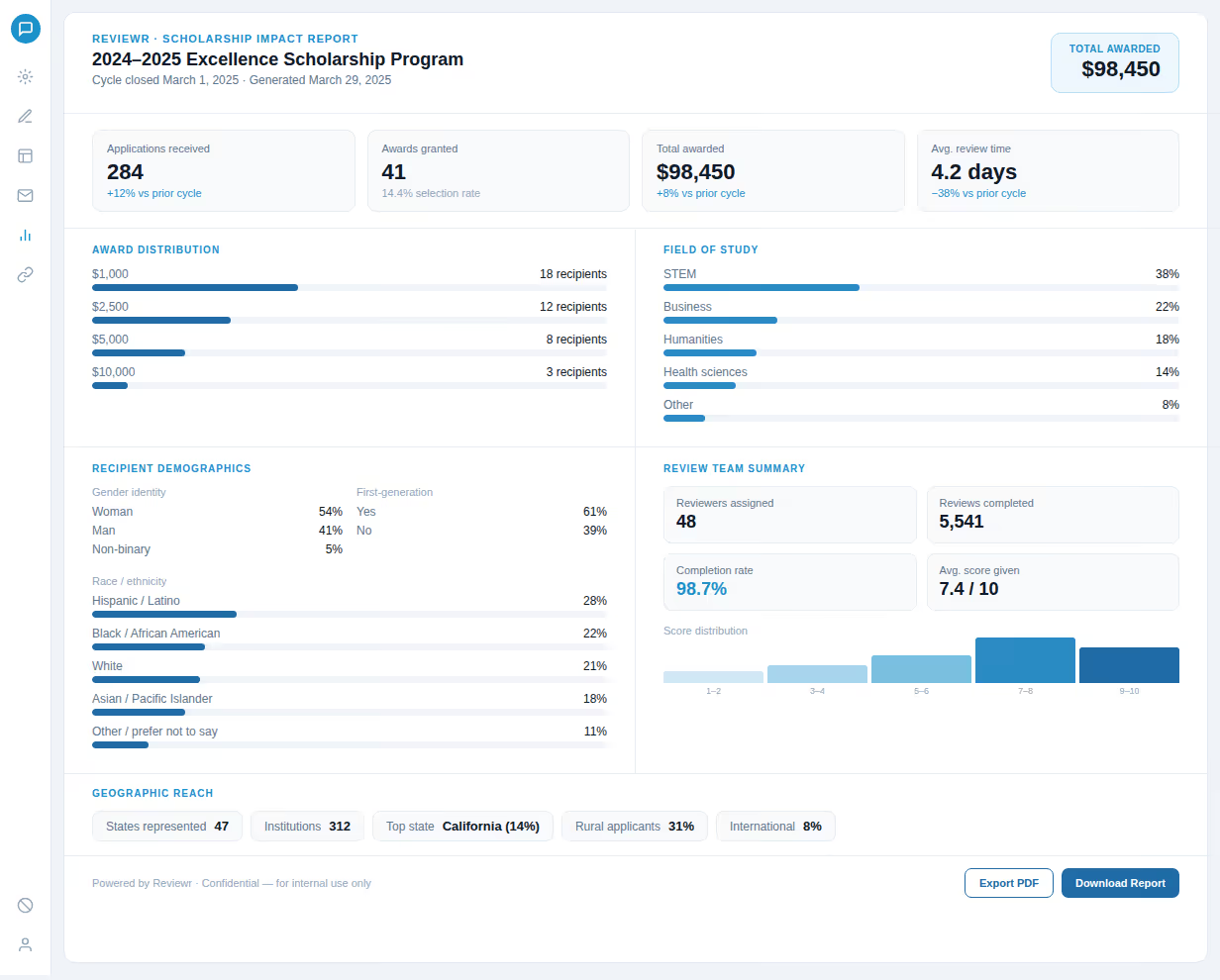
Awards go out. Then what? Multi-year commitments need tracking. Renewal eligibility needs verifying. Donors and boards want to know what their investment produced. Most teams cobble together answers from spreadsheets and manual outreach — if they track post-award outcomes at all. Reviewr keeps the data flowing after the award so you can manage commitments and prove impact without starting from scratch.
Key Capabilities
check_circle
Scholars update their profile each cycle — GPA, enrollment status, progress reports, and required documentation  
Updated data verifies ongoing eligibility and unlocks the next year's funding — no manual chasing
check_circle
Manage net new applicants and recurring scholars in the same program, same cycle  
No separate workflows for first-time applicants and renewals — everything runs through one system
check_circle
Impact reporting with exportable PDF and CSV for any audience  
When donors and boards ask what their investment produced, the answer is ready
2024–2025 Excellence Scholarship Program report showing 284 applications, 41 awards granted, total awarded $98,450, average review time 4.2 days, award distribution mainly at $1,000, STEM is the top field of study at 38%, recipient demographics by gender, race, and first-generation status, review team summary with 48 reviewers assigned and 5,541 reviews completed, and geographic reach across 47 states with California top state at 14%.
AI-Enhanced

Intelligent Tools Built into Every Stage

Reviewr's AI works in the background saving time, improving review quality and protecting program integrity.
description
Live
AI-Generated Application Summaries

Transform lengthy, multi-part submissions into concise reviewer briefs — pulling key qualifications, essay highlights, and supporting document details into a single overview so reviewers evaluate faster and more consistently.

insert_chart
Live
Score Normalization & Judging Tendency Analysis

Automatically detect strict and lenient scoring patterns across your review panel and normalize results — ensuring every submission is evaluated on a level playing field regardless of which reviewer it was assigned to.

search
Live
Smart Matching & Eligibility Screening

Use AI to match applicants to the right scholarships and verify eligibility criteria automatically — reducing unqualified submissions and routing applicants where they're the best fit.

verified_user
Coming Soon
AI & Plagiarism Detection

Identify AI-generated content and flag plagiarized material across essays and written responses — protecting program integrity and ensuring authentic submissions from every applicant.

visibility
Coming Soon
AI-Powered Data Redaction

Automatically redact sensitive or identifying information from essays and uploaded documents to enable blind review — without manual effort from staff.

smart_button
Coming Soon
OCR & Document Intelligence

Extract data from uploaded documents like transcripts, tax forms, and references — enabling form prefill for applicants and cross-validation against submitted responses to catch discrepancies.
Scholarship Success Stories

Real Scholarship Programs. Real Results.

When submissions, operations, and decisions live in separate systems, context is lost — and outcomes suffer.
Case Study
Case Study: Army Scholarship Foundation

Powering Secure, Scalable, and Fair Scholarship Management with Reviewr

reviewr Staff
Case Study
Case Study: Black Data Processing Associates

Powering the High School Coding Competition with Reviewr

reviewr Staff
Case Study
Case Study: American Association of Colleges of Osteopathic Medicine (AACOM)

Powering Research Grant Management with Reviewr

reviewr Staff

Common Questions About Reviewr

Find answers to questions about our platform's capabilities, integrations, and support.
How is Reviewr different from using form tools like Google Forms or SurveyMonkey?

Form tools collect submissions — that's where they stop. Reviewr manages your entire scholarship lifecycle: applications, eligibility screening, reference collection, blind review, scoring, committee decisions, award notifications, post-award compliance, renewals, and impact reporting. Everything connected in one platform instead of spread across disconnected tools.

What separates Reviewr from other scholarship management platforms?

Reviewr manages the full scholarship lifecycle — from application through post-award compliance, multi-year renewals, and impact reporting — where most platforms stop at the award decision. At the core is an industry-leading review and selection engine with blind review, standardized rubrics, score normalization, and AI-powered capabilities like application summaries and smart eligibility matching. The result is a platform built for how scholarship programs actually operate — not just how they collect applications.

Can we manage multiple scholarship programs in one account?

Yes. Each program gets its own eligibility rules, application forms, review criteria, timelines, and communication templates — all managed from a single dashboard. Whether you run one scholarship or a hundred, every program is visible in one place.

How does Reviewr ensure fair and defensible selection?

Blind review strips identifying information from applications. Standardized rubrics with weighted criteria ensure every reviewer evaluates against the same framework. Score normalization adjusts for strict and lenient tendencies across your panel. Every score, vote, and decision is documented with a full audit trail.

What reporting can we provide to donors and boards?

Impact reporting, outcome tracking, and exportable reports in PDF and CSV. Track applicant volume, award breakdowns, demographic data, and post-award outcomes like GPA and enrollment status — so you can demonstrate program ROI to any audience.

How does Reviewr handle renewals and multi-year scholarships

Scholars update their profile each cycle with current GPA, enrollment status, and required documentation. You manage net new applicants and recurring scholars in the same program — no separate workflows. Updated data drives renewal decisions and feeds directly into impact reporting.

Can we migrate data from our current system?

Yes. Reviewr supports importing existing submissions so you don't have to start from scratch. The onboarding team works with you to migrate your data and ensure a smooth transition from your current process.

Is Reviewr secure and compliant?

Yes. Reviewr is SOC 2 Type II certified with encryption in transit and at rest, role-based access controls, field-level data visibility, and full audit logs — meeting requirements for handling sensitive student data.

How long does it take to get up and running?

Most scholarship programs are live within days. Reviewr is a modern SaaS platform — you can self-launch using built-in guides and a comprehensive knowledge base, or work directly with a scholarship expert for guided implementation and hands-on training.


70% less work. 3x more impact.