Open Call Management Platform

Deliver Better Programs with Better Submissions

A full lifecycle platform for open calls of any kind — built to collect the right submissions, coordinate expert review, and make confident selection decisions that shape your best programming.
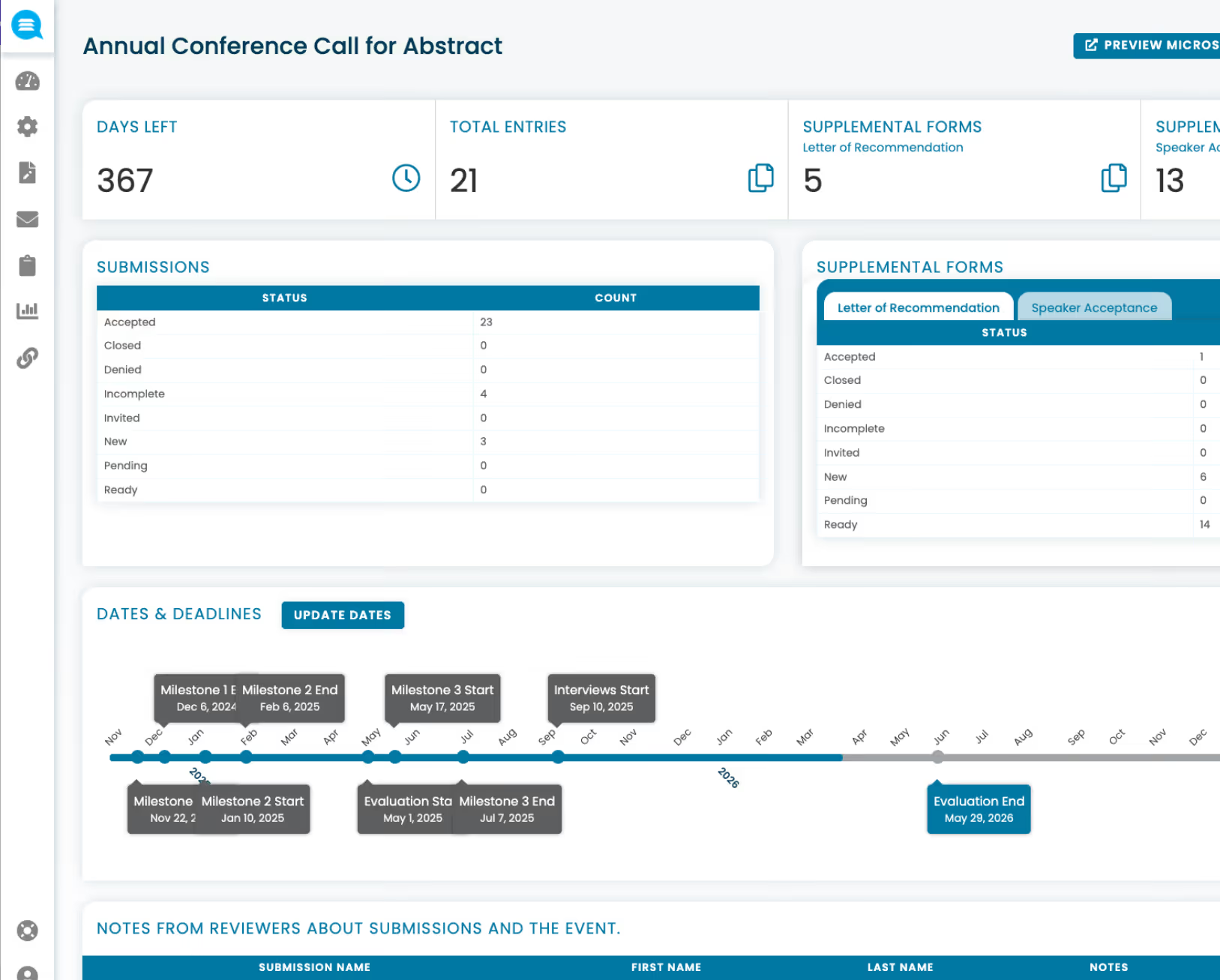
Dashboard for Annual Conference Call for Abstract showing 367 days left, 21 total entries, 5 letters of recommendation, 13 speaker acceptance supplemental forms, tables of submission and supplemental form statuses, a timeline of dates and deadlines from Nov 2024 to May 2026, and a notes section for reviewers.

See Reviewr In Action

Sound Familiar?

A Day in the Life of Open Call Management

This isn't a bad day. This is every day.
> Scroll through to read the story
8:14 AM
A submitter emails asking if their entry was received and whether their co-author has been added. You check three different tools to piece together an answer.
8:47 AM
You export all submissions to a spreadsheet and spend the next hour manually sorting them by track, tagging topics, and compiling individual reviewer packets — copying, pasting, renaming files.
9:52 AM
A reviewer replies-all asking where the scoring rubric is. It was in a different email thread from two weeks ago. Two other reviewers still haven't started — they say they "didn't know it was time."
10:30 AM
A strong submission came in from a well-known contributor whose name is visible throughout the materials. There's no blind review in place and no way to ensure the evaluation will be objective.
11:30 PM
You realize several submissions are missing required supporting documents with the deadline in 3 days. You start manually emailing each submitter.
12:10 PM
You download scoring spreadsheets from each reviewer and start recompiling them into a master sheet — only to find a broken formula and three reviewers with incomplete scores.
1:15 PM
The program committee wants a ranked list by track. You spend 90 minutes pulling data from the form tool into a spreadsheet and cleaning it manually.
2:30 PM
A rejected submitter emails asking why their entry wasn't selected. You have no documented scoring rationale, no audit trail, and no way to show the decision was fair or consistent.
4:30 PM
Accepted submitters need to confirm participation and submit final deliverables. You have no system to collect any of it. You start drafting individual emails.
5:58 PM
You're still at your desk. Your program opens in six weeks. Nothing feels ready.
> Scroll through to read the story
7:48 AM
You find the submission portal. It's a basic web form with no login, no save functionality, and a warning not to close the browser. You start filling it out and hope nothing goes wrong.
8:30 AM
The form asks for your co-author's information. There's no way to add them as a collaborator — you copy and paste their details in manually and hope it's formatted correctly.
9:15 AM
Halfway through, you realize you need a formatted version of your entry and an institutional affiliation document. You leave the page to find the files and hope the form doesn't reset.
10:45 AM
After 45 minutes of work, the page times out. Your answers are gone. You start over — or decide not to.
1:07 PM
You finally submit. A short confirmation message appears. No email arrives. You have no idea if your entry was received or if anything is missing.
Three weeks later
The selections are announced. Your entry wasn't chosen. You never received any communication — not a status update, not a thank you, not a reason. You found out by checking the program website.
> Scroll through to read the story
7:32 AM
An email arrives asking you to review submissions. It includes a link to a shared drive folder and a spreadsheet rubric.
8:04 AM
Inside the folder are dozens of subfolders — one per submission. Each contains PDFs and supporting documents in inconsistent formats with no standardized structure.
9:36 AM
You open the scoring spreadsheet and start downloading submission packets one by one to review them alongside the criteria.
10:58 AM
By the tenth submission the process starts to blur. Several submitters included their names and affiliations prominently throughout the materials. You're trying to stay objective but it's difficult.
12:41 PM
Your scores from this morning feel inconsistent with where you are now. The criteria felt straightforward at first but are harder to apply consistently across different submission formats and lengths.
4:06 PM
You finish and email the spreadsheet back. You're not confident your scores are comparable to what other reviewers submitted.
Two weeks later
The selections are announced. You have no visibility into how scores were combined or how final decisions were made. You're asked to review again next year and pause before saying yes.
There's a better way.
Meet Reviewr.
Replace the chaos with a single, connected system — built for every person in the call for proposal cycle.

Professional Submission Experience

Give submitters the experience your program deserves — with structured forms, co-author management, and complete validation that ensures every entry arrives ready to review.
check
Guided submission forms with word limits and formatting requirements
check
Co-author and co-contributor management
check
Co-author and co-contributor management
check
Mobile-responsive, autosave, and progress tracking
check
Supporting document collection and file uploads
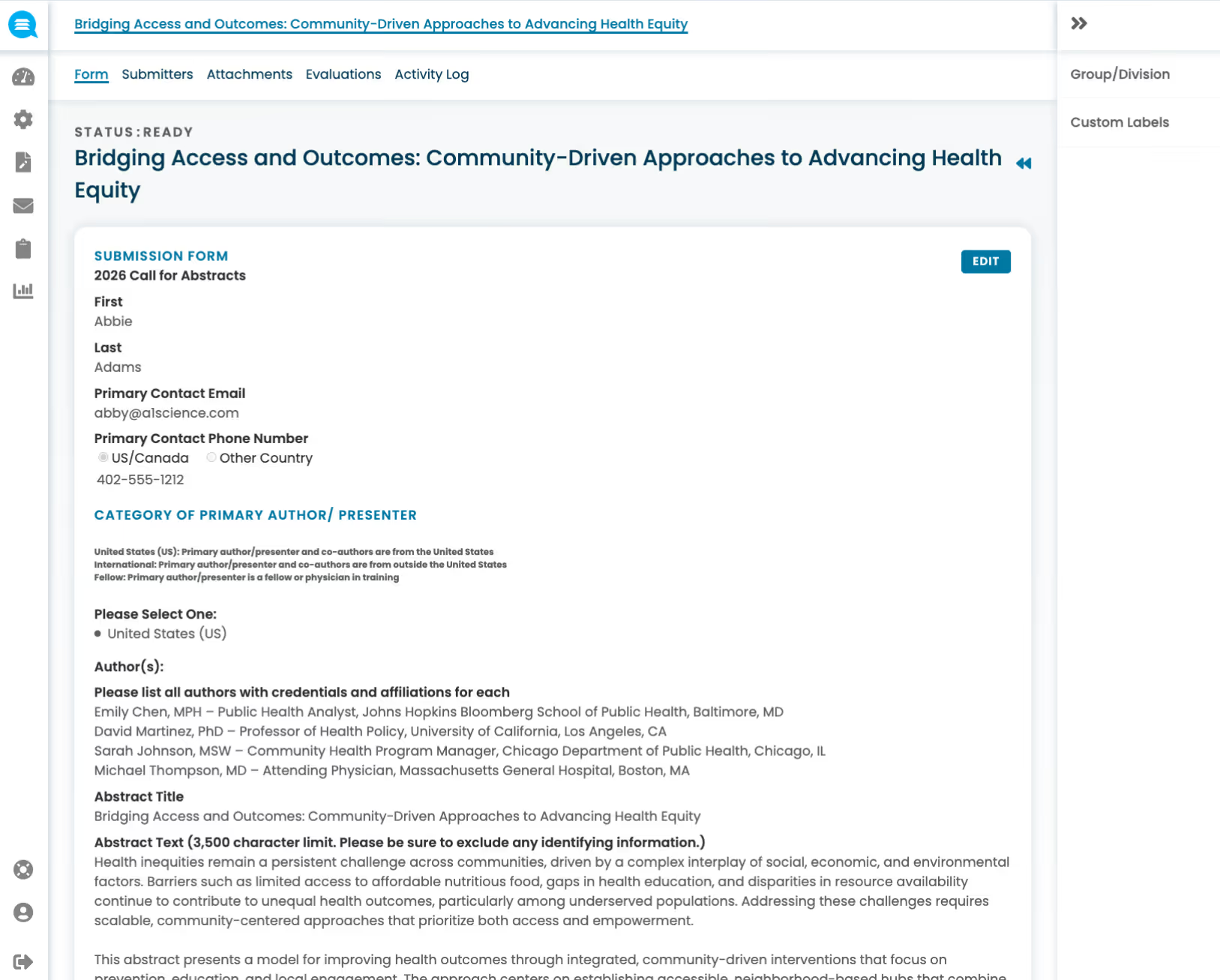
Submission form for 2026 Call for Abstracts titled 'Bridging Access and Outcomes: Community-Driven Approaches to Advancing Health Equity,' showing author details, category selection, author list with credentials, and abstract text input.

Expert Review at Scale

Give your review committee the structure they need — with blind review, conflict disclosure, and score normalization that makes every evaluation fair and defensible.
check
Reviewer assignment by track, expertise, or workload
check
Conflict-of-interest disclosure and recusal management
check
Blind review to reduce bias during evaluation
check
Standardized rubrics for consistent scoring across reviewers
check
Score normalization to account for strict and lenient tendencies
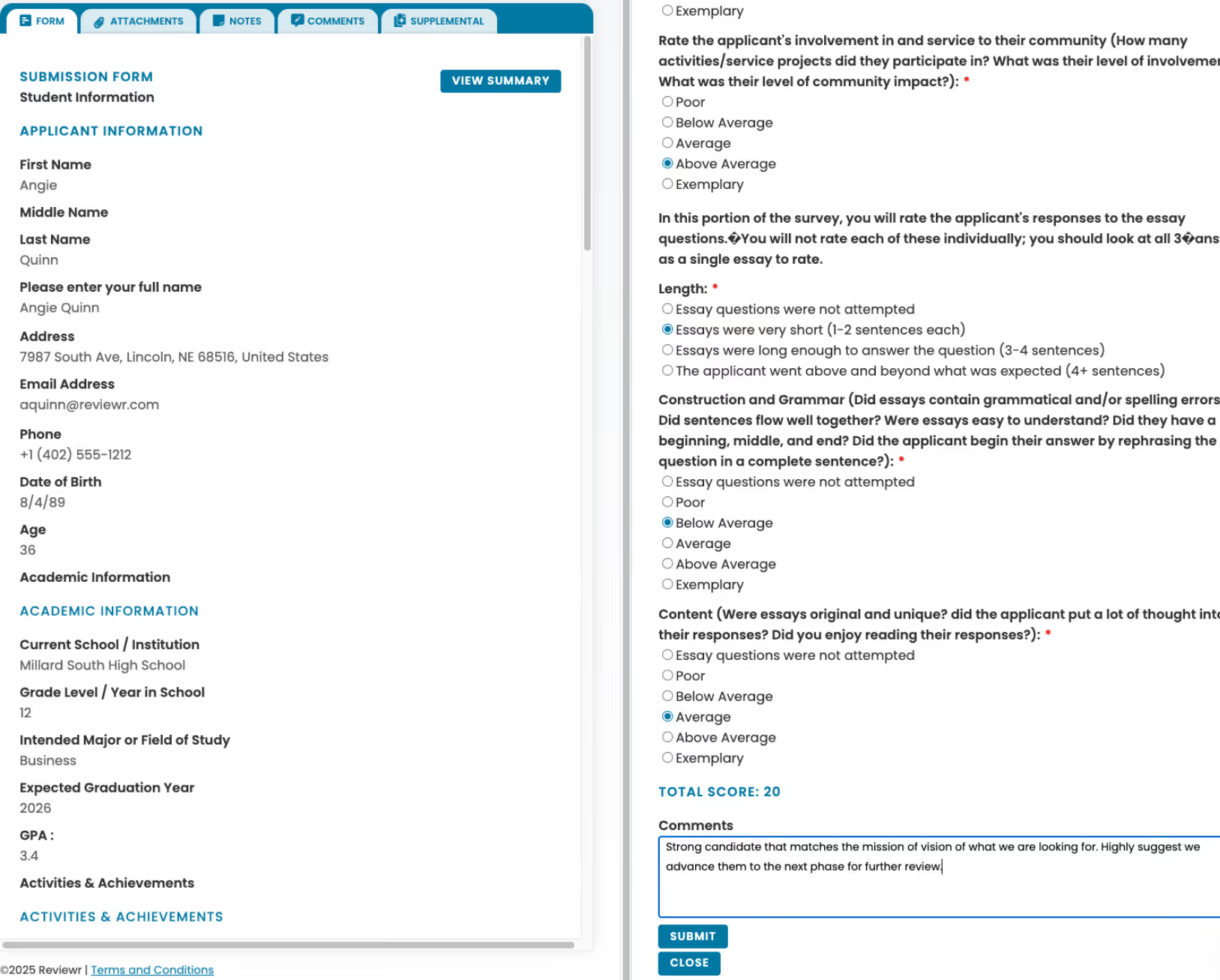
Online submission form showing applicant Angie Quinn's personal, academic details, and a review survey with ratings on community involvement, essay length, grammar, content, and a comment suggesting advancement for further review.

Selection, Notification & Follow-Through

From reviewer scores to final decisions to post-selection deliverables — all in one connected workflow that keeps everyone informed and nothing falling through.
check
Committee voting and approval workflows
check
Batch personalized notifications for accepted, rejected, and waitlisted submitters
check
Post-selection forms for confirmations and final deliverables
check
Automated reminders for outstanding requirements
check
Program analytics and exportable reports for leadership and boards
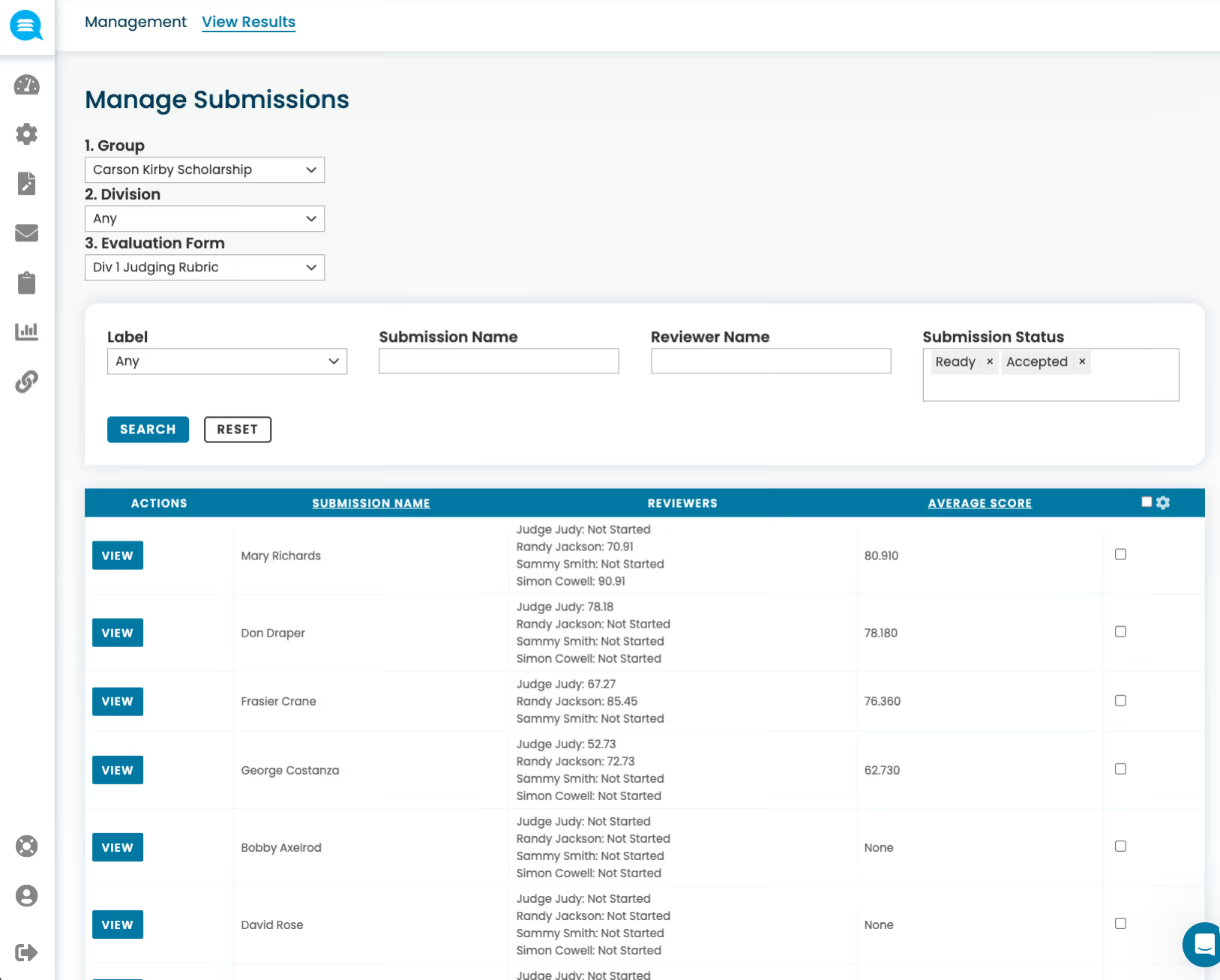
Webpage interface for managing scholarship submissions with filters for group, division, and evaluation form, listing names, reviewer scores, and average scores.
Full Open Call Lifecycle Management
Click any stage to see how Reviewr handles every step of your open call program.

01 — Program Setup & Configuration

Key Capabilities
check_circle
Configure tracks, submission types, and requirements per program
Every stage downstream runs exactly how you designed it
check_circle
Define character limits, required fields, file upload requirements, and supporting document rules
Submitters know exactly what's expected before they start
check_circle
Set up submission deadlines, review stages, and notification templates
A clear timeline keeps everyone on track with no manual follow-up
check_circle
Manage one open call or an annual portfolio from a single dashboard
Always know exactly where every program stands
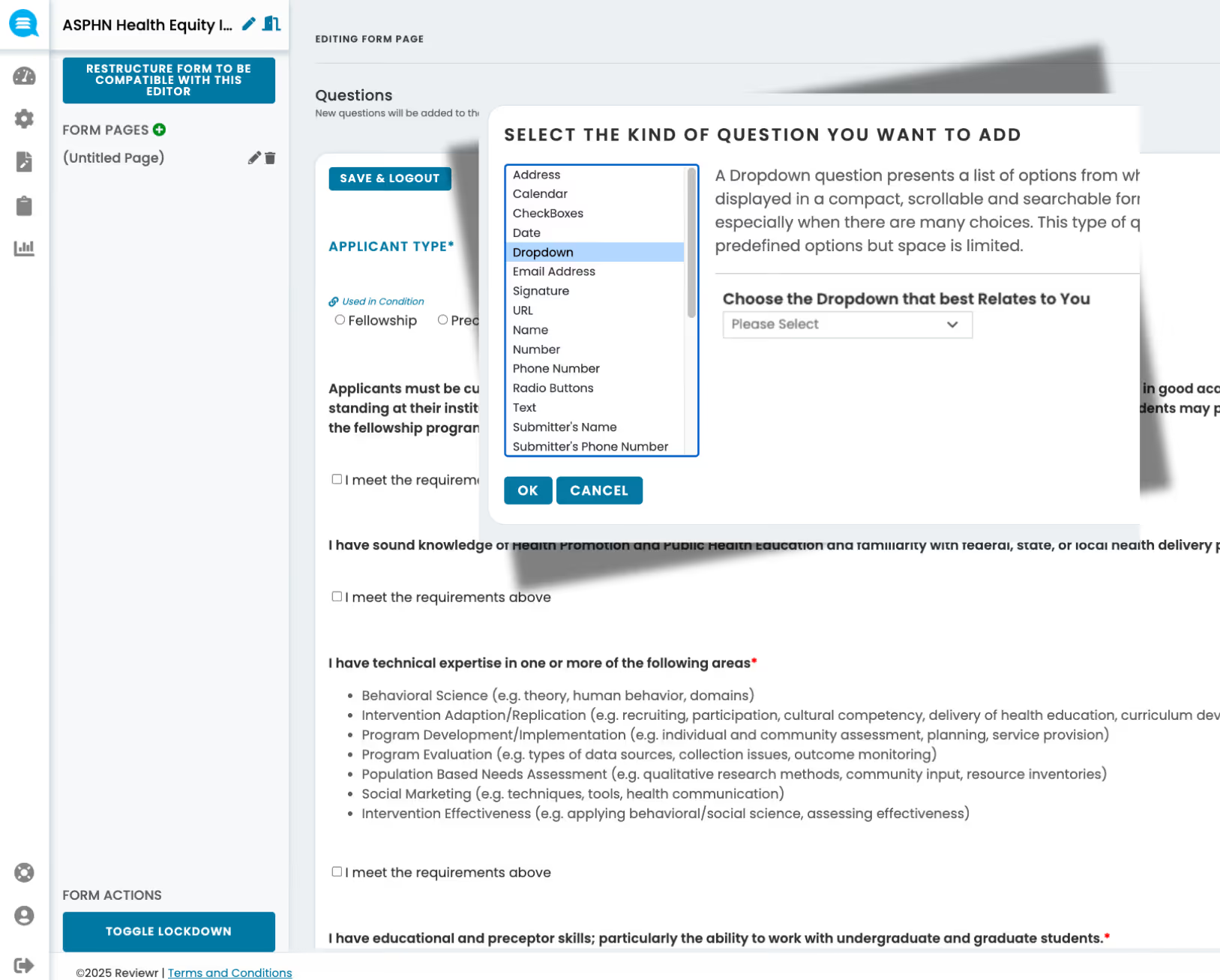
User interface of a form editor showing selection of question type dropdown with options like Address, Calendar, CheckBoxes, and explanation of dropdown question usage.

02 — Submission & Author Management

Key Capabilities
check_circle
Structured submission forms with character limits, formatting requirements, and co-author management
Accept complete, properly formatted submissions every time
check_circle
Autosave, mobile-responsive, and guided submission flow with progress tracking
Submitters finish submissions instead of abandoning them
check_circle
Supporting document collection, submitter bio capture, and any additional materials your program requires
Everything you need to evaluate entries in one submission
check_circle
Save and return with automatic progress preservation
No lost work, no frustrated submitters starting over
Web interface showing submitter Angie Quinn's accepted status, contact details, editors list including Angie Quinn and Tony Stark, and a note from Kyle Fredrickson requesting Tony to enter details for pages 2-3.

03 — Submitter Information & Conflict Management

Knowing who submitted and managing potential conflicts of interest is essential — but most open calls collect submitter information in unstructured text fields with no conflict tracking. Reviewr treats submitter data and conflict disclosure as a structured part of the submission process from the start.

Key Capabilities
check_circle
Structured collection of submitter bios, affiliations, and contact information
Build complete submitter profiles automatically
check_circle
Conflict-of-interest disclosure allows reviewers to self-identify and recuse from submissions where a conflict exists
Conflicts are surfaced and managed before scoring begins
check_circle
Co-author and co-presenter management with designated contact person
Handle multi-author or multi-presenter submissions without coordination headaches
check_circle
Submitter history and profile across multiple submission cycles
Know who your most engaged contributors are year over year
Submission form for 2026 Call for Abstracts titled 'Bridging Access and Outcomes: Community-Driven Approaches to Advancing Health Equity,' showing author details, category selection, author list with credentials, and abstract text input.

04 — Submission Management & Organization

Managing hundreds or thousands of submissions across tracks is a logistics challenge. Most programs resort to spreadsheets, manual tagging, and reactive status tracking. Reviewr organizes submissions automatically as they arrive so you always know exactly where your program stands.
Key Capabilities
check_circle
Real-time submission pipeline showing completeness, review status, and track assignments
One glance tells you exactly where your call stands
check_circle
Advanced filtering and search across tracks, topics, and submitter attributes
Find any submission instantly — no spreadsheet hunting
check_circle
Bulk actions for assigning reviewers, sending communications, or updating statuses
Manage at scale without repetitive manual work
check_circle
Completeness checks that flag incomplete submissions before the deadline
No surprises when review begins
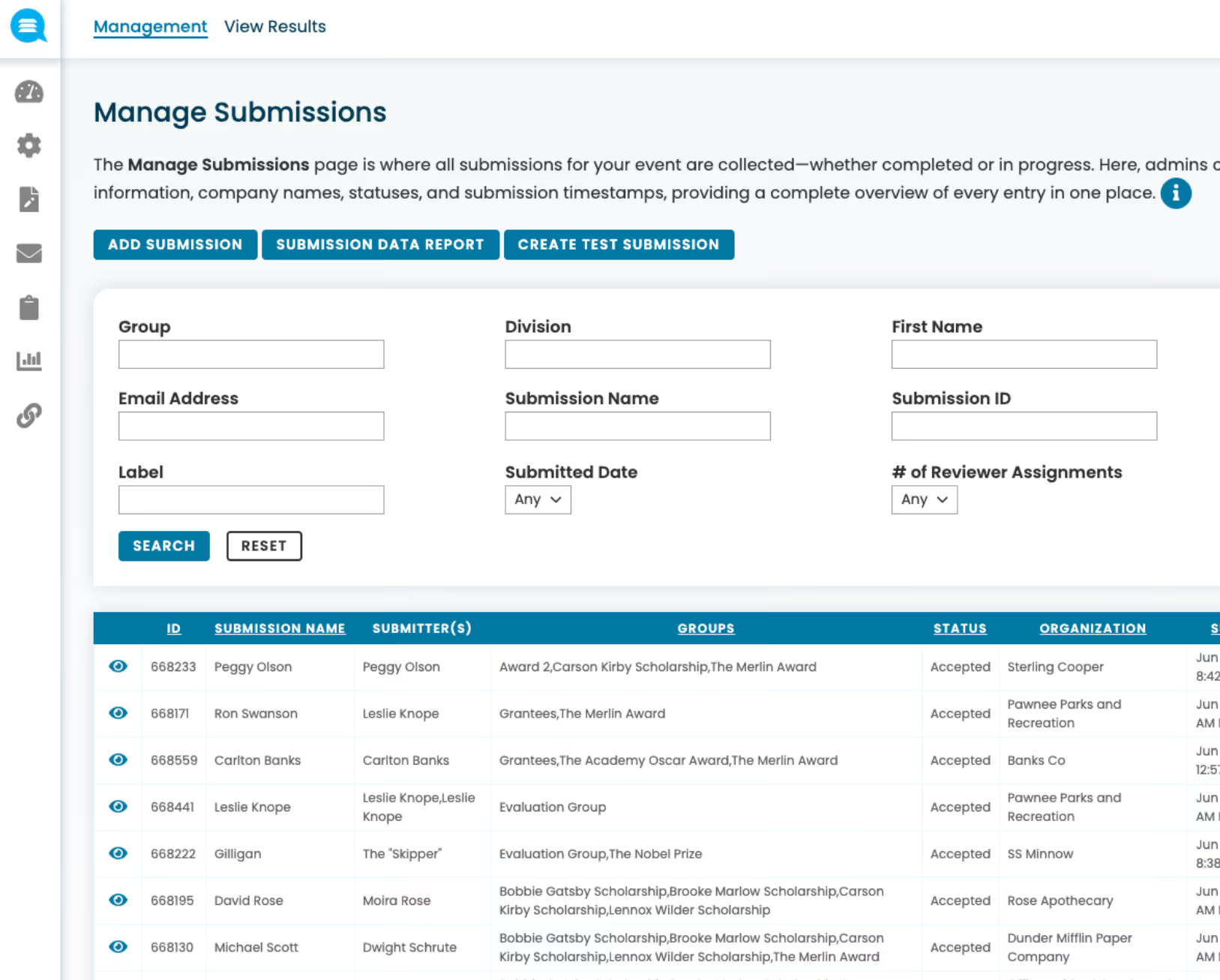
Manage Submissions page showing filters for group, division, first name, email, submission name and ID, label, submitted date, and reviewer assignments, plus a table listing submissions with columns for ID, submission name, submitter(s), groups, status, and organization.

05 — Expert Review & Scoring

Key Capabilities
check_circle
Assign reviewers by track, expertise, or workload — manually or automatically
Every submission gets properly matched evaluation
check_circle
Conflict-of-interest disclosure and recusal management built into the reviewer workflow
Reviewers flag their own conflicts and administrators manage assignments accordingly
check_circle
Blind review removes submitter names and affiliations during evaluation
Submissions are judged on merit, not reputation or relationship
check_circle
Score normalization adjusts for strict and lenient reviewer tendencies automatically
A submission's score reflects its quality, not which reviewer saw it
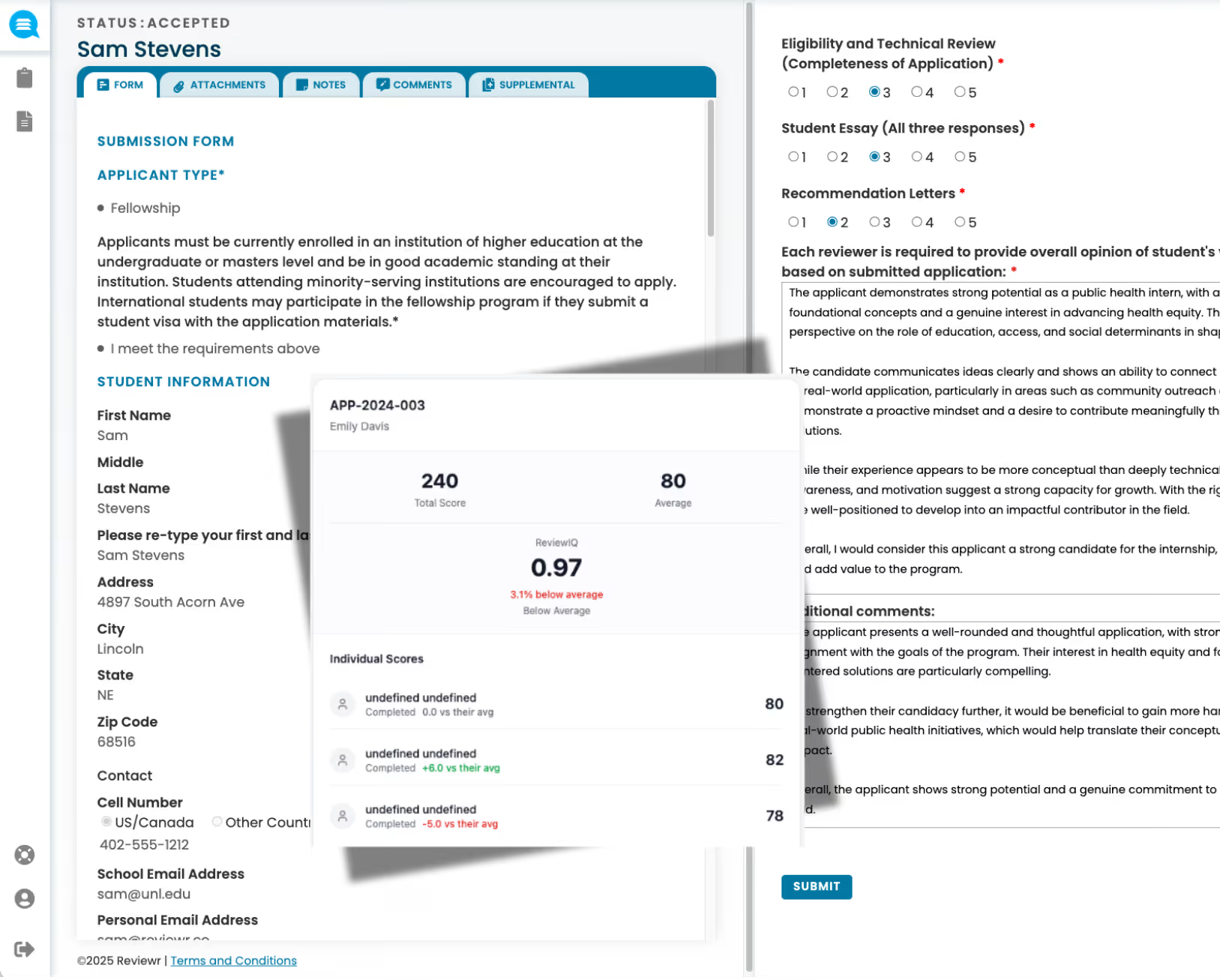
Online fellowship application form for Sam Stevens with eligibility criteria, student information, and recommendation review scores overlay showing total score 240, average 80, and detailed reviewer scores.

06 — Selection & Notification

Scores are in. Now comes the work of finalizing selections and notifying submitters. Most teams do this manually — exporting scores, drafting individual emails, updating spreadsheets. Reviewr automates the entire post-review workflow so nothing falls through.

Key Capabilities
check_circle
Selection workflows with committee voting and approval chains
Every decision is structured and documented — not buried in email threads
check_circle
Batch personalized notifications — acceptance letters, rejection notices, and waitlist communications
Every submitter hears back professionally — no one is left wondering
check_circle
Accepted submitter portal with next steps, requirements, and deadline information
Keep accepted submitters informed of next steps, requirements, and deadlines after selection
check_circle
Program results and reporting — submission volume, acceptance rates, track breakdowns, and reviewer data
When leadership asks how the call went, the answer is one click away
Webpage interface for managing scholarship submissions with filters for group, division, and evaluation form, listing names, reviewer scores, and average scores.

07 — Post-Selection & Reporting

Selection isn't the end. Accepted submitters need to confirm participation, submit final deliverables, and meet any outstanding requirements. Most teams manage this over email with no tracking and no automation. Reviewr keeps the structure going after the decision is made.
Key Capabilities
check_circle
Post-selection forms for confirmations, final deliverables, and any program requirements specific to accepted submitters
Collect everything you need without a single manual follow-up email
check_circle
Automated reminders for outstanding post-selection deliverables
The system follows up until everything is received
check_circle
Program analytics and exportable reports for leadership, sponsors, and boards
Submission trends, acceptance rates, and reviewer participation all in one place
check_circle
Year-over-year program data to inform future calls
Every cycle makes the next one smarter
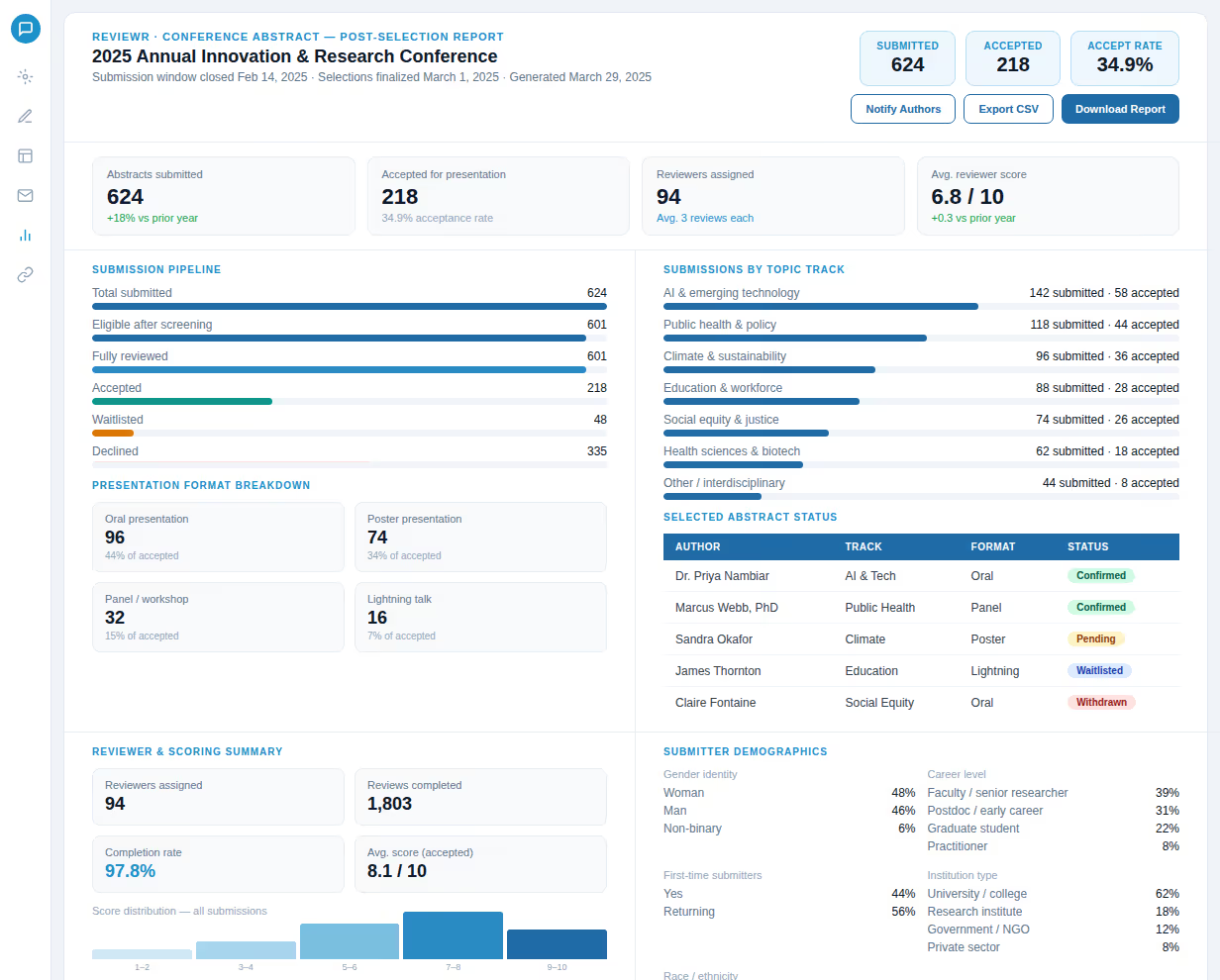
2025 Annual Innovation & Research Conference report overview showing submission stats, acceptance rate, presentation format breakdown, topic submissions, reviewer summary, and submitter demographics.
AI-Enhanced

Intelligent Tools Built into Every Stage

Reviewr's AI works in the background — saving time, improving review quality, and protecting program integrity.
description
Live
AI-Generated Proposal Summaries

Transform lengthy abstracts and proposals into concise reviewer briefs — pulling key research contributions, methodology highlights, and speaker credentials into a single overview so reviewers evaluate faster and more consistently.

insert_chart
Live
Score Normalization & Reviewer Tendency Analysis

Automatically detect strict and lenient scoring patterns across your program committee and normalize results — ensuring every proposal is evaluated on a level playing field regardless of which reviewer it was assigned to.

search
Live
Smart Matching & Track Assignment

Use AI to match proposals to the right tracks and session formats automatically — reducing misplaced submissions and routing speakers where their content fits best.

shield
Coming Soon
AI & Plagiarism Detection

Identify AI-generated content and flag plagiarized material across abstracts and proposals — protecting conference integrity and ensuring authentic submissions from every speaker.

visibility
Coming Soon
AI-Powered Data Redaction

Automatically redact speaker names, affiliations, and identifying information from proposals to enable blind review — without manual effort from program chairs.

description
Coming Soon
Topic Clustering & Theme Analysis

Extract topics and themes from proposals automatically to identify emerging trends, cluster related sessions, and build coherent conference tracks — helping you organize a more cohesive program.

Ready to see Reviewr for your awards program?
Get a personalized walkthrough tailored to your specific awards program.

Frequently Asked Questions

Common questions about managing calls for proposals with Reviewr.
Can we manage multiple calls for different conference tracks?

Yes. Reviewr supports multiple tracks, themes, and session formats in one call. Each track can have unique submission requirements, review criteria, and acceptance rates.

How does Reviewr handle co-authors and co-presenters

Yes. Reviewr supports multiple tracks, themes, and session formats in one call. Each track can have unique submission requirements, review criteria, and acceptance rates.

Can reviewers see speaker identities during evaluation?

Speakers can add multiple co-authors and co-presenters directly in the submission form. You can designate a primary contact and track affiliations for all contributors.

How does conflict-of-interest management work?

Reviewr supports blind review, which hides speaker names, affiliations, and identifying information during the review phase. You control when and whether to reveal identities to your program committee.

Can we build our conference schedule in Reviewr?

Yes. After selections are made, Reviewr includes session scheduling tools with room assignments, conflict detection, and automated program book generation.

Is Reviewr SOC 2 compliant

Yes. Reviewr is SOC 2 Type II certified and uses AES-256 encryption at rest and in transit. Your speaker and proposal data are secure.


70% less work. 3x more impact.