This is the process of setting clear rules for who can apply for your scholarships, then using smart systems to connect the right students with the right opportunities. It combines clear criteria with matching technology to streamline the entire process.
Why It's Important
Good eligibility and matching systems cut down on paperwork, bring in higher-quality applications, help more students succeed, and make sure your scholarship money reaches the students you actually want to help - all while reducing wasted time on applications that don't fit.
🎨 Defining Clear and Effective Eligibility Criteria
Specificity vs. Accessibility Balance: How to create criteria that are specific enough to target intended recipients while avoiding unnecessary barriers that exclude qualified candidates
Legal Compliance Considerations: Ensuring eligibility requirements comply with anti-discrimination laws and institutional policies
Multi-dimensional Criteria Design: Incorporating academic, financial, demographic, and merit-based factors in a balanced framework
Documentation Requirements: Establishing clear evidence standards for each eligibility criterion to streamline verification processes
🔍 Importance of Accurate Matching Algorithms
Data Quality Foundation: How clean, standardized data inputs directly impact matching effectiveness and reduce false positives/negatives
Weighted Scoring Systems: Implementing algorithmic approaches that prioritize different criteria based on scholarship objectives
User Experience Impact: How better matching reduces application fatigue and increases completion rates
📈 Strategies for Improving the Matching Process
Dynamic Profiling: Creating comprehensive student profiles that update automatically as new information becomes available
Applicant Persona Development: Using strategic questionnaires to build detailed applicant personas that simultaneously verify eligibility and identify alignment with multiple scholarship opportunities within an organization's portfolio, helping discover hidden opportunities and increasing participation in lesser-known programs.
Actionable Next Steps
Audit Current Criteria: Review existing eligibility requirements for clarity, legal compliance, and unnecessary barriers within the next 30 days
Pilot Persona Questionnaire : Develop and test a 10-15 question survey that builds applicant personas while verifying eligibility
Implement Basic Analytics :Set up tracking for application completion rates, match accuracy, and user satisfaction to establish baseline metrics
Schedule Regular Reviews :Establish quarterly reviews of matching effectiveness using application outcome data and user feedback
📝 Reference Collection
What Is It?
This is the organized process of requesting, collecting, and managing recommendation letters from teachers, employers, mentors, or other qualified people who can speak to an applicant's qualifications and character.
Why It's Important
Quality references provide important third-party validation of what applicants claim about themselves, offer insights into character and potential that grades alone can't show, and help selection committees make better decisions while reducing fraud risk and improving selection accuracy.
Clear Communication Guidelines: Providing recommenders with specific instructions about what to address and how to structure their responses
Timeline Management: Establishing realistic deadlines that allow adequate time for thoughtful reference preparation
Multiple Contact Methods: Using email, phone, and digital platforms to ensure reliable communication with busy recommenders
Reference Quality Standards: Setting expectations for substantive, specific feedback rather than generic endorsements
⚡ Ensuring Low Barrier, High Quality References
Online Reference Collection: Most references want to submit their content directly and not have it seen by the applicant. Leveraging online tools can automate this and remove barriers.
Lower the Barrier for Success: Consider having references answer a "template" which are 2-3 short essay prompts they answer directly. This speeds up the process and increases quality of work while ensuring consistent data amongst applicants.
Actionable Next Steps
Create Reference Guidelines: Develop a one-page instruction sheet for recommenders that clearly explains expectations, deadlines, and submission process
Implement Reference Templates :Create systematized and standard reference templates with 2-3 short essay prompts that references can answer
Implement Digital Platform :The reference collection process should exist in the same platform as the rest of the scholarship management process for seamless integration
Start the Process Early: Trigger reference request notifications as soon as the scholar starts their submission
Design Reminder Sequence :Create an automated email sequence with 3-4 touchpoints leading up to reference deadline
💬 Communication
What Is It?
Strategic communication in scholarship management involves the planned, targeted exchange of information with all program participants - applicants, reviewers, donors, administrators, and the broader community - through multiple channels and touchpoints throughout the program lifecycle.
Why It's Important
Strong communication builds trust and engagement, reduces confusion and support requests, improves application quality and completion rates, enhances program reputation, and ensures all participants have the information they need to successfully participate in the scholarship process.
📅 Common Communication Points Throughout the Scholarship Lifecycle
Program Launch and Awareness: Initial announcements, eligibility overviews, application availability alerts, and promotional campaigns to target audiences
Application Process Support : Confirmation emails upon submission, missing document notifications, deadline reminders, and technical support communications
Review Process Updates :Reviewer invitation and onboarding materials, application assignment notifications, deadline reminders for evaluations, and calibration meeting communications
Review Team Follow-ups :Progressive reminder sequences for incomplete evaluations, escalation protocols for overdue reviews, workload rebalancing communications, and deadline extension notifications
Decision Communications: Award notifications with next steps, waitlist updates with timeline expectations, and rejection letters with constructive feedback and encouragement
Communication Audit: Review all current communication touchpoints and identify gaps or inconsistencies in messaging across channels
Content Calendar Creation :Develop a 12-month communication calendar that includes regular updates, deadline reminders, and engagement activities
Template Development :Create standardized but customizable templates for common communications like application confirmations, status updates, and decisions
Feedback Collection System :Implement regular surveys or feedback mechanisms to assess communication effectiveness and identify improvement areas
Operational Excellence
⚙️ Dedicated Scholarship Management Systems
What Is It?
A dedicated scholarship management system is a centralized, all-in-one platform that serves as your program's control center, bringing together all functions - application processing, review coordination, communication, reporting, and analytics - into one unified solution.
Why It's Important
Centralized systems eliminate the problems and errors caused by managing scholarships across multiple disconnected tools, reduce time spent on manual tasks through automation, provide real-time visibility into all program activities, ensure data consistency and security, and enable scalable operations that grow with your program needs.
Core System Components and Features
Unified Application Portal: Single platform where applicants can discover opportunities, submit materials, track progress, and receive communications
Integrated Review Management : Built-in tools for reviewer assignment, scoring, collaboration, and decision tracking without external platforms
Automated Workflow Engine : Configurable processes that handle routine tasks like eligibility screening, deadline reminders, and status updates
Comprehensive Analytics Dashboard: Real-time reporting on all program metrics including application volumes, completion rates, reviewer progress, and award distribution
Data Security and Compliance Features
Centralized Security Controls: Unified access management, audit trails, and data protection protocols across all scholarship operations
Role-Based Access Control : Granular permissions that ensure stakeholders only access appropriate information and functions
Actionable Next Steps
Current Tool Audit:Document all existing tools and platforms currently used for scholarship management to identify consolidation opportunities
Requirements Gathering:Define specific functional needs, integration requirements, and scalability goals for a centralized system
Scholarship Management Platform:Implementation of a dedicated scholarship management platform that aligns with unique organizational requirements
ROI Analysis:Calculate time savings, efficiency gains, and cost reductions from consolidating to a single system
Implementation Planning:Develop a phased migration strategy that minimizes disruption while transitioning to centralized operations
📈 Impact Reporting
What Is It?
Impact reporting is a comprehensive system for collecting, analyzing, and communicating data about scholarship program outcomes through ongoing recipient engagement, progress tracking, and outcome measurement to demonstrate program effectiveness and return on investment.
Why It's Important
Impact reporting provides concrete evidence of program success to donors and stakeholders, enables early identification of at-risk recipients for intervention, demonstrates alignment with organizational mission and values, supports continuous program improvement through data-driven insights, and strengthens donor relationships through transparent accountability.
Scholarship Acceptance and Onboarding Process
Acceptance Packet Management: Systematically collecting recipient information, disbursement details, program agreements, and legal documentation
Digital Onboarding Workflows: Creating streamlined processes for new recipients to submit required information and complete program orientation
Expectation Setting and Agreement: Clearly communicating ongoing obligations, reporting requirements, and program participation expectations
Impact Measurement and ROI Analysis
Quantitative Outcome Tracking: Measuring concrete results like graduation rates, employment outcomes, salary improvements, and debt reduction
Qualitative Impact Assessment :Collecting stories, testimonials, and personal transformation narratives that demonstrate program value
Long-term Follow-up Studies :Conducting multi-year tracking to assess sustained impact and career trajectory changes
Cost-Benefit Analysis :Calculating program ROI by comparing investment costs to measurable outcomes and societal benefits
Actionable Next Steps
Acceptance Process Standardization: Develop comprehensive acceptance packets and digital workflows for new recipient onboarding within 60 days
Progress Tracking System Implementation: Create regular check-in schedules and monitoring protocols to identify at-risk recipients early
Impact Metrics Definition : Establish clear, measurable outcomes that align with program goals and stakeholder expectations
Reporting Template Development: Design standardized formats for donor reports, annual assessments, and public communications
Long-term Follow-up Strategy : Plan multi-year tracking systems to measure sustained impact and program effectiveness over time
🤖 The Future of AI in Scholarship Management
Eligibility Screening
AI automatically screens applications to ensure candidates meet basic scholarship criteria (age, GPA, income level, major, etc.).
Application Matching
AI recommends the most relevant scholarships to students based on their profiles, academic background, and interests.
Essay Evaluation
NLP tools analyze essays for structure, grammar, clarity, originality, and alignment with scholarship themes.
Plagiarism Detection
AI scans scholarship essays and statements for copied content using similarity and originality checks.
Automated Scoring
Algorithms assign preliminary scores based on objective criteria like academic performance, community involvement, or leadership activities.
Bias Reduction
AI redacts identifying information (names, gender, school, etc.) in the review process to promote fair evaluations.
Reviewer Assignment
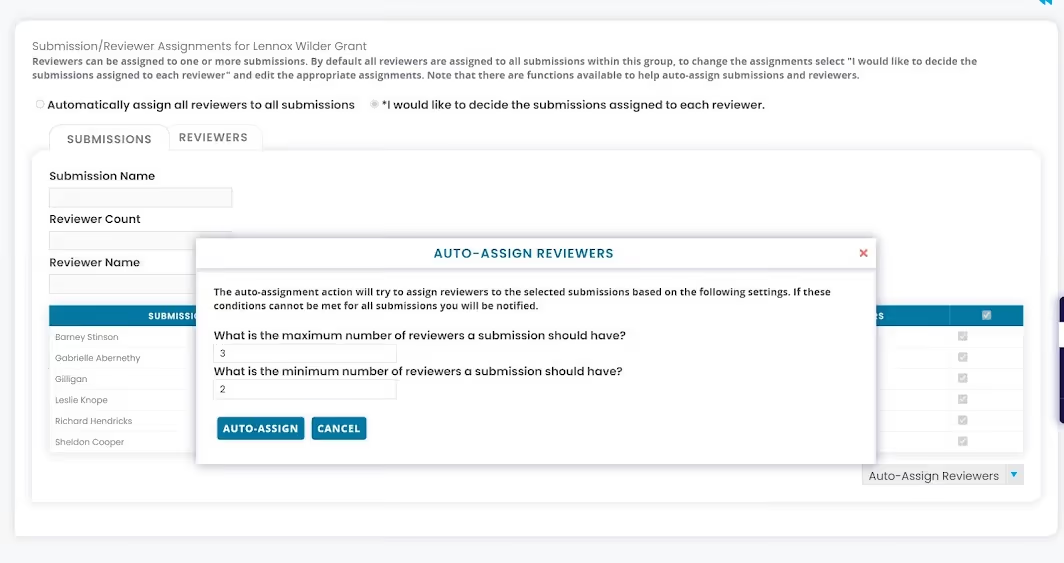
AI matches applications to reviewers based on topic expertise or demographics for peer-reviewed programs.
Sentiment Analysis
AI evaluates essays for emotional tone, passion, and sincerity—helping reviewers spot compelling stories.
Reference Validation
AI checks uploaded recommendation letters for authenticity, tone, and alignment with the student's application.
Fraud Detection
AI monitors for suspicious patterns like duplicate applications, fake documents, or recycled essays.
Success Prediction
AI predicts which candidates are most likely to succeed academically or make an impact post-scholarship.
Demographic Balancing
AI helps ensure diversity goals are met by analyzing demographic data in applicant pools and awardees.
Transcript Parsing
AI reads and interprets transcripts from different schools and systems to standardize GPA calculations.
Renewal Tracking
For renewable scholarships, AI helps track whether recipients are meeting ongoing eligibility requirements.
Budget Alignment
AI helps match scholarships with available funding buckets, ensuring funds are allocated efficiently across categories.
Personalized Feedback
AI generates constructive feedback for applicants who don't win, based on reviewer notes and scoring criteria.
Smart Notifications
AI automates reminders, updates, and deadline alerts tailored to where each applicant is in the process.
Data-Driven Reporting
AI aggregates data on applicants and awardees for internal reporting, donor updates, and impact analysis.
Accessibility Enhancement
AI tools (like text-to-speech, real-time translation, and readability checkers) help make the scholarship application process more inclusive.
Review Compliance & Efficacy
👥 Pairing Applicants with Review and Selection Teams
What Is It?
Applicant-reviewer pairing is the strategic process of matching scholarship applications with appropriate review team members based on expertise, availability, potential conflicts, and other factors to ensure fair, thorough, and efficient evaluation.
Why It's Important
Proper pairing ensures applications receive knowledgeable review from qualified evaluators, prevents conflicts of interest, distributes workload fairly among reviewers, improves review quality and consistency, and maintains the integrity and credibility of the selection process.
Methods for Efficiently Pairing Applicants with Reviewers
Expertise Matching: Systematically aligning reviewer backgrounds and experience with application content and program focus
Conflict of Interest Detection : Identifying and avoiding potential conflicts between reviewers and applicants
Committee/Pods : Share the workload and diversify reviews by creating review committees based on groupings, different scholarships, and phases of Review
Balancing Reviewer Workload and Fair Distribution
Capacity Management Systems: Tracking individual reviewer availability and current commitments to prevent overload
Quality vs. Quantity Considerations : Determining optimal number of applications per reviewer to maintain thorough evaluation
Backup and Contingency Planning :Preparing for reviewer unavailability and maintaining evaluation schedules
Actionable Next Steps
Reviewer Database Development: Create comprehensive profiles for all reviewers including expertise areas, availability, and historical performance data
Conflict Detection System :Implement automated checks for potential conflicts of interest between reviewers and applicants
Workload Tracking Tool :Develop a system to monitor reviewer capacity and ensure equitable distribution of applications
Performance Monitoring :Establish metrics to track reviewer consistency, efficiency, and quality to continuously improve pairing decisions
💻 Conducting Online Review and Selection
What Is It?
Online review and selection involves using digital platforms and organized processes to evaluate scholarship applications remotely, enabling reviewers to assess candidates, collaborate on decisions, and maintain consistent evaluation standards through technology-based workflows.
Why It's Important
Online review systems increase accessibility for diverse reviewer pools, provide better documentation and audit trails, enable more efficient collaboration, reduce geographic constraints, improve consistency through standardized tools, and allow for better data collection and analysis of selection processes.
Using Scoring Rubrics and Evaluation Criteria
Rubric Development: Creating detailed, objective criteria that align with program goals and can be applied consistently
Weight Assignment: Determining appropriate relative importance of different evaluation factors
Calibration Exercises: Training reviewers to apply rubrics consistently through practice evaluations and discussion
Continuous Rubric Refinement: Using feedback and results data to improve evaluation criteria over time
Facilitating Collaboration and Discussion Among Reviewers
Digital Discussion Platforms: Implementing secure communication tools that allow reviewers to share insights and questions
Consensus Building Processes :Establishing protocols for resolving disagreements and reaching final decisions
Documentation and Audit Trails :Maintaining records of reviewer discussions and decision-making processes
Actionable Next Steps
Rubric Development Workshop: Convene stakeholders to create or refine detailed scoring rubrics with clear criteria and weighting
Reviewer Training Program :Develop comprehensive onboarding materials and conduct calibration sessions before each review cycle
Technical Support Protocol :Establish clear procedures for handling technical issues and provide multiple support channels for reviewers
Review Process Documentation :Create detailed standard operating procedures for the entire online review process from start to finish
🔒Redacting PII from Review Teams
What Is It?
PII (Personally Identifiable Information) redaction involves carefully removing or masking sensitive personal information from scholarship applications before they reach review teams, creating anonymized evaluation materials that protect applicant privacy while maintaining evaluation integrity.
Why It's Important
PII redaction reduces unconscious bias in evaluation processes, protects applicant privacy and complies with data protection regulations, maintains legal compliance with privacy laws, prevents conflicts of interest based on personal connections, and ensures evaluations focus on merit-based criteria rather than demographic characteristics.
Types of Information to Redact
Direct Identifiers: Names, social security numbers, addresses, phone numbers, and email addresses that directly identify individuals
Demographic Information: Race, ethnicity, gender, age, and other characteristics that could introduce bias into evaluation processes
Institutional Affiliations: School names, employer information, and geographic locations that might influence reviewer perceptions
Family and Personal Details: Parent names, family income specifics, and personal circumstances that aren't directly relevant to evaluation criteria
Balancing Privacy with Evaluation Needs
Context-Sensitive Redaction: Preserving information that's essential for fair evaluation while removing unnecessary personal details
Redacted vs. Semi-Redacted Review: Determining appropriate levels of anonymization based on program goals and evaluation criteria
Reviewer Access Levels: Creating tiered access systems where different reviewers see different amounts of identifying information
Actionable Next Steps
Privacy Policy Development: Create comprehensive PII redaction guidelines that specify what information to remove, retain, or partially mask
Automate Redaction: Implement automated systems that redact PII to avoid human error or missed data
Staff Training Implementation: Develop training programs for all personnel involved in application processing and review coordination
Legal Compliance Review: Consult with legal counsel to ensure redaction practices meet all applicable privacy laws and institutional requirements
📊 Normalization of Judging Results and Individual Judging Trends
What Is It?
Judging normalization is the statistical process of adjusting reviewer scores to account for individual scoring tendencies, biases, and inconsistencies, ensuring that applicant evaluations are comparable across different reviewers and that selection decisions are based on merit rather than reviewer characteristics.
Why It's Important
Normalization ensures fairness by preventing applicant outcomes from being determined by which reviewer evaluates their application, maintains program integrity and legal compliance, improves selection accuracy by reducing noise from reviewer bias, and provides data-driven insights for continuous improvement of evaluation processes.
Importance of Normalizing Judging Results
Statistical Bias Correction: Understanding how individual reviewer tendencies (harsh vs. lenient scoring) can skew results
Fairness and Equity Assurance: Ensuring that applicant outcomes aren't unfairly influenced by which reviewers evaluate their applications
Legal and Ethical Compliance: Meeting requirements for fair and unbiased evaluation processes
Methods for Identifying and Addressing Judging Trends
Statistical Pattern Recognition: Using data analysis to identify consistent reviewer behaviors and tendencies
Peer Review and Validation: Implementing systems where reviewer decisions are cross-checked by colleagues
Ongoing Monitoring Systems: Creating real-time dashboards that flag unusual scoring patterns for immediate attention
Actionable Next Steps
Historical Data Analysis: Analyze at least 3 years of scoring data to identify reviewer patterns and potential biases in your current system
Normalization Method Selection: Research and implement appropriate statistical methods for adjusting scores based on reviewer tendencies
Monitoring Dashboard Creation: Develop real-time analytics that flag unusual scoring patterns during active review periods
Reviewer Feedback System: Create individualized reports for reviewers showing their scoring patterns compared to peers