Your awards program is probably running “just fine…”. Nominations come in, judges review them, winners get announced. But underneath that cycle, three common mistakes are quietly working against you — and most programs don't catch them until the damage is done.
Every year, association awards administrators put enormous effort into their recognition programs — coordinating nominations, organizing judging panels, planning ceremonies — only to find that the same five people applied, the same three people won, and participation barely budged from the year before.
It's a frustrating pattern, and it's more common than most organizations want to admit. But what's causing it isn't a lack of effort. It's three specific process gaps that quietly limit your program's reach, disengage your membership, and wear down the volunteers who make it all possible.
We see these mistakes across associations of every size — professional societies, trade groups, alumni organizations, and community-based programs. And the good news is that each one has a clear, practical fix.
The hidden cost of "good enough": Even if your awards program seems cost-free, consider the cumulative time investment — yours, your judges', your nominators', and your nominees'. If your membership isn't growing from it, every one of those hours is being spent inefficiently. That's costly, even if no invoice ever gets sent.
Most awards programs lose their best candidates before a single judge ever sees them. The culprit is almost always the same: a nomination process that places too much burden on the nominator, asking them for information they simply don't have.
Think about what a typical nomination form asks: detailed metrics, specific accomplishments, revenue figures, performance data. A nominator might know this person is exceptional — they've seen it firsthand — but they don't necessarily have the numbers to back it up. So they abandon the form, or worse, submit something incomplete that doesn't do the nominee justice.
On the flip side, there are plenty of candidates who know they're deserving but feel uncomfortable putting themselves forward. Self-nominations carry a social stigma that keeps qualified people out of the running entirely — even when their work clearly merits recognition.
When one person in your organization has a frustrating nomination experience and shares that with colleagues, it spreads. A single negative word-of-mouth story can quietly suppress your nomination numbers for multiple cycles — without you ever knowing why.
The result of all this friction is predictable: the same small group of well-connected members gets nominated year after year. New voices don't enter the conversation. Your program stagnates, and your broader membership loses interest in a program that doesn't feel accessible to them.
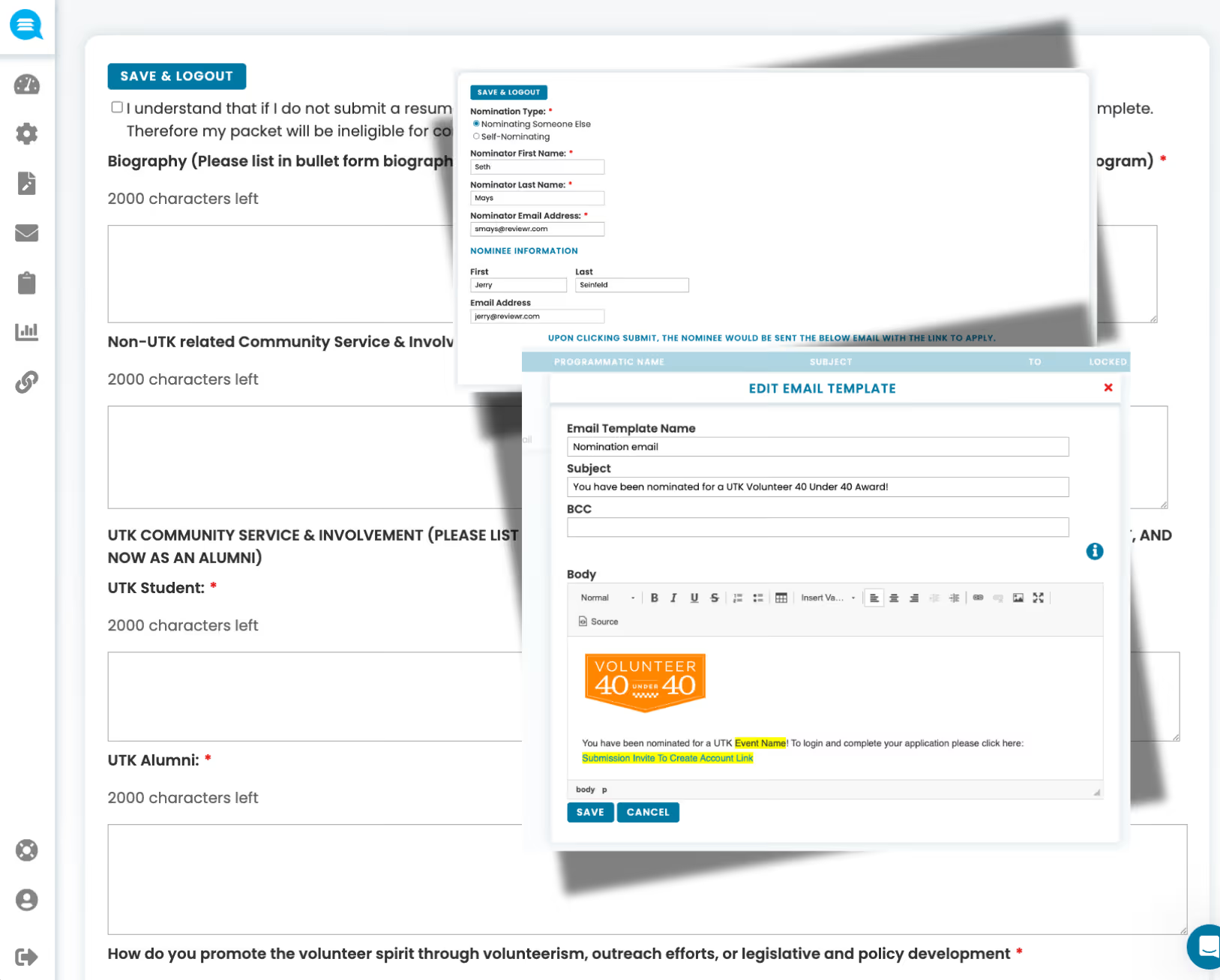
The solution is to separate the nomination from the application — and give each party only what they're responsible for knowing.
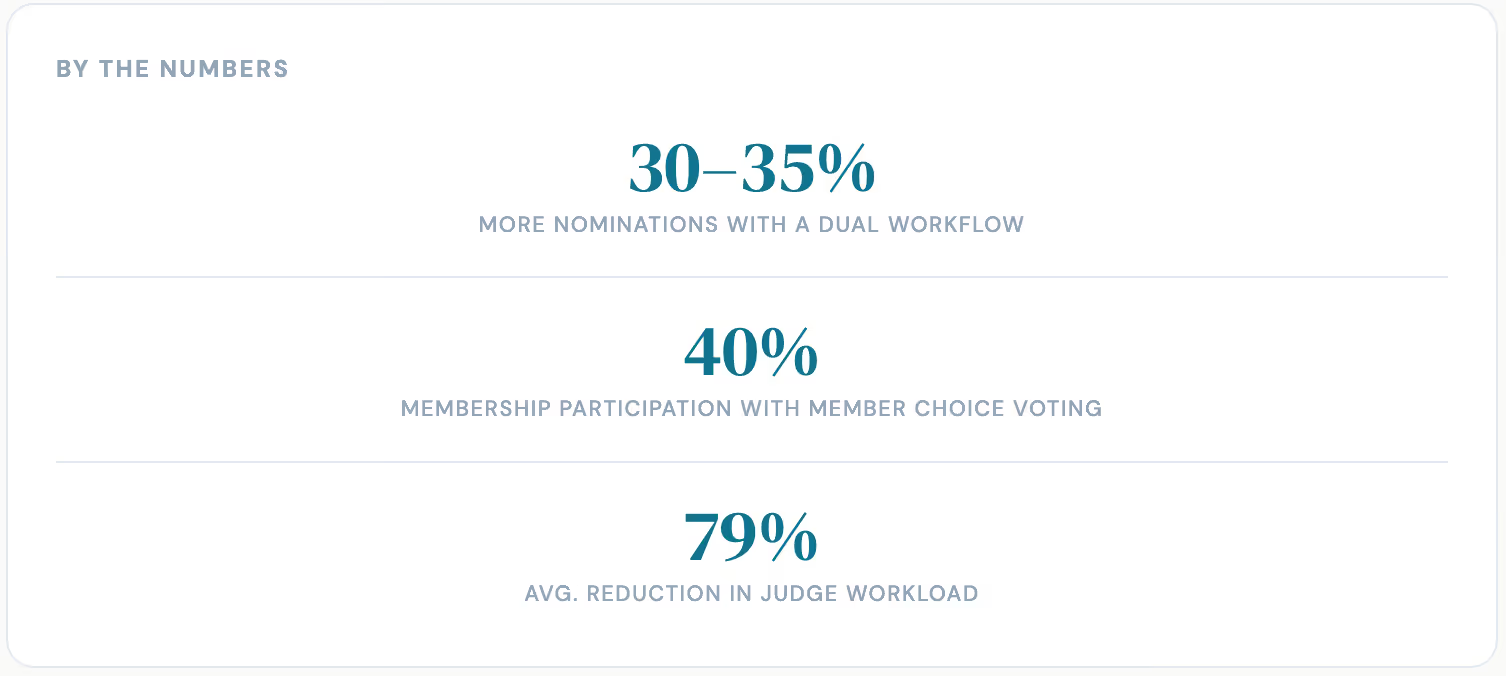
In a dual nominator → nominee workflow, the nominator's job is simple: answer a few basic questions about who they're nominating and why they deserve recognition. That's it. The form takes minutes to complete, the barrier to entry is low, and the nominator walks away feeling good about the experience.
Once that nomination is submitted, the nominee receives a congratulations email letting them know they've been recognized. They're then invited to log in and complete the detailed application themselves — sharing their own story, their own metrics, their own supporting materials in their own words.
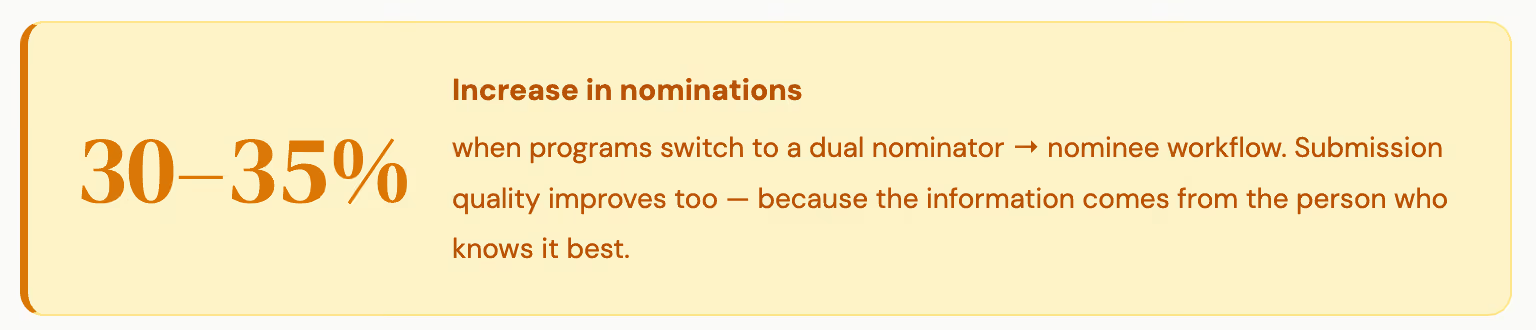
This approach solves both problems at once. Nominators aren't burdened with information they don't have. Nominees get to represent themselves accurately and compellingly. And the experience of being formally notified of a nomination — of receiving that congratulations email — creates a moment of recognition that's meaningful in itself, regardless of the final outcome.
❌ Traditional Nomination Process
✓ Dual Nominator → Nominee Workflow
One additional advantage worth noting: when you use a platform like Reviewr, nominee accounts persist year over year. A member who was nominated this year can log back in next year, apply again, or nominate someone else. The friction continues to decrease as your community becomes more familiar with the process.
Here's a question worth sitting with: outside of your nominees and your judging committee, how many of your members are genuinely engaged in your awards program?
For most organizations, the honest answer is: not many. The broader membership hears about the awards at the ceremony, applauds the winners, and then doesn't think about it again for another eleven months. The program goes dark, and with it, so does one of the most powerful member engagement tools your association has.
When members feel like spectators — people who watch the awards happen rather than participate in them — it has a compounding effect. They don't feel invested in the outcome. They're less likely to nominate someone next year. They're less likely to apply themselves. And over time, that detachment erodes the cultural weight that makes awards programs worth running in the first place.
The problem isn't that these members don't care. It's that no one has given them a meaningful way to participate.
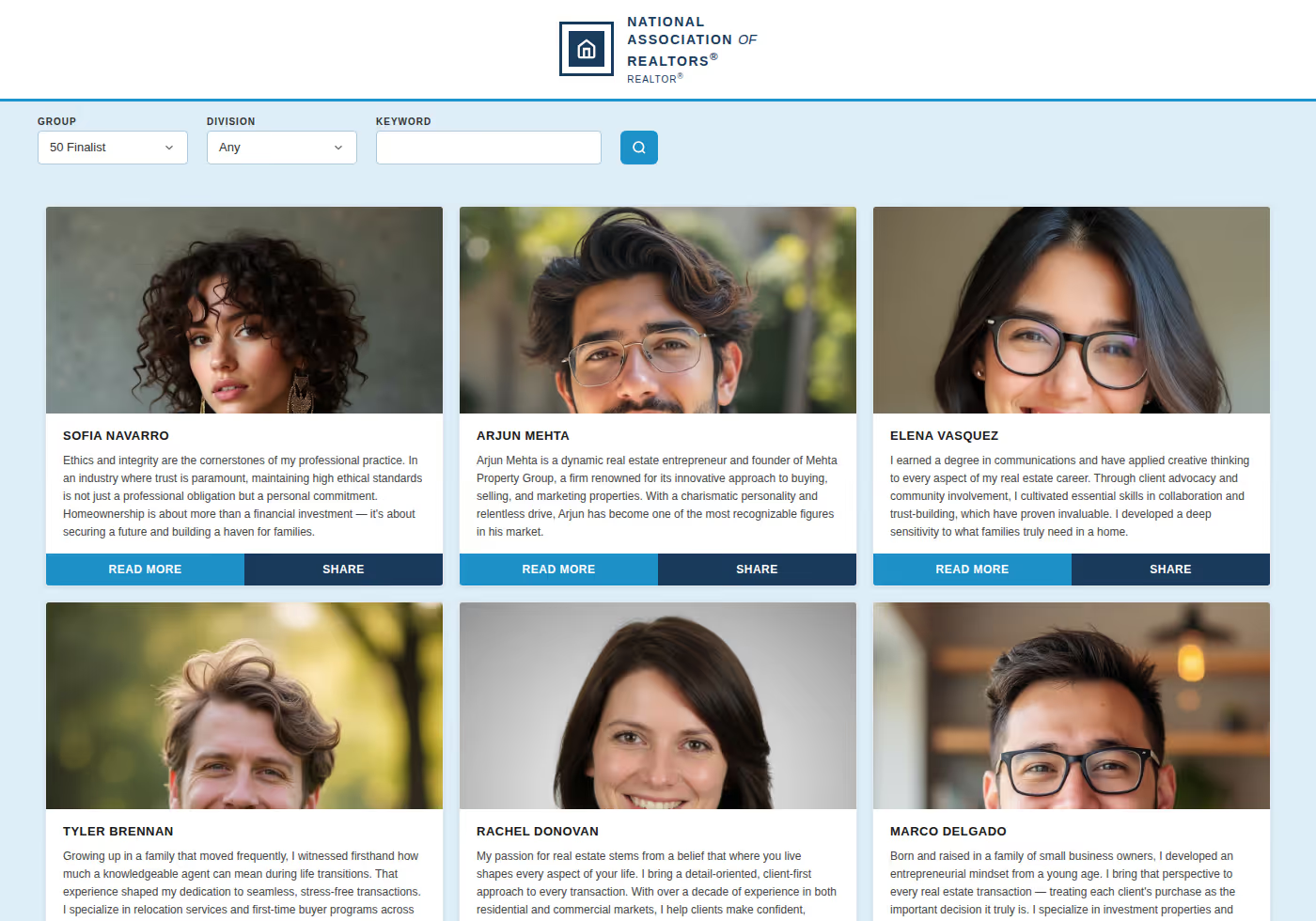
Being nominated is an achievement in itself. Showcasing all nominees — not just winners — acknowledges their recognition publicly, keeps them engaged with your program, and increases the likelihood they'll participate again next cycle.
The most effective way to broaden engagement is to give your entire membership a role in the program — not just the committee. Two tools make this possible: public nominee showcases and member choice voting.
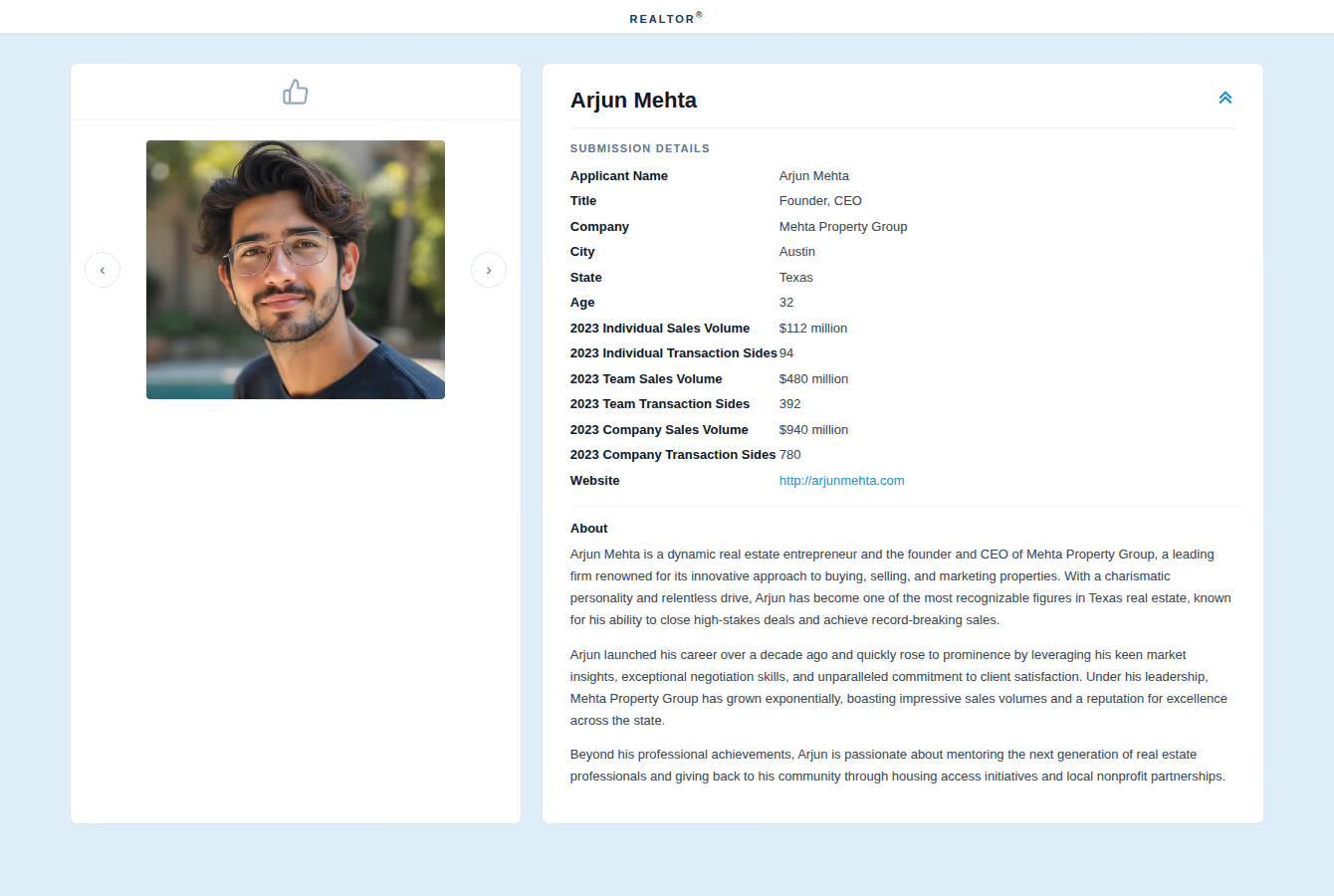
A nominee showcase is a publicly accessible gallery of your nominees, displaying highlights of their submissions and accomplishments. It can be shared on your website, through email, on social media — anywhere your members are. It educates your membership about the people being recognized, creates visibility for nominees who won't ultimately win, and generates community conversation around the program.
Member choice voting goes a step further, giving every member a direct say in the outcome. This can work alongside your expert judging panel — perhaps the committee determines finalists, and the full membership votes on the recipient — or it can power its own dedicated award category entirely. Either way, the effect is the same: members who vote are invested in the result. They're watching. They're engaged. And they're far more likely to nominate someone — or apply themselves — the following year.

The practical impact of member voting extends beyond your awards program itself. When members visit your site to view nominees and cast their votes, that traffic benefits your organization broadly. When they share nominees on social media, your program — and your association — gains visibility. The awards program stops being a closed-door event and becomes something the whole community feels a part of.
Your judges are volunteers. They're coming into your awards program on top of their regular responsibilities, giving their time and expertise because they care about your community. That goodwill is not unlimited — and when the judging process is disorganized, overwhelming, or inconsistent, it gets depleted fast.
Judge fatigue isn't just a volunteer retention problem. It's a results integrity problem. A judge who has been assigned 30 submissions will not evaluate them with the same care and consistency as one who has been assigned ten. When workloads are unbalanced, the quality of your selection outcomes suffers — and so does the defensibility of your decisions.
1. Manual, unbalanced assignment. When nominations are distributed manually without any logic or guardrails, it's nearly impossible to ensure fairness. Some judges end up overwhelmed; others barely contribute. There's no way to verify the distribution is equitable without doing it entirely yourself.
2. No blind review. In most association awards programs, judges are likely to recognize the nominees by name, organization, or tenure. Without the ability to redact identifying information, unconscious bias inevitably influences scores — and those biases are often invisible until someone questions the outcome.
3. Downloading files and switching between tools. Judges who have to open multiple tabs, download attachments, and track their scores separately in a spreadsheet will not stay engaged. This friction is one of the most common reasons we hear from awards administrators that judges don't return for the next cycle.
4. No rubric — or an ineffective one. The most underestimated problem in awards judging is scoring without a shared standard. When judges are told to "pick their favorites" and apply a 1–10 scale, two judges can score the same submission a 5 and a 9 for completely different reasons. The gap between a 5 and a 6 is entirely subjective — which means your results aren't just inconsistent, they're indefensible.
Language matters in rubric design. Replacing numeric scales with descriptive language — "exceeds expectations," "meets expectations," "below average" — dramatically reduces scoring variance across judges. There's far less gray area in a word than in a number, and far less room for individual interpretation to skew your results.
5. No visibility into progress. When administrators can't see where the judging process stands in real time, they're forced to send manual follow-ups, chase down submissions by email, and guess at whether the cycle will close on time. This is a significant administrative burden — and an entirely avoidable one.
The good news is that all five of these problems are solvable with the right process and tools in place.
❌ Without Structured Judging
✓ With Reviewr's Judging Engine
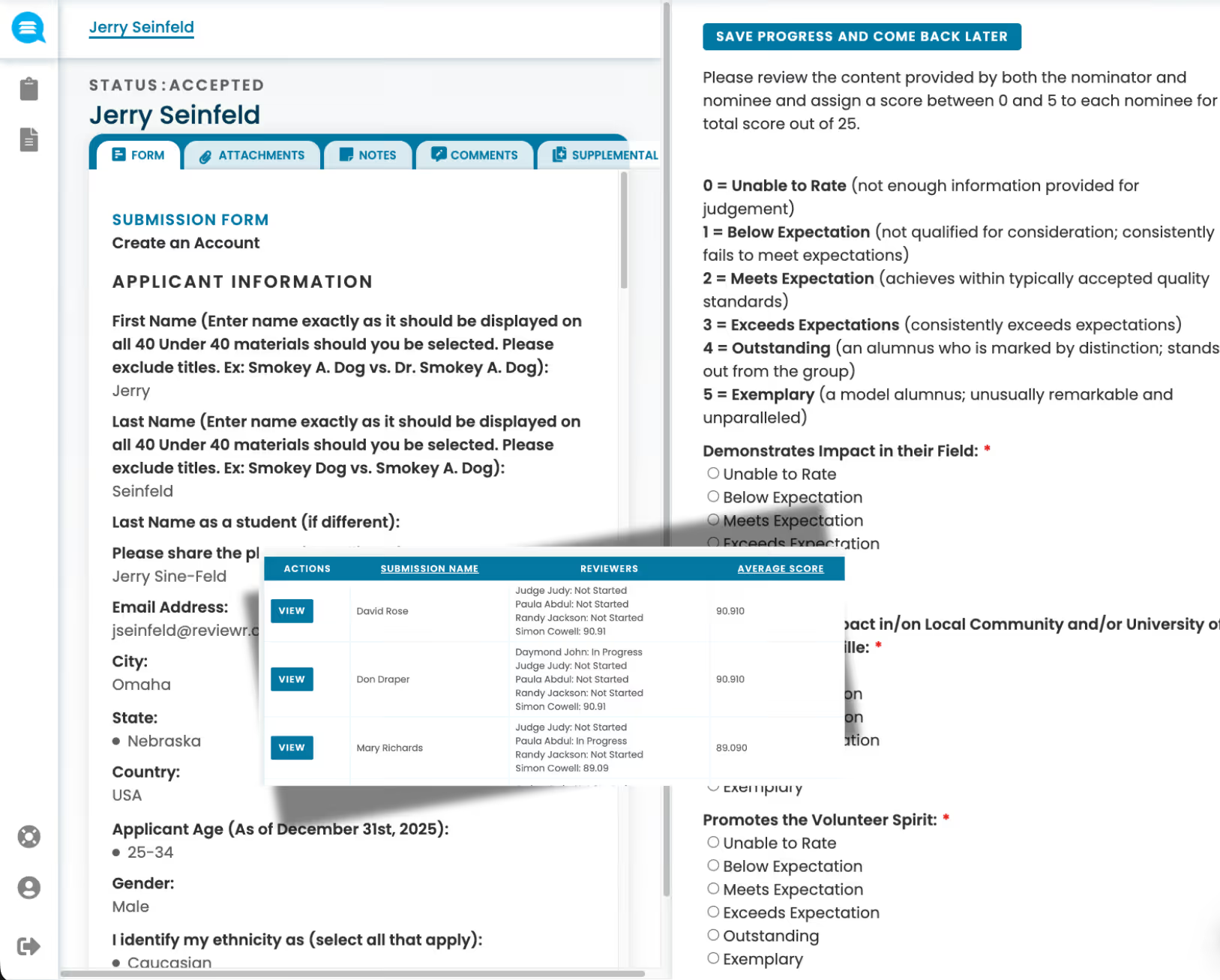
When judges log into Reviewr, they see their assigned submissions in a single portal — no separate tabs, no downloaded files, no scattered tools. The submission form and evaluation scorecard appear side by side on one screen. Judges can view attached files inline, leave notes for the administrator, and track their own progress. It's a process that respects their time — and that respect is what brings them back year after year.

Each of these mistakes compounds the others. Nomination friction keeps your applicant pool small, which limits the quality of what judges are evaluating. Poor member engagement means the broader community never develops an investment in the program. And judge fatigue leads to inconsistent results that are difficult to stand behind — which erodes member trust in the program's fairness.
Fix all three, and you create a virtuous cycle instead: more nominations of higher quality, a membership that feels genuinely invested, and judges who produce results your organization can be proud of and publicly defend.
The organizations running the most successful recognition programs aren't necessarily the ones with the biggest budgets or the most prestigious awards. They're the ones that have built a process their members trust, their judges enjoy, and their community feels genuinely part of.
That process is achievable — and it starts with addressing these three mistakes before your next cycle begins.
Reviewr is purpose-built for associations, foundations, and organizations running member recognition awards programs. From dual nominator/nominee workflows and member choice voting to structured judging and real-time dashboards — everything your awards program needs is in one place.
Schedule a 1-on-1 consultation with our team. We'll learn about your specific program, walk through your current process, and show you exactly how Reviewr can help — no pressure, just a real conversation about your awards program.

The all-in-one platform for managing scholarships, grants and awards programs.