Scholarship Application Review Software

Scholarship Application Review Software for Committees That Have to Defend the Decision

Your applications come in fine. Everything after submit is the problem: packets, a rubric on a separate sheet, judges who don't finish, and a winner you can't fully explain. Reviewr puts the whole review in one place, with one link for every reviewer.

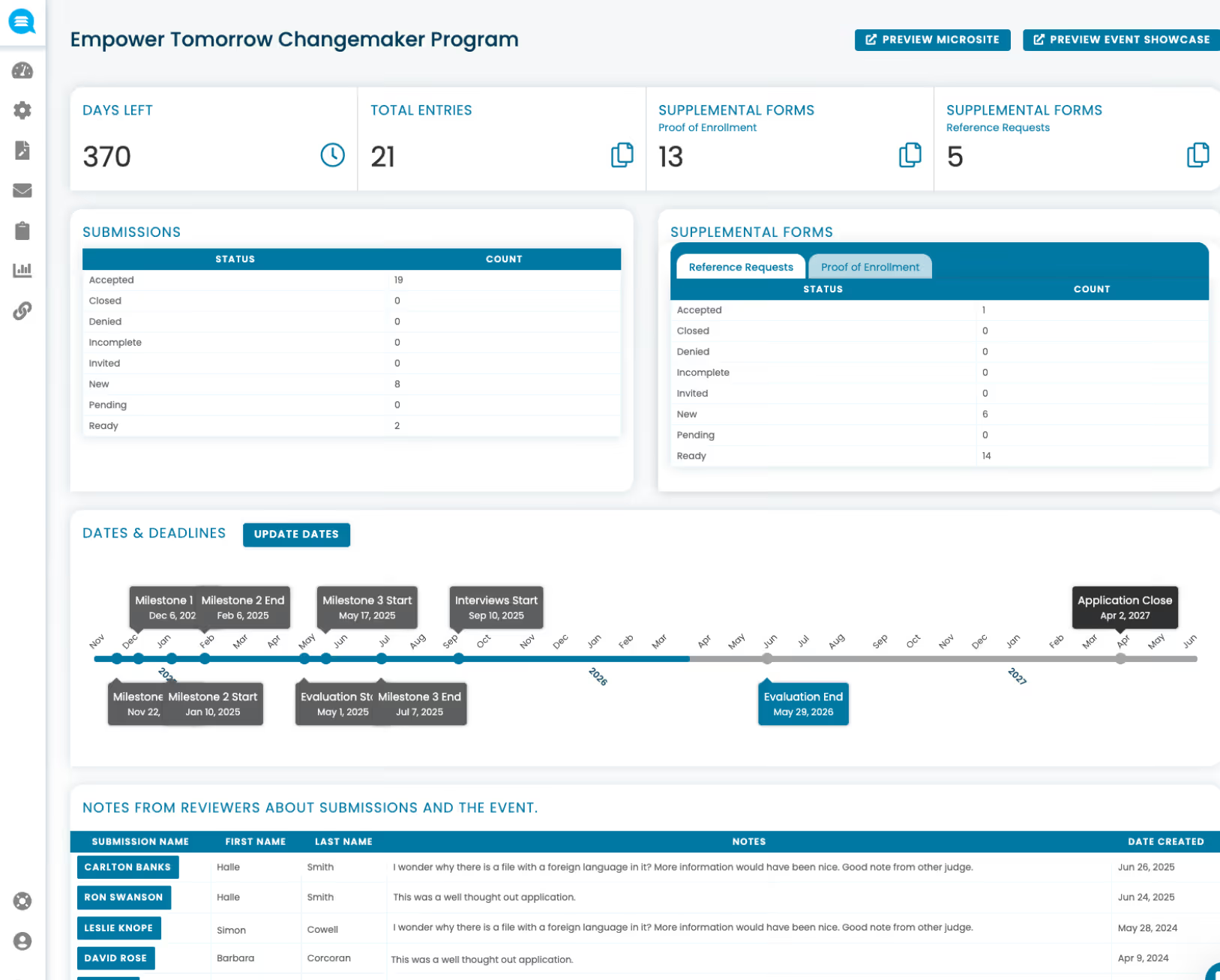
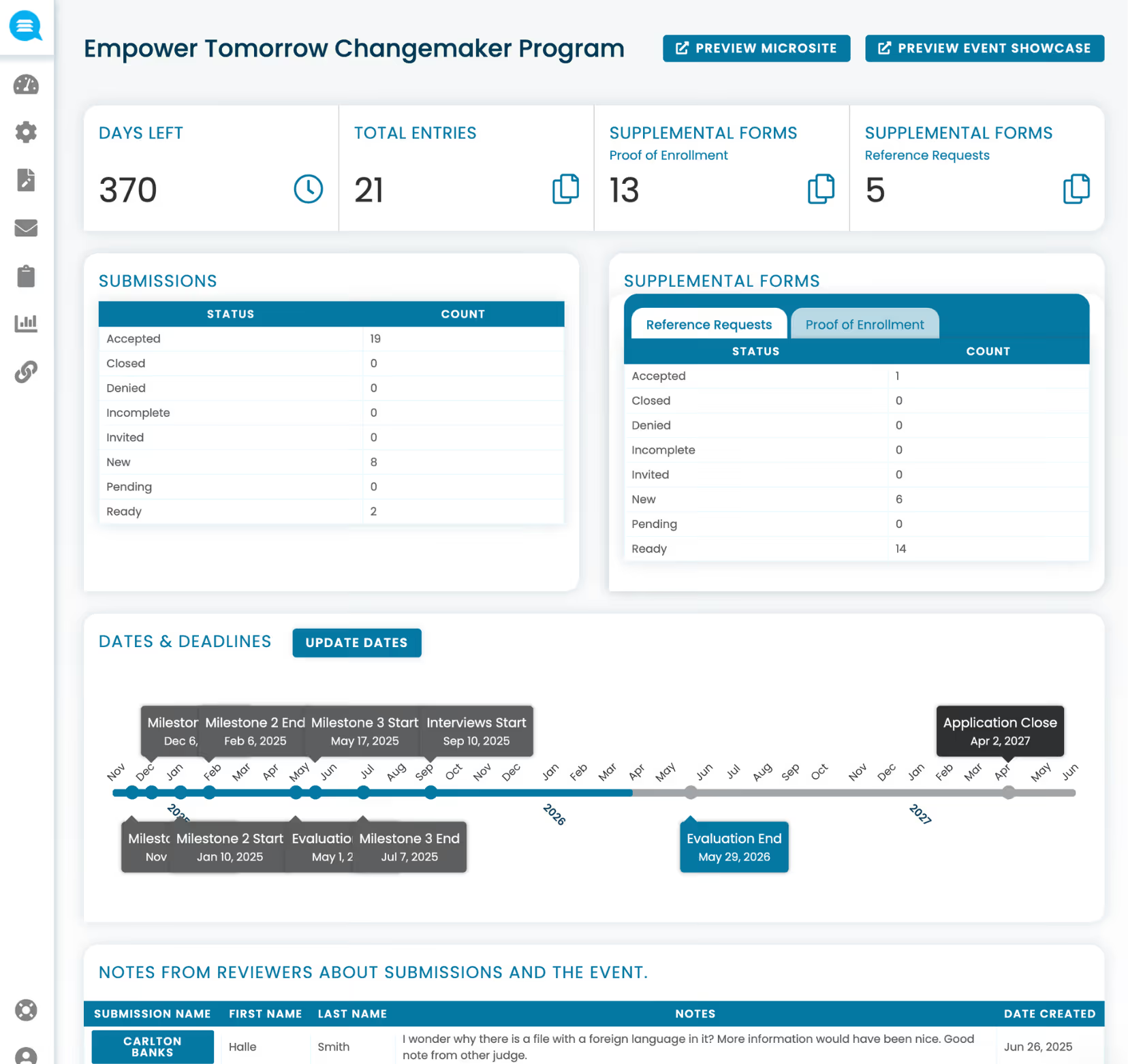
Dashboard for Empower Tomorrow Changemaker Program showing 370 days left, 21 total entries, 13 proof of enrollment and 5 reference request forms. Submission status table with counts, supplemental forms status for reference requests and proof of enrollment, timeline with milestones and deadlines from 2023 to 2027, and reviewer notes on submissions with names and dates.

See Reviewr In Action

Sound Familiar?

A Day in the Life of Scholarship Review

This isn't a bad day. This is every day.
> Scroll through to read the story
8:14 AM
An applicant emails asking if their application was received and whether their references have submitted yet. You check three different tools to piece together an answer.
8:47 AM
You open your online form tool, export all submissions to a spreadsheet, and spend the next hour manually compiling individual scholar packets — copying, pasting, renaming files.
9:52 AM
A reviewer replies-all asking where the scoring rubric is. It was in a different email thread from two weeks ago. Two other reviewers still haven't started — they say they "didn't know it was time."
10:30 AM
You realize 12 applications are missing letters of recommendation — with the deadline in 4 days. You start manually emailing each reference.
11:30 PM
You realize 12 applications are missing letters of recommendation — with the deadline in 4 days. You start manually emailing each reference.
12:10 PM
You download scoring spreadsheets from each judge and start recompiling them into a master sheet — only to find a broken formula and three judges with incomplete scores.
1:15 PM
The committee wants a list of finalists. You spend 90 minutes pulling data from the form tool into a spreadsheet and cleaning it.
2:30 PM
A rejected applicant's parent calls asking why their student wasn't selected. You have no documented scoring rationale, no audit trail, and no way to show the decision was fair.
3:40 PM
A board member asks how last year's winners are doing. You have no idea — post-award tracking never happened. They ask if the program is worth continuing to fund.
4:30 PM
Six award recipients still haven't submitted acceptance forms or tax documents. A multi-year scholar is up for renewal but you don't know if they're still enrolled or maintained their GPA. There's no system to collect any of it.
5:58 PM
You're still at your desk. The scholarship goes out next week. Nothing feels ready.
> Scroll through to read the story
7:48 AM
You open the scholarship application link. It's a long web form with dozens of questions, file uploads, and essay prompts. There's no login — just a page that warns not to refresh or close the browser. I hope i'm even eligible...
8:16 AM
Halfway through the form you realize you need your transcript and activity list. You leave the page to find the files and hope the form doesn't reset.
8:42 AM
The application requires two letters of recommendation. You email your teacher asking if they can write one and hope they have time before the deadline.
10:03 AM
Your teacher replies saying they can help but asks where the letter should be sent. You explain that you'll need the letter back so you can upload it into the application yourself.
11:18 AM
After nearly an hour of writing essay responses, the page refreshes and the form reloads. Your answers are gone. You start over.
1:07 PM
You finally submit the application. The page reloads with a short "Thank you for applying" message. No confirmation email arrives.
Three weeks later
You see a post announcing the scholarship winners. Your name isn't there.
9:12 AM
You email asking if your application was received. They reply saying they can't find your submission in the spreadsheet export.

11:48 AM
Your application was never reviewed. You were never considered for the opportunity. You're left wondering how you'll fund your education.
> Scroll through to read the story
7:32 AM
An email arrives inviting you to serve as a scholarship judge. The message includes a link to a Google Drive folder and a scoring spreadsheet.
8:04 AM
Inside the Drive folder are dozens of subfolders — one for each applicant. Every folder contains PDFs, transcripts, essays, and supporting documents.
8:47 AM
You open the scoring spreadsheet. Each applicant has a row with several scoring categories. You start downloading applicant packets so you can review them one by one.
9:36 AM
The first few applicants take a while. You read every essay carefully and try to apply the rubric consistently.
10:58 AM
By the fifteenth applicant the process starts to blur together. The packets are long and the spreadsheet keeps growing.
12:41 PM
You notice applicant names, schools, and personal details throughout the materials. There's no way to conduct a blind review.
2:18 PM
You begin moving faster just to get through the remaining submissions. The first applicant you reviewed this morning would probably receive a different score if you saw them now.
4:06 PM
Some questions become harder to score consistently. What felt like a "7" earlier now feels like a "5."
5:12 PM
You finish scoring and email the spreadsheet back to the program administrator.
Two weeks later
You see the winners announced. You have no visibility into how the final decisions were made or how scores from different judges were combined.
Six months later
You're asked to volunteer as a judge again next year. You pause before responding. Your time is valuable. The process was inefficient, and you're not confident the selections were fair. You're not sure you want to do it again.
> Scroll through to read the story
Month 1
You commit to funding a scholarship. You receive a short acknowledgment email thanking you for the contribution. The program launches, but you don't hear anything about how it's being managed.
Month 3
You ask for an update on the program. You're told applications were received and are currently "under review." You ask how many applicants applied. They say they'll check and get back to you.
Month 5
A recipient has been selected. You receive the student's name and a short bio. There's no insight into how many students applied, what the selection criteria were, or how the final decision was made.
Month 7
You start wondering how competitive the scholarship was. Were there 20 applicants or 200? Was the process fair? There's no data to help answer the questions.
Month 9
You ask how the recipient is doing. The program officer says they'll reach out to the student and see if they can provide an update.
Month 10
You receive a brief email: the student is "doing well in school." No transcript updates, no story, no measurable impact.
Month 12
Your board asks about the results of the scholarship you funded. How many students applied? How were finalists selected? What difference did the award make? You don't have answers.
Year 2 — 10:15 AM
You're asked whether you'd like to renew funding for the scholarship. Without visibility into the process or evidence of impact, you decide not to continue funding the program.
There's a better way.
Meet Reviewr.
One link for every reviewer, the rubric beside the essay, and a result you can defend. Built for the committee, not just the form.
1

Everything After Submit, in One Place

Your applications come in fine. The problem starts after submit: packets built by hand, a rubric in a Word doc, scores typed into a spreadsheet one person maintains, and a chair who spends the last week before the deadline asking people to please review these. Reviewr puts the whole review in one place.
check
One applicant record — application, transcript, essays, and references together, no packets, no 800-page combined PDF
check
One link for every reviewer — no downloads, no login hunting, no "which version is the rubric"
check
Buckets by scholarship, fund, or region — random distribution to N reviewers, shuffled order, caps per reviewer
check
Reminders keyed to the judging deadline — with started-and-unfinished tracking so you nudge the right people before it's late
Dashboard for Empower Tomorrow Changemaker Program showing 370 days left, 21 total entries, supplemental forms counts, submission status counts, a timeline of important dates, and reviewer notes on submissions.
2

A Review Your Committee Can Defend

One reviewer scores everything a 6. Another never gives below a 9. The applicant who drew the harsh reviewer loses, and the committee knows it, so they adjust by hand. That fix is honest, and it is indefensible the day a donor, a board member, or an examiner asks how the winner was chosen.

check
Split-screen review — the application on the left, your weighted scorecard on the right
check
Scorer-tendency normalization — each reviewer compared to their own average, so a harsh judge doesn't decide the outcome
check
Results dashboard and leaderboard — every score and comment on the record, exportable
check
An audit trail you can hand to a board, a donor, or an examiner
Online applicant form for Angie Quinn showing personal and academic information, with a question/comment section requesting a current transcript.
3

Blind Review Without the White-Out

In a small community the committee knows the families. Blind review is the right answer, and done by hand it takes hours and still misses the mascot on page four. Reviewr hides what you tell it to hide before anyone opens a file.

check
Hide identifying fields from reviewers — names, schools, hometowns, any field you choose
check
Review by applicant ID — the committee scores the application, not the family
check
Structured reference prompts — rating boxes and short questions keep names out of letters
check
Leverage integrated AI to audit long form content to assist with manual data redaction.
Screenshot of an online submission form showing applicant Angie Quinn's personal and academic information, alongside a pop-up table listing submissions by David Rose, Don Draper, and Mary Richards with reviewer statuses and average scores.
Everything After Submit, Step by Step
Click any stage to see how Reviewr handles scholarship review, from eligibility to the leaderboard.

Set Up the Review

Most committees inherit a rubric in a Word doc and a process in someone's head. Reviewr turns that into a weighted scorecard, review phases, and reviewer groups before the first application lands, so the committee is scoring against the same standard from day one.
Key Capabilities
check_circle
Weighted scorecards per phase — criteria, point values, and comment fields your committee agrees on once
Every reviewer scores against the same standard
check_circle
Review phases — screening, committee review, finalist round, each with its own scorecard
Multi-round review without a second spreadsheet
check_circle
Buckets by scholarship, fund, region, or category
Each committee sees only what belongs to it
check_circle
Clone the program next cycle
Set it up once; the rubric and phases carry forward
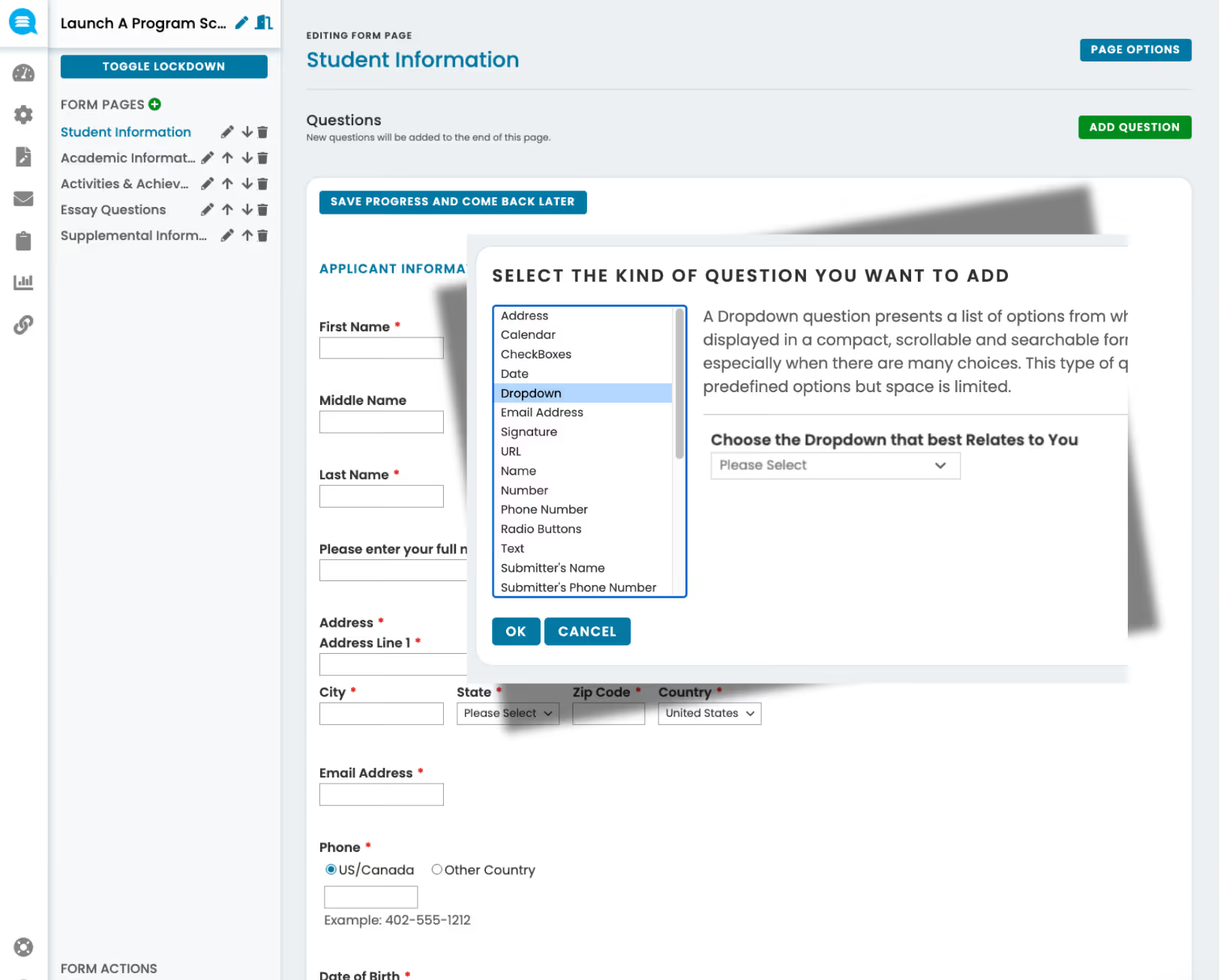
Form editing interface showing Student Information form with fields for applicant details and a pop-up for selecting question type including dropdown option.

Eligibility at the Door

Reviewer time is the scarcest resource a scholarship program has. Reviewr checks eligibility and completeness before review opens, so the committee never spends an evening on an application that was never going to qualify.
Key Capabilities
check_circle
Knockout questions — GPA, residency, enrollment, membership, employment status, and custom rules
Wrong-program applicants are stopped at the door, not untangled after the award
check_circle
Completeness gates — transcripts, essays, and references required before a submission counts
No half-finished files in the review queue
check_circle
Program matching — one application routed to every scholarship a student qualifies for
More of the right applicants, fewer of the wrong ones
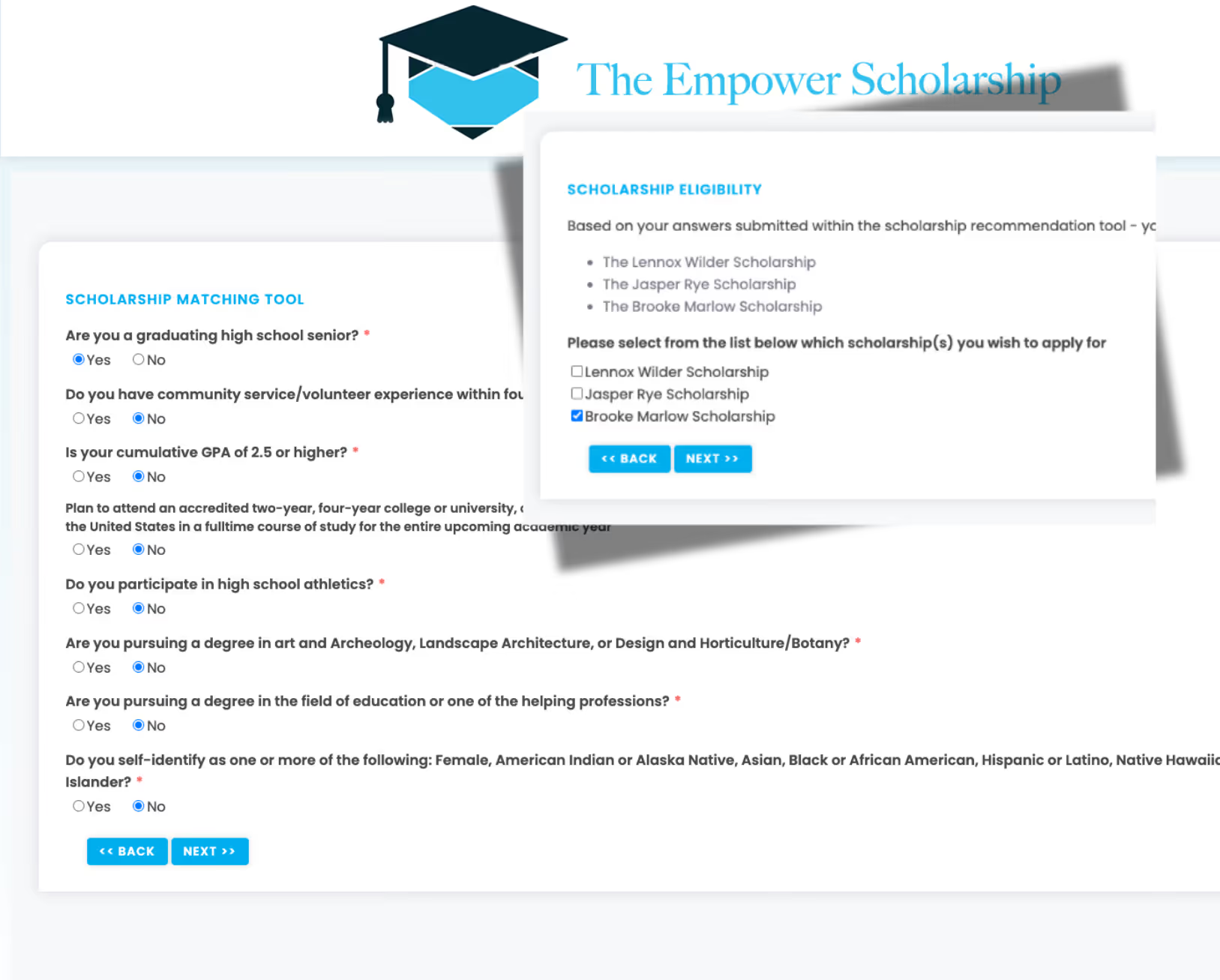
Scholarship Matching Tool form with questions about high school senior status, community service, GPA, college plans, athletics, degree pursuit, and ethnicity, alongside a Scholarship Eligibility section listing three scholarships and options to select one for application.

What the Reviewer Sees

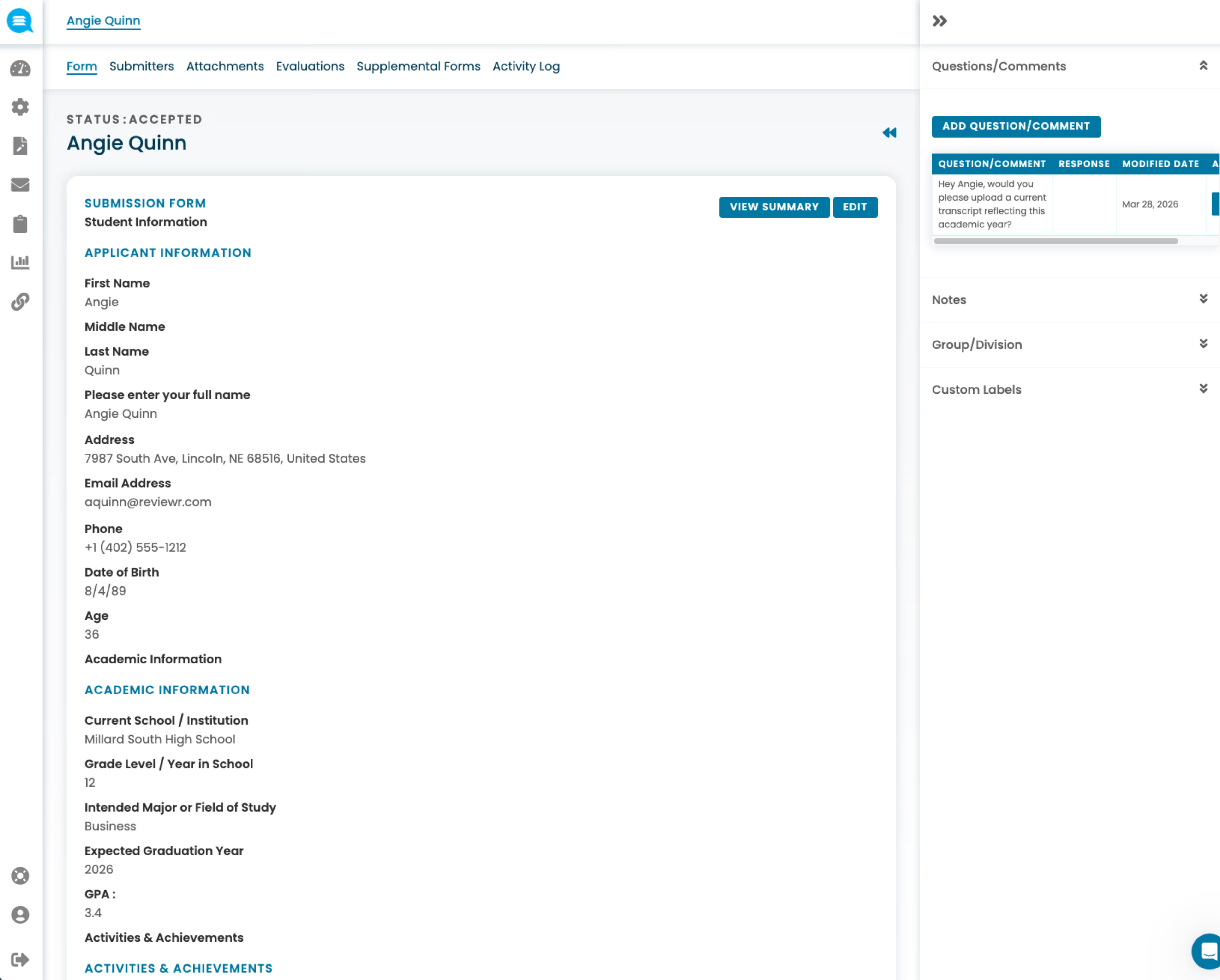
A reviewer who works across two systems, the application in one place and the scoresheet in another, does not finish. Reviewr gives every reviewer one link to one screen: the application on the left, the scorecard on the right, and only the files assigned to them.
Key Capabilities
check_circle
Split-screen review — application, transcript, essays, and video embedded beside the scorecard
No downloads, no packets, essays keep their formatting
check_circle
Assigned applications only, in a shuffled order
First-read bias spreads across the panel instead of landing on one applicant
check_circle
Print-and-enter-scores fallback
The board member who won't log in can still finish
Applicant Angie Quinn's accepted submission form showing personal, academic information, and a question asking for a current transcript.

References Before Review

Pestering recommenders is the single thing scholarship administrators most want to stop doing. Reviewr sends the request when the applicant names the reference, reminds until it arrives, and lets references have a later deadline than the application, so review doesn't wait on a teacher's inbox.

Key Capabilities
check_circle
The applicant enters the reference; Reviewr requests, reminds, and tracks
No one on staff is chasing recommenders
check_circle
Separate reference deadline
The application closes on time; the letters can follow
check_circle
Structured prompts and rating boxes instead of free-form letters
Fewer self-uploaded letters, more comparable references
Screenshot of a recommendation letter submission interface showing a list of recommenders Clark Kent and Lois Lane, their email addresses, status as accepted, with detailed form for Clark Kent to upload a letter of recommendation for Angie Quinn.

Assign and Distribute

When everyone reads everything, volunteers burn out and the chair spends the last week sending "can you please review these" one email at a time. Reviewr distributes the load and tells you who to nudge.

Key Capabilities
check_circle
Random distribution to N reviewers per application
Every file gets the coverage you set; no reviewer reads all of them
check_circle
Manual assignment when the committee needs it — a fund's own reviewers, a conflict to route around
Buckets and assignment rules you control
check_circle
Caps per reviewer and completion tracking
You know who has started and who hasn't before the deadline, not after
check_circle
Reminders keyed to the judging deadline
The system does the chasing
Dashboard for Empower Tomorrow Changemaker Program showing 370 days left, 21 total entries, 13 proof of enrollment and 5 reference request forms. Submission status table with counts, supplemental forms status for reference requests and proof of enrollment, timeline with milestones and deadlines from 2023 to 2027, and reviewer notes on submissions with names and dates.

Score Side by Side

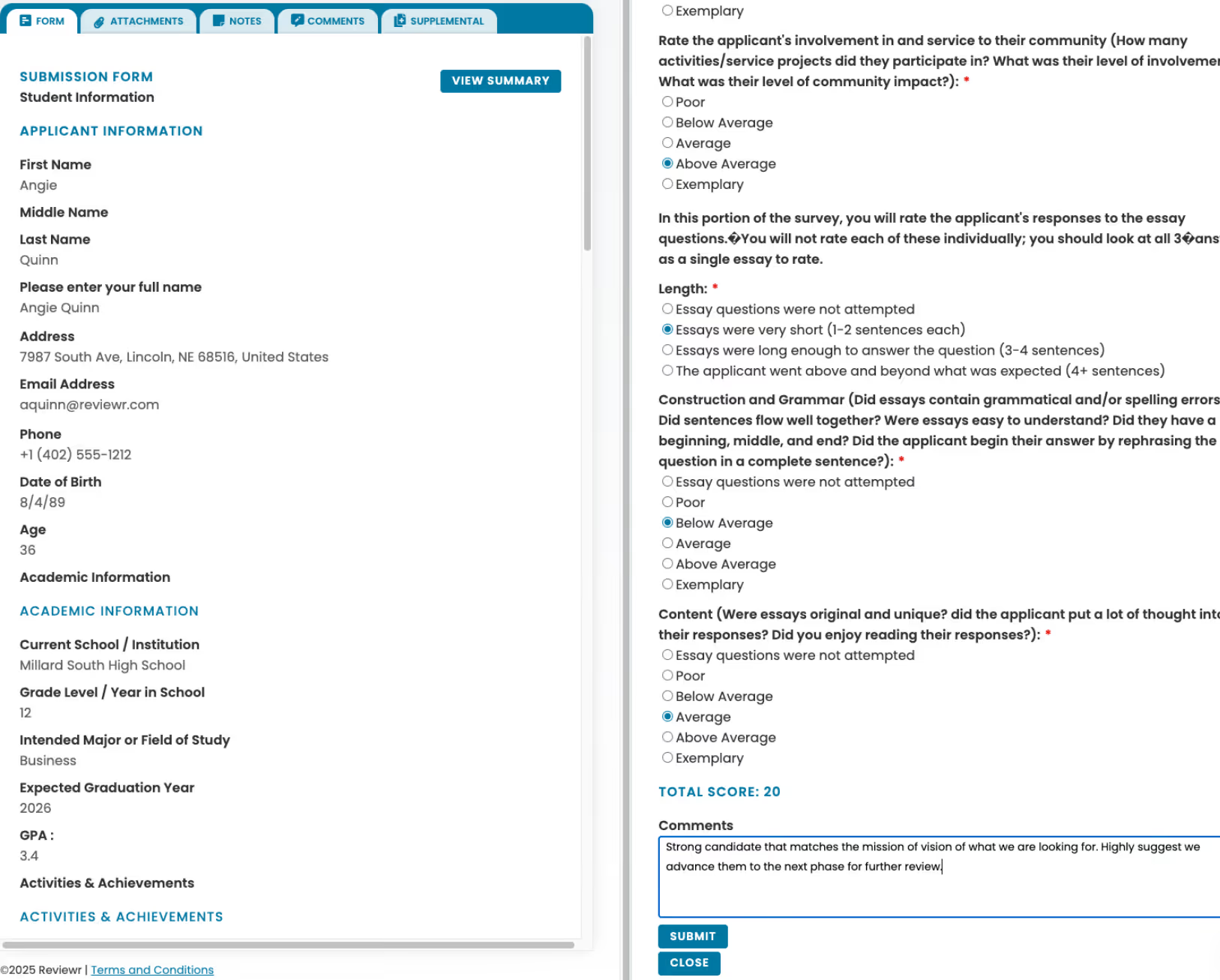
The rubric on a separate sheet is where consistency dies. In Reviewr the scorecard sits beside the application, the weights are built in, and the totals compute as the committee works. No recompiling, no broken formula, no "which version is the master sheet."
Key Capabilities
check_circle
Weighted criteria and composite scores computed as reviewers go
No master spreadsheet to rebuild
check_circle
Comment fields on every criterion
The rationale is recorded at the moment of the decision
check_circle
Live view of scoring progress for the administrator
See the gaps while there's still time to fill them
check_circle
Blind review by ID with hidden fields
The committee scores the application, not the family
Online submission form showing applicant Angie Quinn's personal, academic details, and a review survey with ratings on community involvement, essay length, grammar, content, and a comment suggesting advancement for further review.

Normalize and Compare

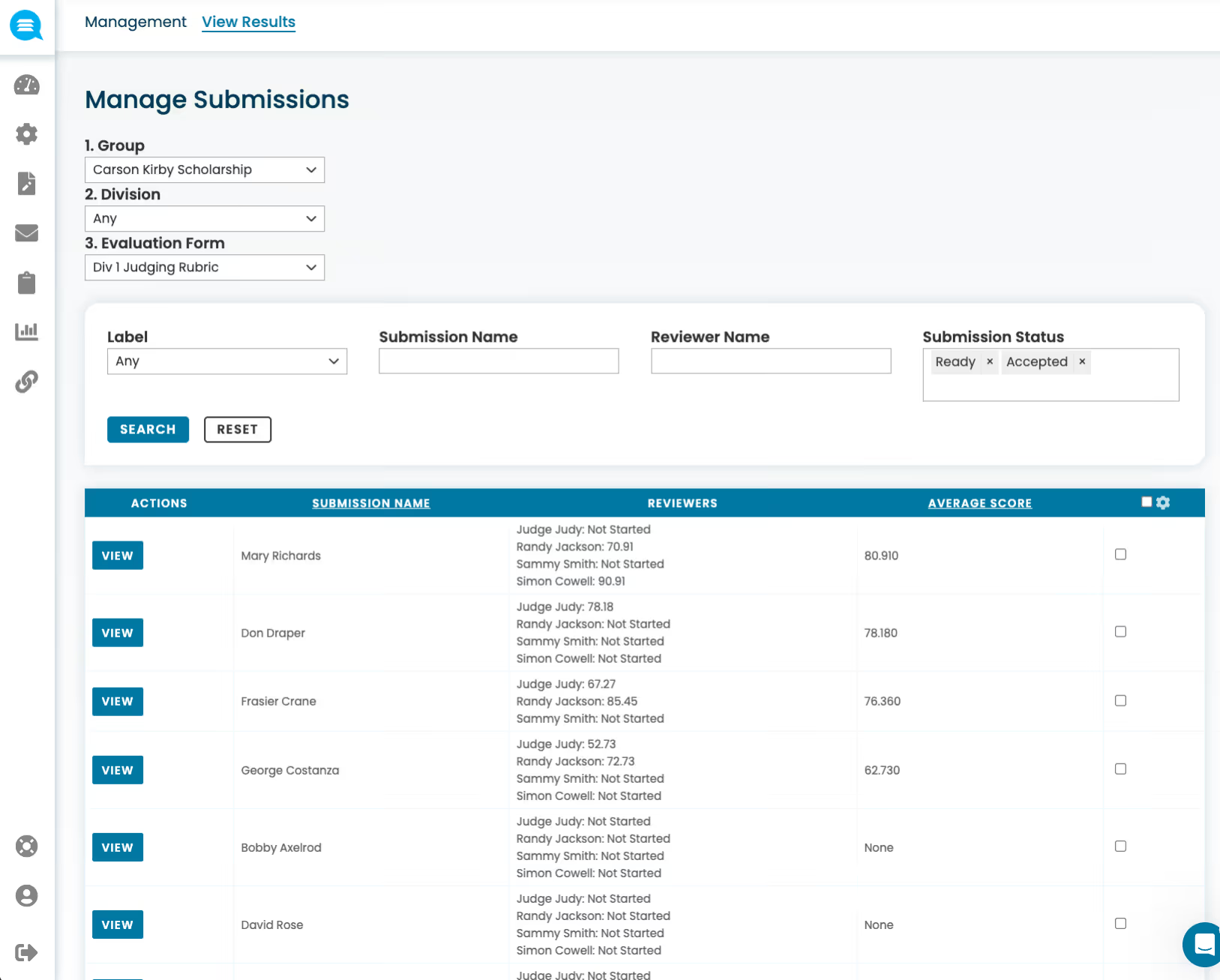
A harsh judge and an easy judge on the same panel can decide a scholarship before the committee ever meets. Reviewr's scorer-tendency report shows each reviewer against their own average, so the committee sees the disparity instead of discovering it later, or quietly adding ten points by hand.
Key Capabilities
check_circle
Scorer-tendency normalization report
Outcomes reflect merit, not which reviewer an applicant drew
check_circle
Leaderboard and results dashboard by scholarship, fund, or category
The committee meeting starts from the same list
check_circle
Tie-breaks and finalist selection on the record
No hand-adjusted scores in a spreadsheet nobody can explain
Webpage interface for managing scholarship submissions with filters for group, division, and evaluation form, listing names, reviewer scores, and average scores.

Decide and Notify

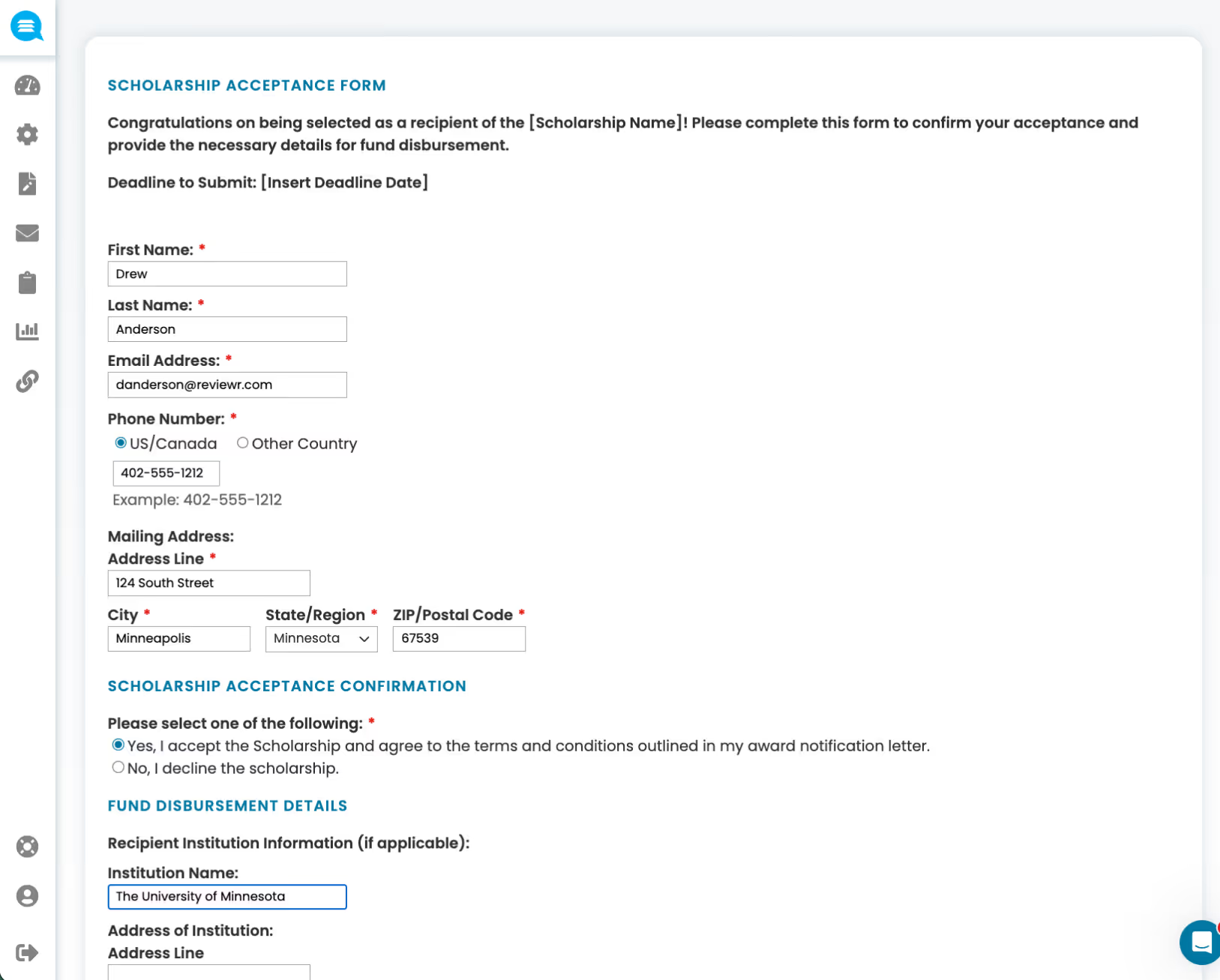
Scores are in and this is where programs stall: committees passing spreadsheets, award letters drafted one at a time, students waiting weeks. Reviewr moves the committee from the leaderboard to the decision to the notification in one place.
Key Capabilities
check_circle
Committee decisions with the rationale recorded
Structured, documented, and not buried in an email thread
check_circle
Batch notifications from your own domain — selected, waitlisted, not selected
Every applicant hears back, and the email gets through institutional filters
check_circle
Results and applicant demographic reporting, exportable
When a donor or a board asks what happened this cycle, the answer is ready
Scholarship acceptance form with fields filled for recipient Drew Anderson, including contact info, mailing address in Minneapolis, and institution name University of Minnesota.

After the Decision

The committee's work ends at the decision. The administrator's doesn't. Reviewr carries acceptance, proof of enrollment, thank-yous, and renewal paperwork on the same applicant record, and keeps every cycle's history so next year's committee starts with context. Reviewr tracks these steps; it does not disburse funds or track fund balances.
Key Capabilities
check_circle
Acceptance, e-sign, proof of enrollment, and thank-you tasks
Collected on the applicant's record, with reminders
check_circle
Renewal profiles that continue into college
Returning scholars and new applicants in the same cycle
check_circle
Applicant history across cycles, archive and clone
Next year's committee inherits a process, not a binder
check_circle
Recipient report export for finance and your CRM
Disbursement stays with your finance process
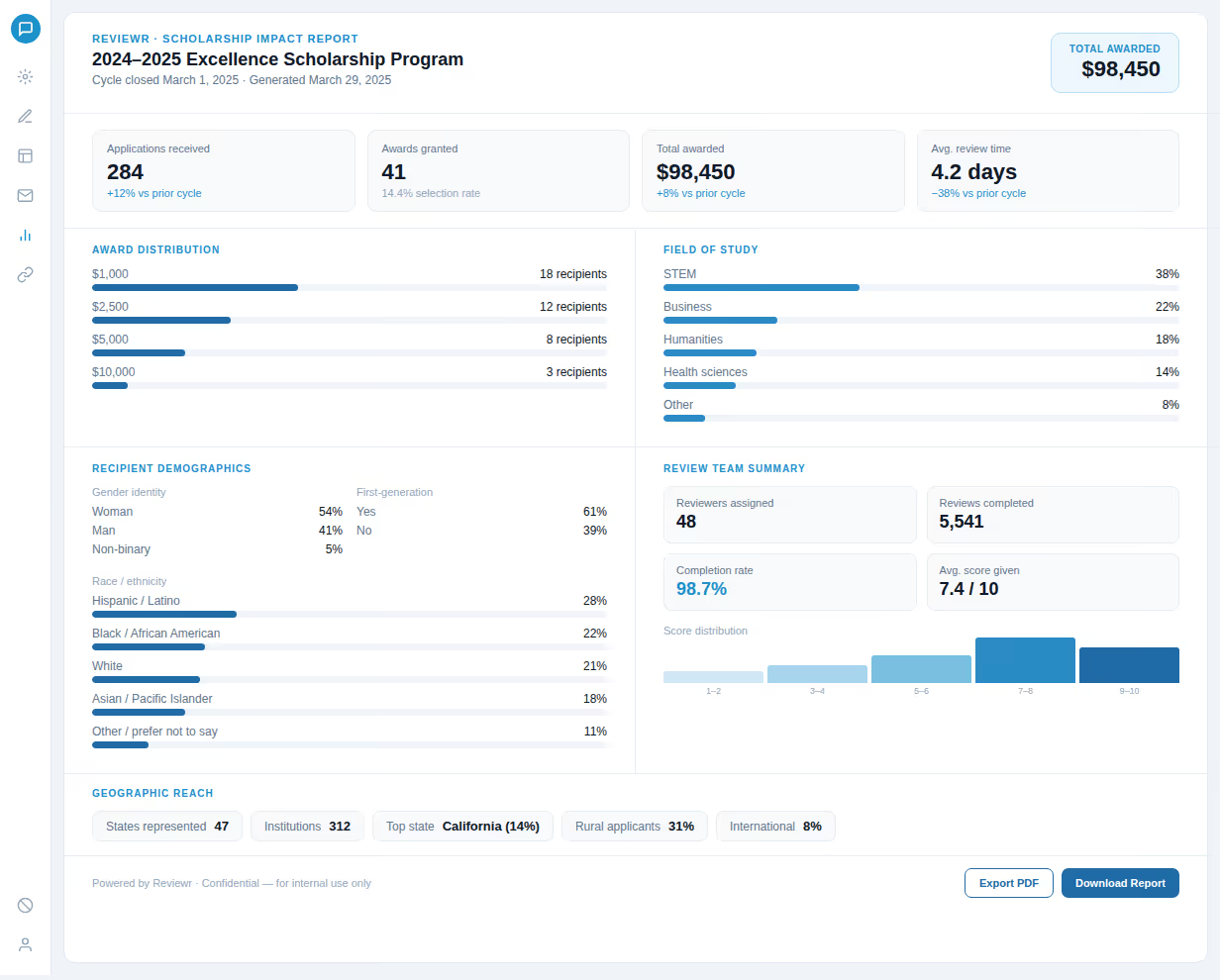
2024–2025 Excellence Scholarship Program report showing 284 applications, 41 awards granted, total awarded $98,450, average review time 4.2 days, award distribution mainly at $1,000, STEM is the top field of study at 38%, recipient demographics by gender, race, and first-generation status, review team summary with 48 reviewers assigned and 5,541 reviews completed, and geographic reach across 47 states with California top state at 14%.
AI-Enhanced

Built for Every Committee That Runs Scholarships

Credit unions, foundations, schools, associations, employers — the review problem is the same. The details differ.
description
Live
AI-Generated Application Summaries

Credit unions and banks. Fairness came up in 96% of the credit union conversations we've had. Blind review, randomized assignment, a recorded rubric, and an audit trail you can hand to an examiner.

insert_chart
Live
Score Normalization & Judging Tendency Analysis

Community, family, and nonprofit foundations. Dozens of named funds, each with its own criteria and committee. One student application matched to every fund they qualify for, and each fund's reviewers see only their own applicants.

search
Live
Smart Matching & Eligibility Screening

Education foundations and K-12. Fifteen to seventy local scholarships, each with a donor who has opinions. Per-donor buckets, a print-and-enter fallback for the reviewer who won't log in, and renewal profiles that follow the student into college.

verified_user
Coming Soon
AI & Plagiarism Detection

Colleges, universities, and alumni associations. Internal competitions, student awards, and the flagship scholarship that eats hundreds of hours. Anonymous peer review, weighted scorecards, SSO, and a process that survives the next student committee.

visibility
Coming Soon
AI-Powered Data Redaction

Associations and professional societies. Member verification at intake, per-committee access, and scorecards that keep a volunteer committee consistent from one scholarship to the next, under the foundation's branding or the society's.

smart_button
Coming Soon
OCR & Document Intelligence

Corporate, hospital, and rural organizations. Employee scholarships where eligibility depends on HR status and reviewers are busy clinicians or managers; farm bureaus and co-ops whose applications used to arrive by fax. One link, a short rubric, reminders that do the chasing.

Scholarship Success Stories

Real Scholarship Programs. Real Results.

When submissions, operations, and decisions live in separate systems, context is lost — and outcomes suffer.
Case Study
Case Study: American Association of Colleges of Osteopathic Medicine (AACOM)

Learn how AACOM established a modern, secure, and transparent research grant management process that aligns with their mission.


reviewr Staff
Case Study
Case Study: March of Dimes

How March of Dimes runs award nominations, judging, and selection on Reviewr, and what changed for staff and volunteer reviewers.

reviewr Staff
Case Study
Case Study: Army Scholarship Foundation

How Army Scholarship Foundation is powering secure, scalable, and fair scholarship management with Reviewr.

reviewr Staff

Common Questions About Scholarship Review

What committees ask on demos, in the order they ask it.
What does the applicant see?

A branded application they can save and finish later, with status visibility so they aren't calling your office. References are requested and reminded automatically, and the reference can have its own later deadline.

What does a reviewer see?

One link, the application beside the scorecard, and only the applications assigned to them, in a shuffled order. No login hunting, no downloads. Committee members who won't log in can print and enter scores.

Can we use it for our awards or grants too?

Yes. Scholarships, awards, grants, board nominations, and calls for entry run on the same platform, each with its own rubric, phases, and committee.

Our committee knows the applicants. Can review be blind?

Yes for form fields: names, schools, and any field you choose are hidden from reviewers, and review is by applicant ID. Structured reference prompts keep names out of letters. Redaction inside uploaded files is limited.

What happens with a judge who scores harder than everyone else?

The scorer-tendency normalization report shows each reviewer against their own average, so the committee can see and account for it instead of adjusting scores by hand in a spreadsheet.

How is this different from Google Forms and a spreadsheet?

The form is one-third of the job. Reviewr handles everything after submit: eligibility checks, reviewer assignment, split-screen scoring, normalization, the leaderboard, notifications, and the post-decision paperwork, on one applicant record instead of across four tools.

We run several scholarships and named funds. Can each committee see only its own?

Yes. Applications are bucketed by scholarship, fund, region, or category, and each committee's access is limited to its bucket. One student application can be matched to every fund they qualify for without the committees seeing each other's applicants.

Our applications already came in this year. Can we still review them in Reviewr?

Yes. A spreadsheet plus a folder of PDFs can be imported so this cycle's review happens in Reviewr, with intake moving over for the next cycle.

Is applicant data secure?

Reviewr is SOC 2 Type II, with SSO (SAML and OAuth) for sign-on, role-based access, and audit logs. You own your data and can export all of it.


See your review process on a real screen.