This is the process of establishing clear criteria for member award eligibility, then using intelligent systems to connect the right members with the right recognition opportunities. It combines membership standing requirements with achievement-based matching to streamline nominations.
Why It's Important
Effective eligibility and matching systems increase nomination quality, ensure award categories reach their intended recipients, boost member participation across all segments, and maintain program integrity while reducing administrative burden on both nominators and staff.
🎨 Defining Clear Award Category Criteria
Membership Standing Requirements:Establishing clear membership duration, status, and participation thresholds that align with association values
Achievement-Based Criteria:Creating specific, measurable accomplishments that distinguish exceptional members from routine participation
Category Differentiation:Ensuring each award category has distinct criteria to prevent overlap and confusion among nominators
Inclusive Excellence Standards:Balancing high standards with accessibility to recognize diverse forms of member contribution and achievement
🔍 Smart Member-Award Matching
Member Profile Integration:Leveraging existing member data including committee participation, event attendance, and professional background for intelligent matching
Achievement Pattern Recognition:Using member activity data to identify potential nominees who meet specific award criteria
Nomination Suggestions:Providing targeted recommendations to members about colleagues who would be strong candidates for specific awards
🔗 Association Management Software (AMS) Integration
Single Sign-On (SSO) Implementation:Enable members to access the award portal using their existing AMS credentials, eliminating the need for separate logins and reducing participation barriers
Member Profile Pre-Population:Automatically pull forward member information from the AMS including contact details, membership history, committee participation, and professional background to streamline nomination completion
Bidirectional Data Flow:Send award participation data back to the AMS to maintain comprehensive member engagement records and serve as the authoritative source for member recognition history
Enhanced Member Services:Enable association staff to leverage award data for targeted member outreach, leadership development programs, and personalized engagement strategies
🔗 Association Management Software (AMS) Integration
Single Sign-On (SSO) Implementation:Enable members to access the award portal using their existing AMS credentials, eliminating the need for separate logins and reducing participation barriers
Member Profile Pre-Population:Automatically pull forward member information from the AMS including contact details, membership history, committee participation, and professional background to streamline nomination completion
Bidirectional Data Flow:Send award participation data back to the AMS to maintain comprehensive member engagement records and serve as the authoritative source for member recognition history
Enhanced Member Services:Enable association staff to leverage award data for targeted member outreach, leadership development programs, and personalized engagement strategies
📈 Strategies for Increasing Nomination Participation
Member Engagement Analytics:Using participation data to identify highly engaged members who could serve as effective nominators
Peer Recognition Networks:Mapping member relationships and committee structures to encourage nominations from colleagues and collaborators
Actionable Next Steps
Criteria Audit and Refresh:Review current award categories for clarity, relevance, and alignment with association strategic priorities within 30 days
Member Data Integration:Connect award system with membership database to enable automatic eligibility verification and matching
Nomination Campaign Strategy:Develop targeted outreach to high-engagement members and committee leaders to increase nomination volume
Success Metrics Establishment:Set baseline measurements for nomination rates, category distribution, and member satisfaction with the process
📝 Reference Collection
What Is It?
This is the structured process of gathering recommendation letters or endorsements from colleagues, supervisors, clients, or other qualified members who can speak to a nominee's qualifications, character, and achievements relevant to the award category.
Why It's Important
Quality references provide third-party validation of nominee achievements, offer insights into professional impact and character that resumes alone cannot show, help selection committees distinguish between qualified candidates, and add credibility to the recognition process while reducing selection bias.
Reference Relationship Guidelines: Defining appropriate relationships between references and nominees (colleagues, supervisors, clients) while avoiding conflicts of interest
Award-Specific Instructions: Providing clear guidance about what references should address based on specific award criteria and evaluation factors
Professional Context Focus: Emphasizing member contributions, professional achievements, and association involvement rather than personal characteristics
Timeline and Communication: Establishing realistic deadlines that allow references adequate time while maintaining award program schedules
⚡ Streamlined Reference Collection
Online Reference Portal: Digital systems that allow references to submit materials directly without nominee involvement, maintaining confidentiality and authenticity
Structured Reference Templates: Standardized forms with 3-4 focused questions that guide references toward relevant information while ensuring consistency across nominations
Automated Follow-up Sequences: Progressive reminder systems that increase response rates without overwhelming references
Actionable Next Steps
Reference Template Development:Create award-specific reference forms with 3-4 targeted questions that align with selection criteria
Digital Platform Implementation:Set up online reference collection system that integrates with your award management platform
Reference Guidelines Creation:Develop clear instructions for nominees about selecting appropriate references and timeline expectations
Response Rate Optimization:Design and test automated reminder sequences to maximize reference completion rates
🔗 Association Management Software (AMS) Integration
What Is It?
AMS integration connects your award management system directly with your association's membership database, enabling seamless data flow, single sign-on access, and comprehensive member engagement tracking across all association touchpoints.
Why It's Important
Integration eliminates barriers to member participation through familiar login processes, reduces data entry burden by pre-populating member information, maintains data accuracy and consistency across systems, and provides associations with comprehensive member engagement insights for strategic decision-making.
🔐 Single Sign-On (SSO) Implementation
Seamless Member Access: Enable members to access the award portal using their existing AMS credentials, eliminating the need for separate account creation and login processes
Reduced Participation Barriers: Remove technical friction that prevents member engagement by leveraging familiar authentication systems
Enhanced Security: Maintain centralized access control and security protocols through established AMS user management systems
Simplified User Experience: Provide members with consistent navigation and access patterns across all association digital platforms
📊 Member Profile Pre-Population and Data Flow
Automatic Information Transfer: Pull forward member contact details, membership history, committee participation, and professional background to streamline nomination completion
Real-Time Data Synchronization: Ensure award system reflects current member status, contact information, and participation records from the AMS
Bidirectional Data Flow: Send award participation data back to the AMS to maintain comprehensive member engagement records and serve as the authoritative source for recognition history
Enhanced Member Services: Enable association staff to leverage award data for targeted member outreach, leadership development programs, and personalized engagement strategies
📈 Strategic Member Engagement Benefits
Comprehensive Member Journey Tracking: Create complete visibility into member participation across events, committees, and recognition programs
Personalized Member Experiences :Use integrated data to provide tailored award recommendations and recognition opportunities based on member activity patterns
Leadership Pipeline Developmen t:Identify high-engagement members for leadership development and succession planning through cross-platform activity analysis
Member Retention Insigh ts:Analyze correlation between award participation and member retention to optimize engagement strategies
Actionable Next Steps
AMS Compatibility Assessment: Evaluate current AMS platform for integration capabilities and API availability for award system connectivity
Data Mapping and Field Alignment :Document member data fields that should flow between systems and establish data synchronization protocols
SSO Implementation Planning :Design authentication workflow that maintains security while providing seamless member access to award portal
Integration Testing and Rollout :Develop phased implementation plan with member testing and feedback collection before full deployment
🔄 Implement a Dual Nominator → Nominee Workflow
What Is It?
A two-stage nomination process that separates the initial nomination (by peers) from the detailed application (by nominees themselves). This dual approach removes barriers while ensuring high-quality submissions.
Why It Matters
Traditional nomination processes either burden nominators with excessive information requirements or limit participation to self-nominations. This dual approach increases nomination volume by lowering initial barriers, improves submission quality with accurate information from nominees, and creates multiple opportunities for member engagement.
Core System Components and Features
Increased Nomination Volume: Lower barriers for initial nominations encourage more members to participate in recognizing colleagues
Enhanced Submission Quality: Nominees provide accurate, detailed information about their own achievements and qualifications
Improved Member Engagement: Creates multiple touchpoints and opportunities for member interaction with the program
Better Nominee Experience: Nominees feel honored by the nomination and have control over their application presentation
🔧 Implementation Plan
Phase 1 - Process Design:Map current nomination process, create separate nominator and nominee forms, determine privacy settings, and design notification workflows
Phase 2 - Communication Development:Create announcement messaging, develop email templates for each stage, and prepare comprehensive FAQ documentation
Phase 3 - Technical Setup:Build integrated forms, set up data connections, create automation rules, and implement reference collection processes
Phase 4 - Launch and Monitor:Announce new process, track conversion metrics, and optimize based on member feedback and performance data
Actionable Next Steps
Current Process Mapping:Document existing nomination workflow and identify specific friction points that deter participation
Form Template Creation:Design separate nominator and nominee forms with appropriate information requirements for each stage
Automation Setup:Implement automated notification system to connect nominations with nominee applications seamlessly
Success Metrics Definition:Establish tracking for nomination volume, conversion rates, completion times, and member satisfaction
Sample Nominator Form
Professional Association Excellence Awards - Nominator Form
About You:
First Name: [Text Field]
Last Name: [Text Field]
Email Address: [Email Field]
Member ID (optional): [Text Field]
About Your Nominee:
Nominee First Name: [Text Field]
Nominee Last Name: [Text Field]
Nominee Email: [Email Field]
Award Category: [Dropdown Menu]Rising Star (30 Under 30)Industry InnovatorCommunity ImpactLeadership ExcellenceChapter Achievement
Tell Us Why:
Why are you nominating this person/chapter? What specific achievements, contributions, or qualities make them deserving of recognition? (250 words maximum) [Text Area]
Confirmation:
I understand that my nominee will be notified of this nomination and will need to complete a more detailed application to be considered for the award.
I agree to be identified as the nominator to the nominee. (Optional)
[Submit Nomination] button
Sample Nominee Form
Professional Association Excellence Awards - Nominee Application
Personal Information:
First Name: [Text Field] (pre-filled)
Last Name: [Text Field] (pre-filled)
Email Address: [Email Field] (pre-filled)
Member ID: [Text Field]
Years of Membership: [Number Field]
Current Position/Title: [Text Field]
Organization: [Text Field]
Professional Bio (150 words maximum): [Text Area]
Professional Photo: [File Upload]
Award Category Information:
Award Category: [Text] (pre-filled, non-editable)
Qualification Questions:(These would vary based on award category - example below is for "Industry Innovator")
Describe the innovation or approach you've implemented in your work/organization: [Text Area]
What challenge or opportunity was this innovation addressing? [Text Area]
What measurable results or impacts have you achieved through this innovation? [Text Area]
How has your innovation influenced others in the industry or your organization? [Text Area]
How has your membership in our association contributed to your professional growth or this achievement? [Text Area]
Link to relevant website, video, or additional information (optional): [URL Field]
References:
Reference #1 Name: [Text Field]
Reference #1 Email: [Email Field]
Reference #1 Relationship to you: [Text Field]
Reference #2 Name: [Text Field]
Reference #2 Email: [Email Field]
Reference #2 Relationship to you: [Text Field]
Confirmation:
I confirm that the information provided is accurate and complete.
I agree to be featured in association publications and events if selected as a finalist or winner.
Operational Excellence
⚙️ Dedicated Award Management Systems
What Is It?
A centralized, integrated platform that serves as your award program's command center, unifying all functions - nomination processing, review coordination, member communication, impact tracking, and analytics - into one comprehensive solution designed specifically for member recognition programs.
Why It's Important
Centralized systems eliminate errors from managing awards across multiple disconnected tools, provide seamless integration with membership databases, enable automated workflows that save staff time, offer real-time visibility into program performance, and create scalable operations that grow with membership expansion.
Core Award Management Features
Unified Nomination Portal:Single platform where members can discover awards, submit nominations, track progress, and receive updates throughout the process
Membership Integration:Direct connection with membership database for automatic eligibility verification, member profile access, and participation history tracking
Automated Review Workflows:Built-in tools for reviewer assignment, scoring, collaboration, and decision tracking without external platforms
Member Engagement Analytics:Comprehensive reporting on nomination patterns, member participation, award distribution, and program impact metrics
🔐 Association-Specific Security and Compliance
Member Data Protection: Secure handling of member information with role-based access controls and audit trails for all program activities
Recognition Program Governance :Built-in compliance tools for award policies, conflict of interest management, and fairness protocols
Historical Data Management :Long-term storage and retrieval of past award cycles for trend analysis and member recognition history
Actionable Next Steps
System Requirements Assessment:Document current tools, integration needs, and specific association requirements for award management
Membership Database Integration Planning:Evaluate connectivity options between award system and existing membership platforms
Vendor Evaluation:Research award management platforms with association-specific features and membership integration capabilities
Implementation Roadmap:Develop phased migration strategy that ensures continuity of current award cycles while transitioning to new system
🔒 Protecting Member Information in Review Processes
What Is It?
Member information protection involves carefully managing or masking sensitive personal and organizational details from award nominations before they reach review committees, creating evaluation materials that protect member privacy while maintaining review integrity.
Why It's Important
Information protection reduces unconscious bias in evaluation processes, protects member privacy and complies with data protection regulations, prevents conflicts of interest based on personal connections, ensures evaluations focus on merit-based criteria rather than member characteristics, and maintains trust in the award program.
🏷️ Types of Information to Manage
Member Identifiers: Names, contact information, and direct identifiers that could influence reviewer perceptions or create bias
Organizational Affiliations: Employer details, company names, and institutional connections that might impact evaluation fairness
Geographic and Network Details: Specific locations, mutual connections, and association relationships that could influence reviewer decisions
Personal Demographics: Age, graduation years, and other identifying characteristics not directly relevant to award criteria
⚖️ Balancing Privacy with Evaluation Needs
Context-Sensitive Information Management:Preserving achievement details and qualification information essential for fair evaluation while removing unnecessary identifying elements
Tiered Review Processes:Determining appropriate levels of information sharing based on review stage and committee member roles
Committee Access Levels:Creating different information access tiers where initial reviewers see anonymized materials while final decision-makers access complete profiles
Actionable Next Steps
Information Management Policy Development: Create comprehensive guidelines that specify what member information to anonymize, retain, or partially mask during review processes
Automated Privacy Protection: Implement systems that automatically manage sensitive information to avoid human error or missed details
Committee Training Implementation :Develop training programs for all review committee members on privacy protocols and fair evaluation practices
Compliance Review :Ensure information management practices meet all applicable privacy laws and association policies
🤖 The Future of AI in Member Award Management
Membership Eligibility Verification
AI automatically verifies member standing, participation history, and eligibility requirements across multiple award categories.
Award-Member Matching
AI recommends optimal award categories for members based on their profiles, achievements, and participation patterns.
Nomination Quality Assessment
NLP tools analyze nominations for completeness, relevance, and alignment with award criteria before committee review.
Duplicate Detection
AI identifies multiple nominations for the same member and consolidates information for comprehensive review.
Automated Preliminary Scoring
Algorithms provide initial scoring based on objective criteria like years of membership, committee participation, and achievement metrics.
Bias Reduction
AI redacts identifying information to promote fair evaluations focused on achievements rather than personal connections.
Committee Member Assignment
AI matches nominations to committee members based on expertise, geographic knowledge, and industry experience.
Achievement Impact Analysis
AI evaluates nominations for innovation, community impact, and professional excellence—helping identify outstanding contributions.
Reference Authenticity Verification
AI validates recommendation letters for authenticity, relevance, and consistency with nomination materials.
Nomination Fraud Detection
AI monitors for suspicious patterns like fabricated achievements, false references, or duplicate submissions.
Winner Impact Prediction
AI predicts which award recipients are likely to continue active association involvement and leadership roles.
Diversity and Inclusion Monitoring
AI helps ensure award distribution represents member demographics and promotes inclusive recognition practices.
Member Engagement Analysis
AI analyzes member participation patterns to identify potential nominees and encourage broader program participation.
Award Category Optimization
AI recommends new award categories or modifications based on member interests, nominations, and recognition gaps.
Personalized Member Communications
AI generates tailored award announcements, nomination encouragements, and winner celebrations for different member segments.
Predictive Nomination Analytics
AI identifies members likely to be strong award candidates and suggests targeted outreach for nominations.
Smart Notification Systems
AI automates deadline reminders, status updates, and celebration announcements tailored to individual member preferences.
Program Impact Reporting
AI aggregates data on award effectiveness, member satisfaction, and program ROI for stakeholder reporting.
Review & Selection
👥 Pairing Nominees with Review Teams
What Is It?
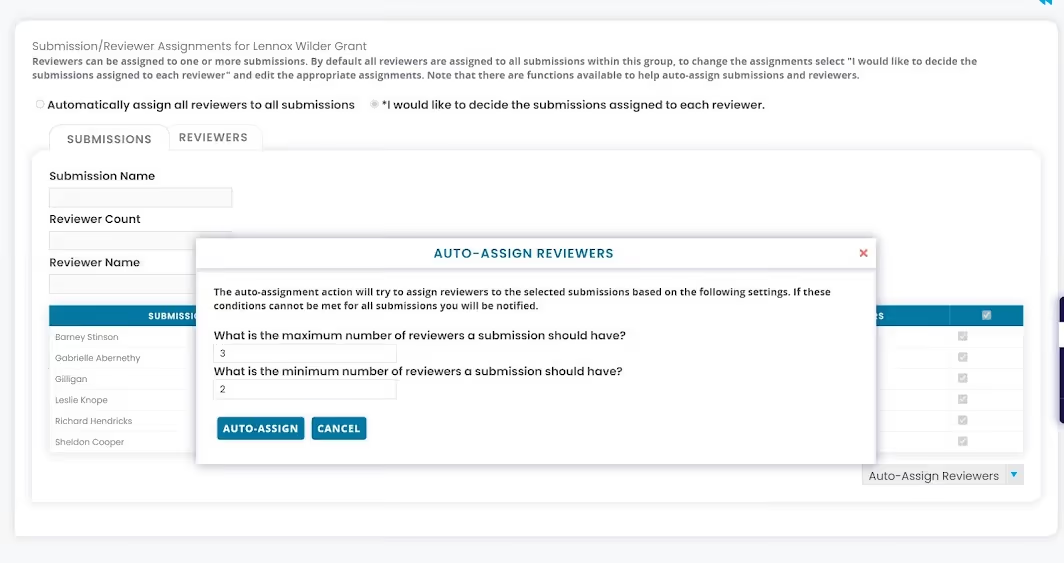
Strategic assignment of award nominations to appropriate review committee members based on expertise, experience, potential conflicts, and workload considerations to ensure fair, knowledgeable, and efficient evaluation of member achievements.
Why It's Important
Proper reviewer pairing ensures nominations receive expert evaluation from qualified committee members, prevents conflicts of interest within member communities, distributes review workload equitably, improves consistency and quality of evaluations, and maintains the credibility and fairness of the recognition process.
🎯 Strategies for Effective Reviewer Assignment
Expertise Alignment:Matching reviewer backgrounds and professional experience with award categories and nominee qualifications
Association Conflict Management:Identifying and avoiding potential conflicts between reviewers and nominees within member networks, committees, and professional relationships
Geographic and Sector Distribution:Ensuring diverse perspectives by balancing reviewer assignments across regions, industries, and member segments
Review Committee Structure:Creating balanced panels that combine seasoned association leaders with newer members for mentorship and fresh perspectives
⚖️ Workload Balance and Fair Distribution
Reviewer Capacity Planning:Tracking individual reviewer availability, current association commitments, and optimal review loads for quality evaluation
Multi-Award Coordination:Managing reviewer assignments across multiple award categories to prevent overload while maintaining expertise matching
Backup and Contingency Systems:Preparing for reviewer unavailability and maintaining evaluation schedules during busy association periods
Actionable Next Steps
Reviewer Database Development:Create comprehensive profiles for all review committee members including expertise, availability, and member relationship mapping
Conflict Detection Protocol:Implement systematic checks for potential conflicts between reviewers and nominees based on committee service, employer relationships, and collaborative history
Assignment Algorithm Creation:Develop scoring system that balances expertise matching, conflict avoidance, and workload distribution for optimal reviewer assignments
Performance Tracking Implementation:Establish metrics to monitor reviewer consistency, efficiency, and feedback quality for continuous improvement
💻 Conducting Online Review and Selection
What Is It?
Online review and selection involves using digital platforms and structured processes to evaluate member award nominations remotely, enabling review committees to assess candidates, collaborate on decisions, and maintain consistent evaluation standards through technology-enhanced workflows.
Why It's Important
Online review systems increase accessibility for diverse review committee pools, provide comprehensive documentation and audit trails, enable efficient collaboration among geographically dispersed reviewers, improve consistency through standardized evaluation tools, and allow for better data collection and analysis of selection processes.
Award-Specific Scoring Rubrics and Evaluation Criteria
Award Category Alignment:Creating detailed, objective criteria that align with specific award purposes and association values
Achievement Weight Assignment:Determining appropriate relative importance of different evaluation factors like innovation, impact, and service
Committee Calibration Exercises:Training review committee members to apply rubrics consistently through practice evaluations and discussion
Continuous Rubric Refinement:Using feedback and results data to improve evaluation criteria and scoring methods over time
Facilitating Collaboration Among Review Committee Members
Digital Discussion Platforms: Implementing secure communication tools that allow committee members to share insights and questions about nominees
Consensus Building Processes: Establishing protocols for resolving disagreements and reaching final award decisions through structured discussion
Documentation and Audit Trails: Maintaining comprehensive records of committee discussions and decision-making processes for transparency
Actionable Next Steps
Award Rubric Development Workshop: Convene committee members and association leadership to create detailed scoring rubrics with clear criteria and weighting
Committee Training Program :Develop comprehensive onboarding materials and conduct calibration sessions before each award cycle
Technical Support Protocol :Establish clear procedures for handling technical issues and provide multiple support channels for committee members
Review Process Documentation :Create detailed standard operating procedures for the entire online review process from assignment to final decision
📊 Normalization of Review Results and Scoring Trends
What Is It?
Review normalization is the statistical process of adjusting committee member scores to account for individual scoring tendencies, biases, and inconsistencies, ensuring that nominee evaluations are comparable across different reviewers and that award decisions are based on merit rather than reviewer characteristics.
Why It's Important
Normalization ensures fairness by preventing nominee outcomes from being determined by which committee member evaluates their nomination, maintains program integrity and member trust, improves selection accuracy by reducing noise from reviewer bias, and provides data-driven insights for continuous improvement of award processes.
⚖️ Importance of Normalizing Review Results
Statistical Bias Correction:Understanding how individual committee member tendencies (generous vs. conservative scoring) can skew award outcomes
Member Trust and Credibility:Ensuring that award recipients aren't unfairly influenced by which committee members evaluate their nominations
Award Program Integrity:Meeting member expectations for fair and unbiased recognition processes that honor true achievement
🔍 Methods for Identifying and Addressing Scoring Trends
Committee Member Pattern Analysis:Using historical data to identify consistent scoring behaviors and calibration needs among review committee members
Cross-Validation Systems:Implementing processes where high-stakes nominations receive evaluation from multiple committee members for comparison
Real-Time Monitoring:Creating dashboards that flag unusual scoring patterns during active review periods for immediate attention
Actionable Next Steps
Historical Award Data Analysis:Review at least 3 years of committee scoring data to identify member patterns and potential biases in current selection processes
Normalization Method Implementation:Research and deploy appropriate statistical methods for adjusting scores based on individual committee member tendencies
Committee Performance Dashboard:Develop real-time analytics that monitor scoring patterns and flag inconsistencies during active award cycles
Committee Member Feedback System:Create individualized reports showing committee members their scoring patterns compared to peers for calibration improvement
🗳️ Member Choice Awards
What Is It?
A structured approach to involving your broader membership in the award selection process, complementing expert evaluation with peer input. This creates wider ownership of the program and increases overall engagement with both the awards and the association.
Why It's Important
Member involvement creates broader investment in the award program, increases award visibility throughout your membership, provides valuable marketing and promotional opportunities, builds anticipation for results announcement, and establishes greater transparency in the selection process while fostering community engagement.
Benefits of Member Engagement in Selection
Increased Program Investment: Member participation creates wider ownership and investment in the award program across the entire association
Enhanced Award Visibility: Public voting and showcase periods significantly increase awareness and discussion of award recipients and their achievements
Marketing and Promotion Opportunities: Member voting creates natural content for social media, newsletters, and member communications
Community Building: Shared recognition activities strengthen member connections and association community bonds
🔧 Implementation Plan
Phase 1 - Selection Model Design:Determine approach to member involvement (member's choice awards alongside expert selection, public voting as scoring component, or nomination-only involvement), establish weighting guidelines, and create safeguards against manipulation
Phase 2 - Public Showcase Development:Design nominee profile templates, create technical infrastructure for nominee galleries and voting mechanisms, and develop content moderation protocols
Phase 3 - Communication and Promotion:Create messaging explaining member involvement process, develop promotional assets and social media templates, and plan progressive communication strategy
Phase 4 - Launch and Management:Open public showcase and voting periods, implement engagement tracking and monitoring, and gather feedback for continuous improvement
📊 Engagement Tracking and Optimization
Participation Analytics:Monitor voting rates, time spent reviewing nominees, social sharing activity, and member feedback volume to optimize engagement
Real-Time Monitoring:Track member engagement patterns and address any issues or opportunities for increased participation during voting periods
Impact Measurement:Assess overall program impact on member satisfaction, association engagement, and award program credibility
Actionable Next Steps
Member Involvement Model Design:Define how member input will be weighted and integrated with expert committee evaluation in your award selection process
Public Showcase Platform Development:Create technical infrastructure for nominee profiles, member voting, and social sharing functionality
Promotional Strategy Creation:Develop comprehensive communication plan for member voting periods including social media templates and engagement tactics
Success Metrics Establishment:Define tracking for member participation rates, engagement quality, and overall program impact on association community